Find Mass times to celebrate the Solemnity of Mary Mother of God, Dec. 31 and Jan. 1 posted here. Parishes from across the diocese are ready to welcome you on this Holy Day of Obligation! Merry Christmas!
A meeting of the Catholic Bishops of Saskatchewan Nov. 24, 2025 in Saskatoon included both a welcome and a farewell.
Archbishop-Elect Susai Jesu, OMI, was welcomed to the group following the recent announcement of his appointment as Archbishop of Keewatin-Le Pas, with his episcopal ordination to take place in the New Year on Jan. 26, 2026 in The Pas, Manitoba.
Meeting of the Saskatchewan Catholic Bishops in November 2025 (l-r): Bishop Michael Smolinski of the Ukrainian Catholic Eparchy of Saskatoon; Archbishop-Designate Stephen Hero, administrator of the Roman Catholic Diocese of Prince Albert who has been appointed Archbishop of Catholic Archdiocese of Edmonton; Archbishop Donald Bolen of the Archdiocese of Regina; Archbishop-Elect Susai Jesu, OMI, who has been appointed Archbishop of Keewatin-Le Pas in the north; and Saskatoon Bishop Mark Hagemoen. (Photo by Kiply Lukan Yaworski, Catholic Saskatoon News)
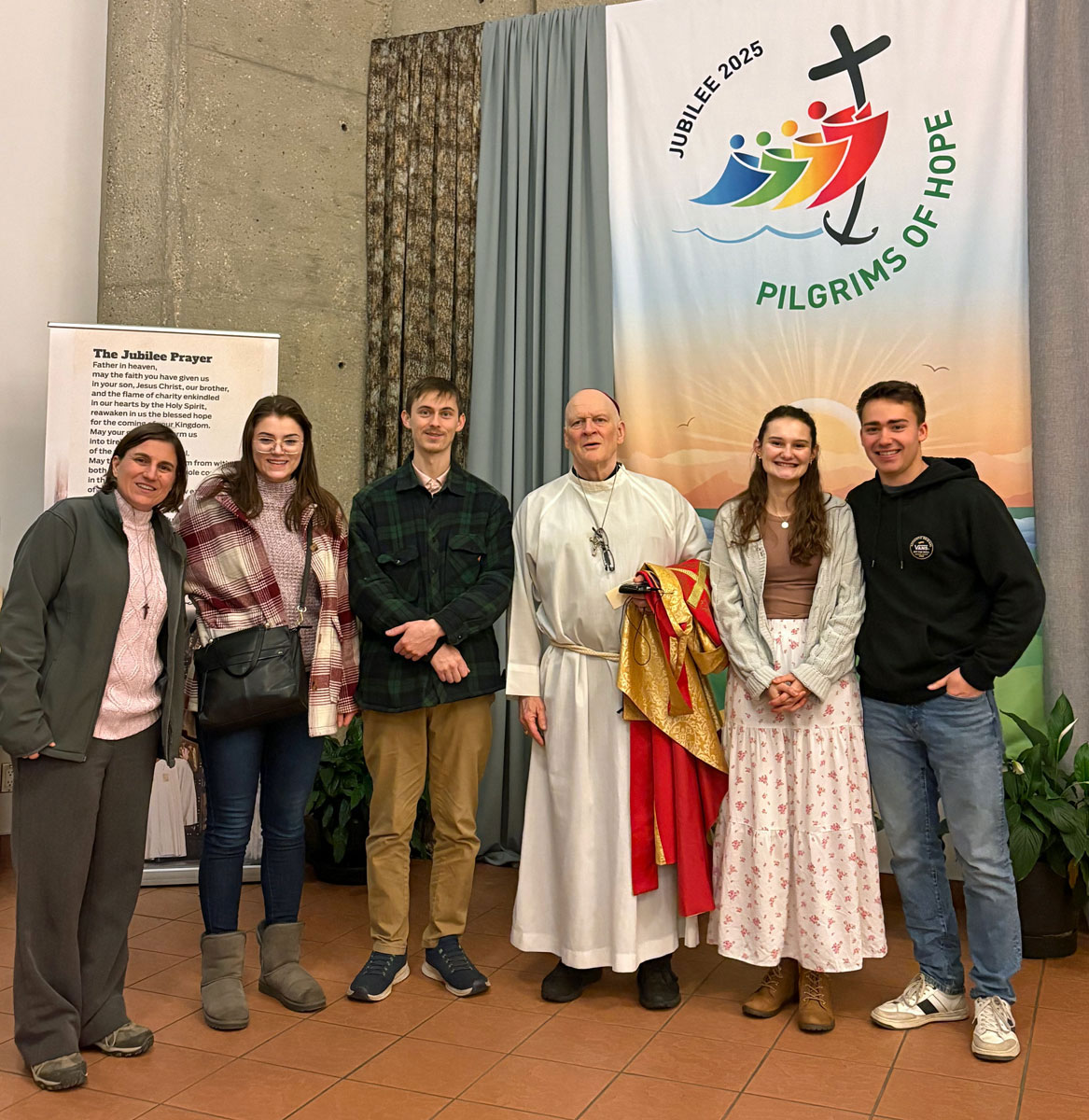
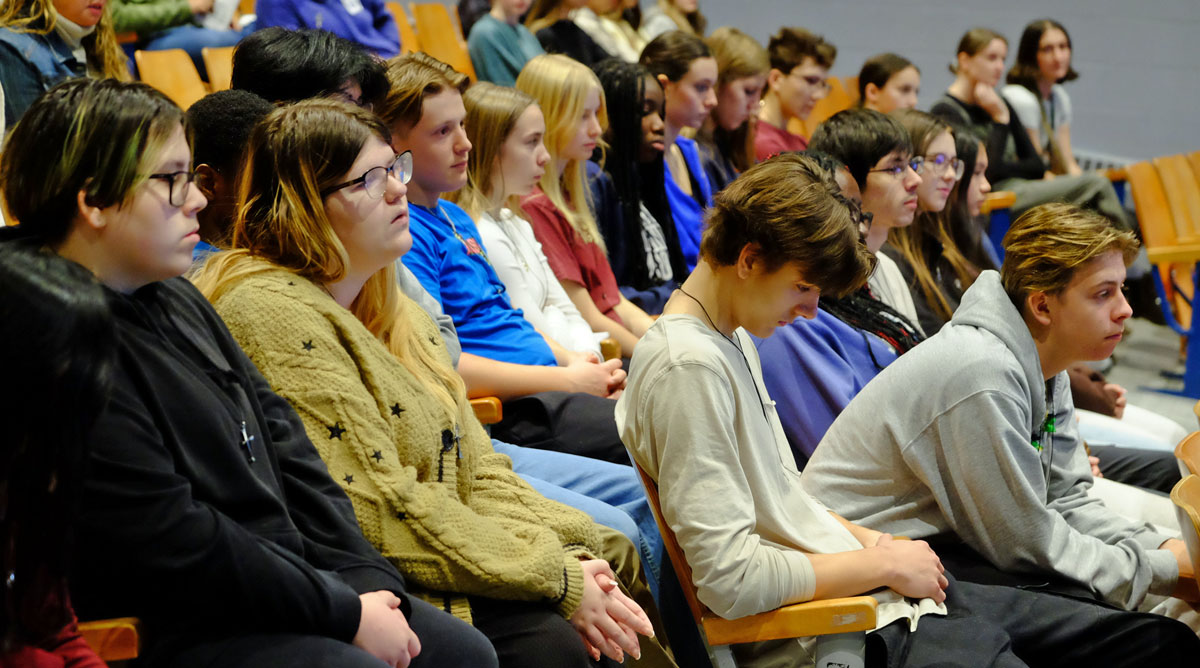
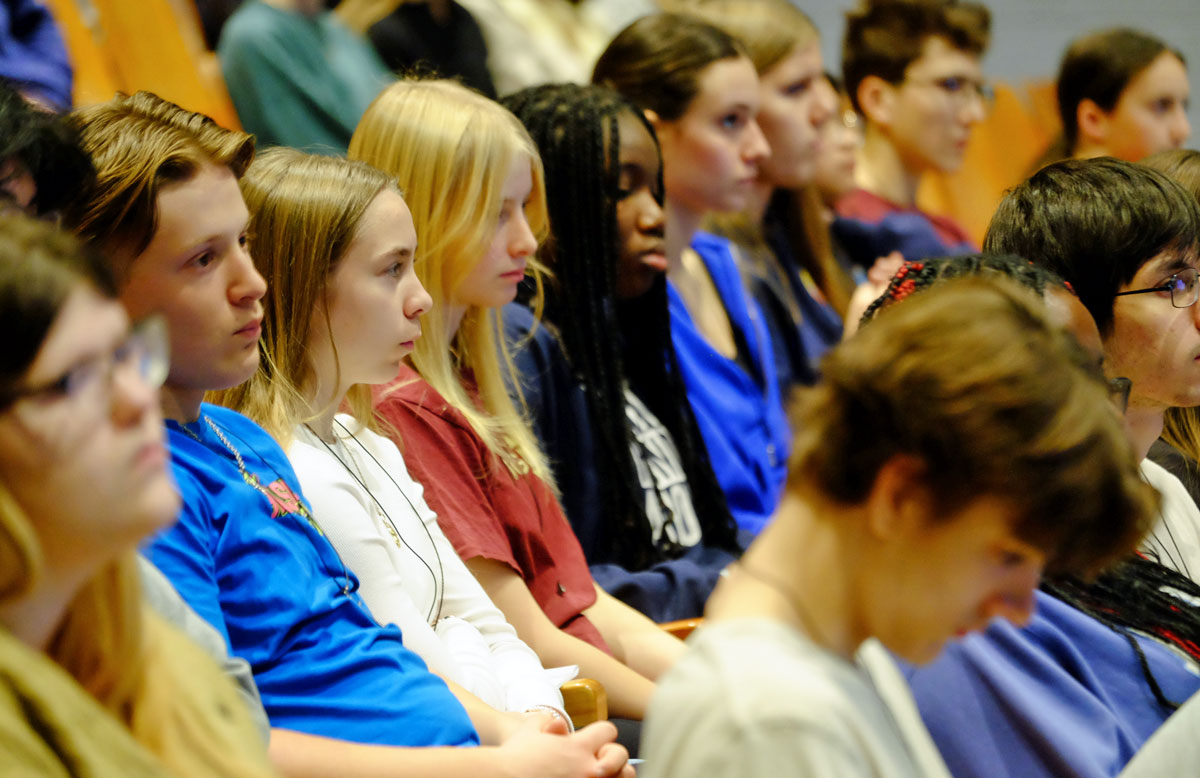
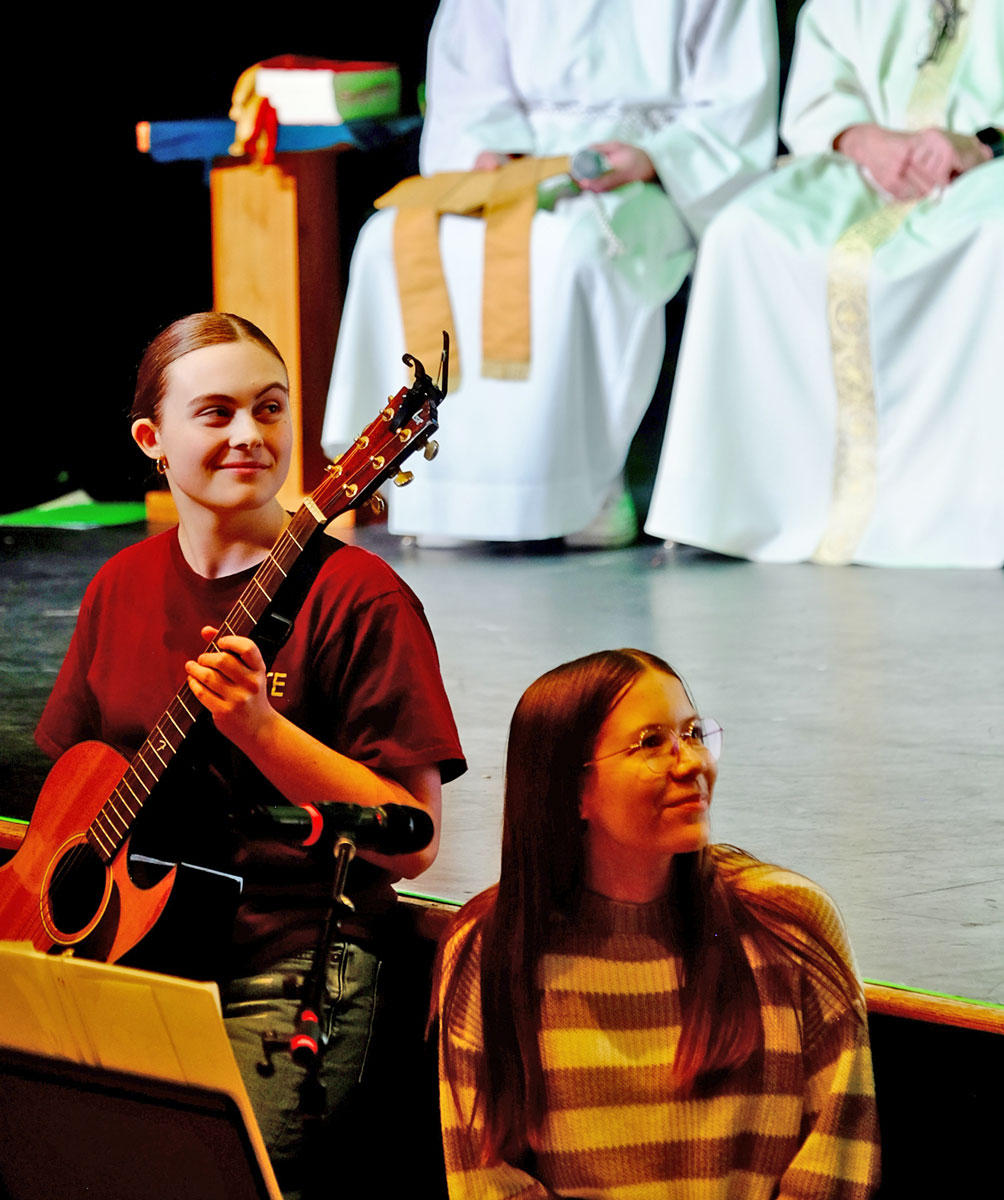
On Christ the King Sunday Nov. 23 at the Cathedral of the Holy Family in Saskatoon, Bishop Mark Hagemoen presided at Mass to mark World Youth Day in the Roman Catholic Diocese of Saskatoon.
Established by Saint John Paul II, World Youth Day is a reminder that young people hold a vital place in the life and mission of the Church.
Each year on Christ the King Sunday, dioceses around the world unite in prayer and celebration—connected spiritually to millions of youth and young adults journeying in faith across the globe. This year’s theme was “You also are my witnesses, because you have been with me.” (Jn 15:27)
Young adult missionary shares testimony
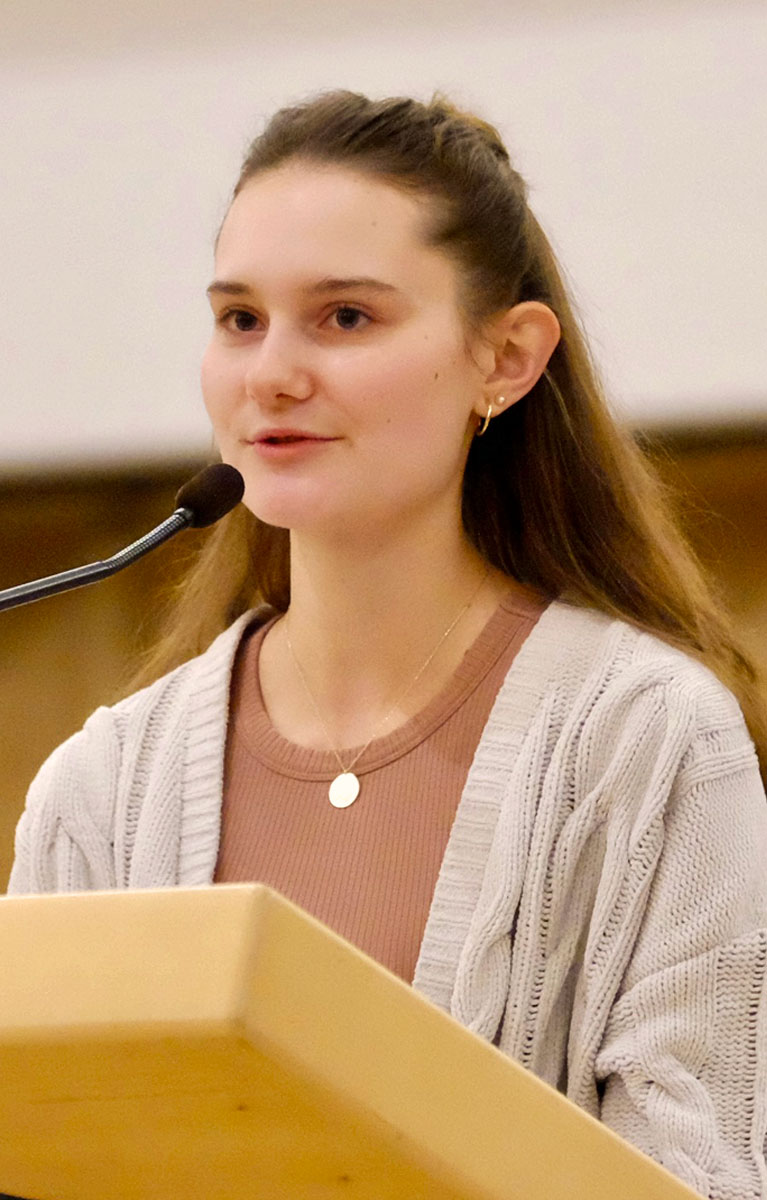
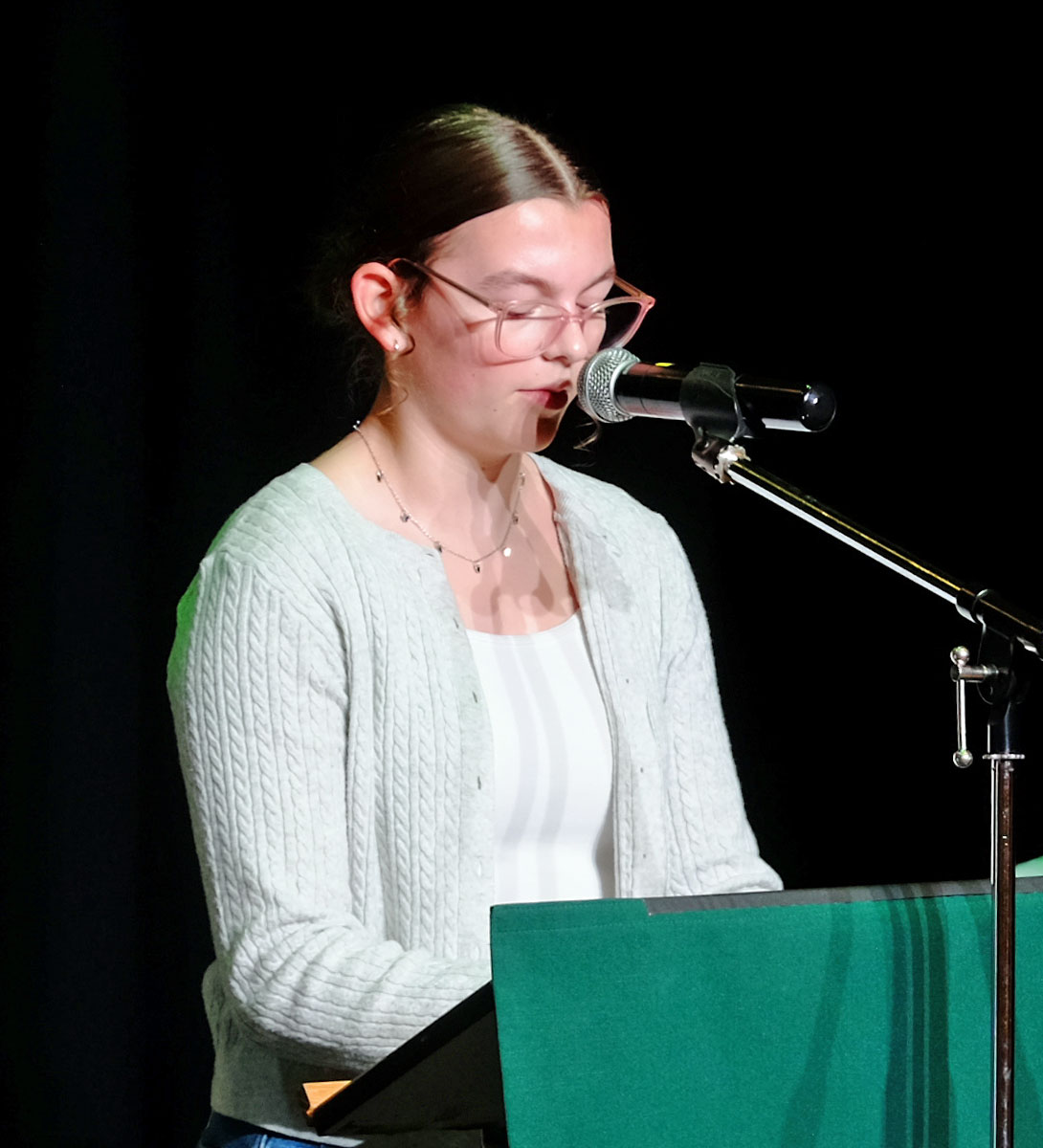
Before Mass, third-year music and education student Marie Levesque of Catholic Christian Outreach (CC)) shared testimony about the impact of attending the Jubilee of Youth in Rome with CCO this summer as part of a mission project..
“Being in Rome for the Jubilee of Hope was an absolute blessing. There were so many ways that God worked in my heart during that time, and two of the big ways were through encountering the saints and through encountering Christ in learning about Ignatian discernment of spirits associated with prayer.”
Marie Levesque was part of a CCO mission trip to Rome during the Jubilee of Youth. (Photo by Kiply Lukan Yaworski, Catholic Saskatoon News)
Levesque was part of the CCO team that hosted the “Blessed Carlo Acutis Centre” at a church in Rome during the Jubilee of Youth July 29-31, 2025, which included the opportunity for pilgrims to venerate a first-class relic of Blessed Carlo Acutis, who was canonized by Pope Leo in September .
Levesque described how she had always been drawn to the simplicity of what made the 15-year-old a saint. “It was through the Eucharist – the Body and Blood of Jesus – that he became holy,” she said. “One of his many quotes that I love is that he said ‘The Eucharist is my highway to heaven.’”
Seeing the body of the young saint in his clear glass tomb at Assisi was profoundly moving, she said. “And in Rome we had the great blessing of inviting pilgrims to venerate a relic of Blessed Carlo (Saint Carlo now) and encountering Jesus in Eucharistic Adoration. And those days made my heart explode: being able to bring others to Jesus along with my friend in heaven – along with being able to evangelize with the other student missionaries on my trip.”
Another key feature of the trip was putting Ignatian discernment into practice, Levesque said. “Through prayer and allowing the Holy Spirit to reveal what lies I had been believing about God, others, and my identity, God revealed a deep truth that I had been struggling to believe. He reminded me of his love and his delight, and responded to my fears with the simple words, ‘You are a blessing.’ This transformed the rest of the mission and ignited my heart to share the Gospel with the other pilgrims, inviting them to encounter the love that God has for each one of them as well.”
She concluded: “I am so grateful and utterly blessed to have gotten this experience and grow deeper in my faith, while being able to tell others about it in a beautiful way through Jesus, our hope. And today, on the Feast of Christ the King, I invite you – in the silence of your heart as we enter into Mass – to invite Jesus to be the King of your universe.”
Bishop’s homily
In his homily, Bishop Mark Hagemoen reflected on how World Youth Day is marked on the Solemnity of Our Lord Jesus Christ, King of the Universe.
“When we celebrate Christ the King who is like no other king, we are quickly confronted with how we are called to share his kingship” through our baptismal anointing as priest, prophet, and king, noted the bishop, “so that we may live as members of his Body, sharing his life”.
He then turned to Pope Leo’s message for World Youth Day as an example of what this kingship means for young missionary disciples, quoting the Holy Father: “dear young people, with the help of the Holy Spirit, you can become missionaries of Christ in the world.”
Pope Leo continues: “Many of your peers are exposed to violence, forced to use weapons, separated from their loved ones, and compelled to migrate or flee. Many lack education and other essential goods. All share with you the search for meaning and the insecurity that accompanies it, the discomfort of growing social and work pressures, the difficulty of dealing with family crises, the painful feeling of a lack of opportunities, as well as the remorse for mistakes they have made. You can stand alongside other young people, walk with them and show that God, in Jesus, has drawn close to each person.”
A social gathering was held at the conclusion of the World Youth Day Mass.
The next World Youth Day global gathering will be held in Seoul, Korea in 2027.
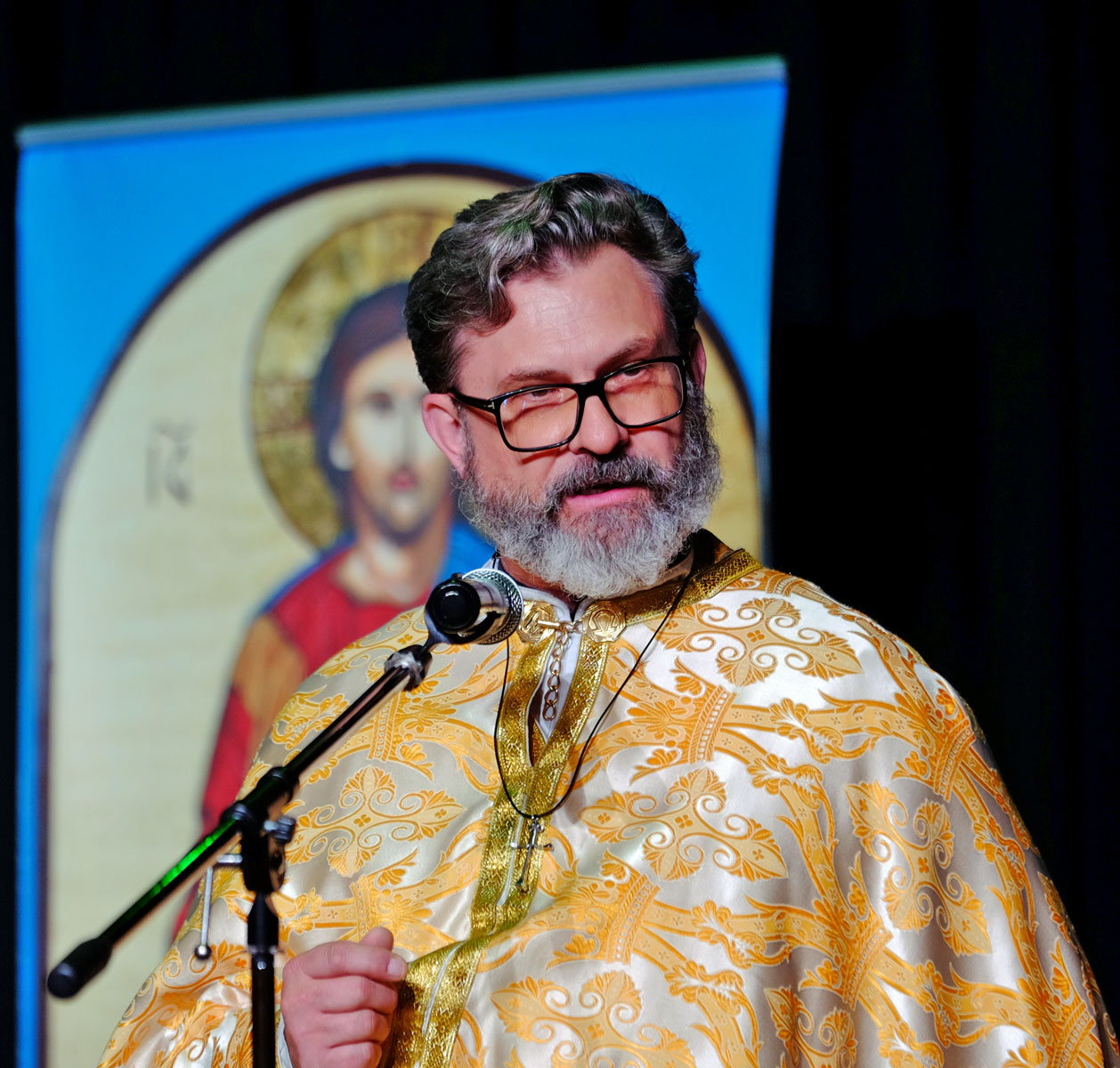
Sr. Marta Piano of the Verbum Dei Missionary Fraternity (left) and Bishop Mark Hagemoen with young adults at the World Youth Day celebration Nov. 23 in Saskatoon. (Submitted photo
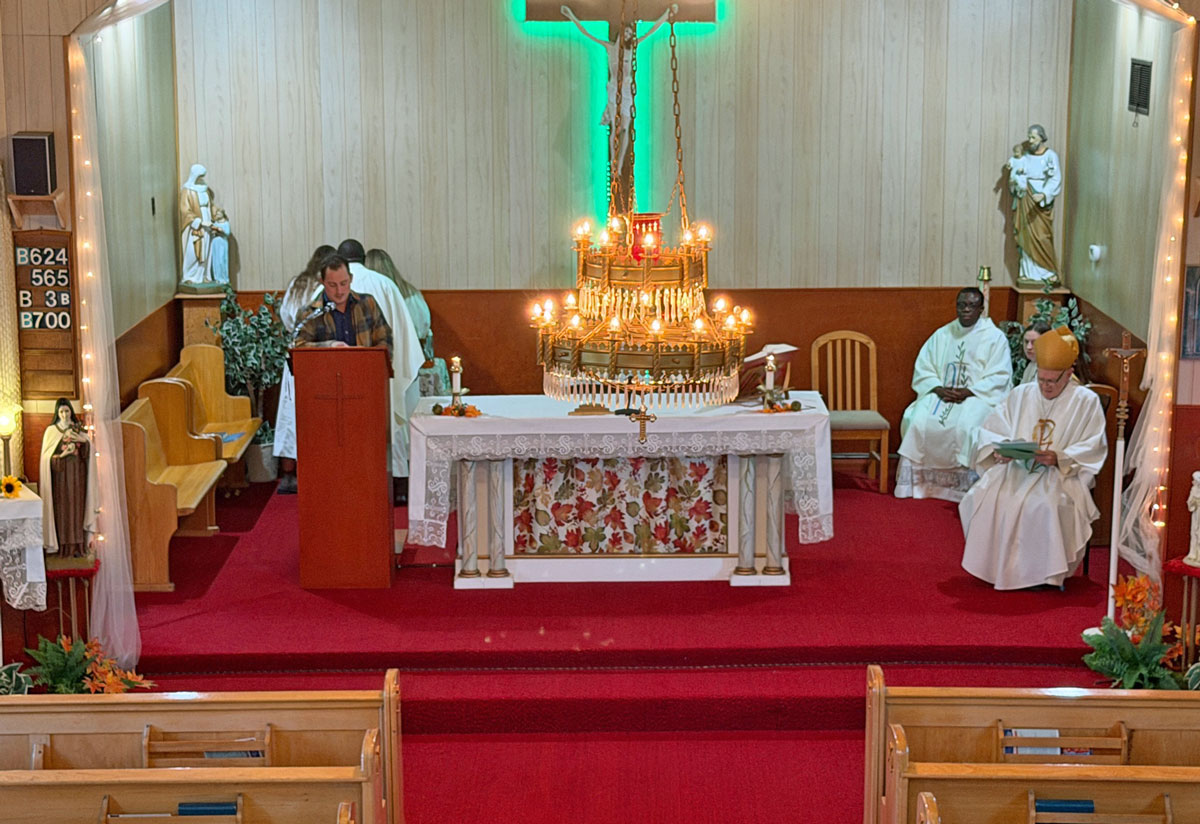
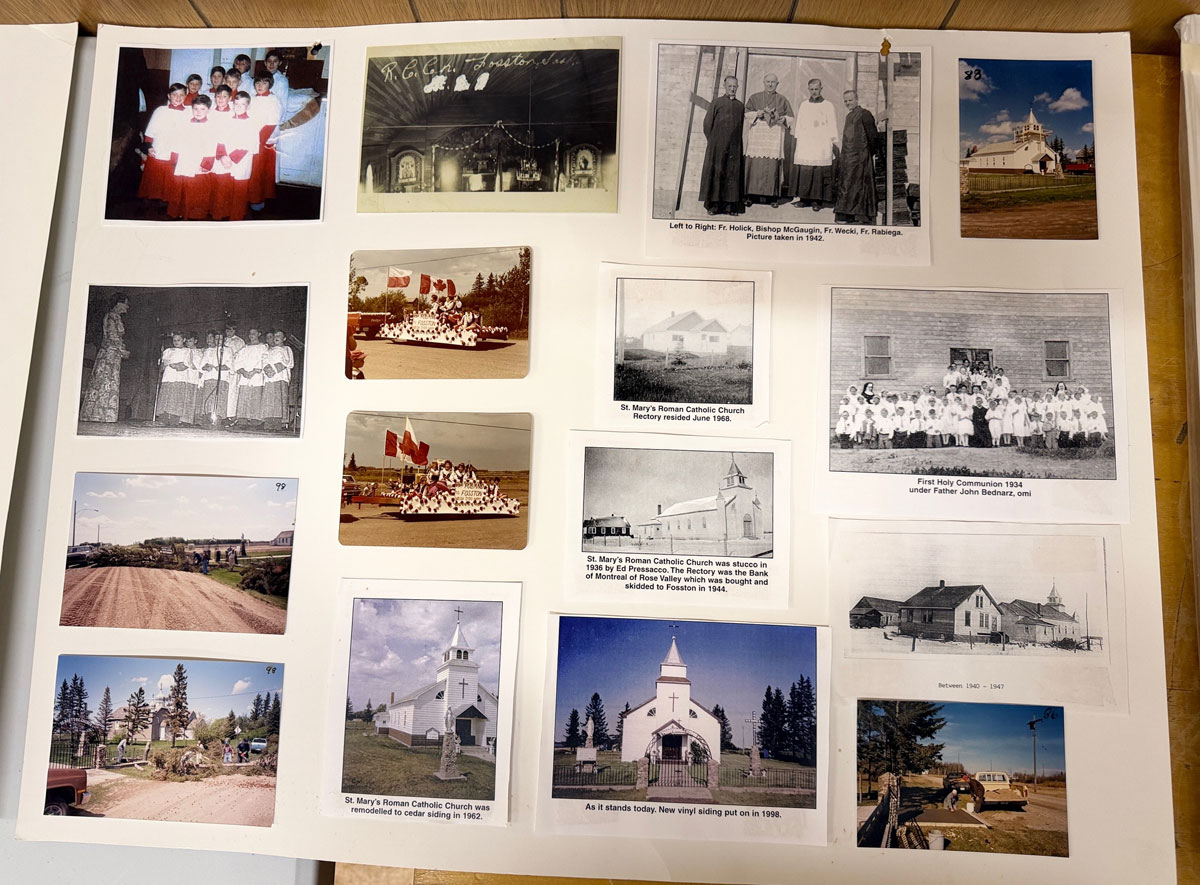
A 90th anniversary celebration for St. Mary, Our Lady Queen of Poland Parish at Fosston, SK was held Nov. 14, 2025. (Photo by Frank Lipinski)
Bishop Mark Hagemoen joined parishioners of St. Mary, Our Lady Queen of Poland Parish at Fosston, SK, in the Wadena Deanery on Nov. 14, 2025 for an evening celebration of 90 years of parish life, witness, and community.
The 90th anniversary celebration included a retrospective look back at the history of the parish, its leaders and ministries.
Parish history
The parish of Our Lady Queen of Poland was established in 1934, serving Catholics in the community, many of whom were of Polish descent, reports the diocesan history book “Building the Church, Living the Gospel” by diocesan Archvisit Margaret Sanche.
The Polish community hall was purchased by the Catholic parish and was expanded and converted for use as the Catholic church. Pastor at the time of the 1934 construction was Fr. John Bednarz, OMI.
A church bell was purchased and installed in 1938. Additional renovations to the building and the worship space were carried out from 1968 to 1973.
The parish at Fosston was part of the Archdiocese of Regina until 1998, when it became part of the Roman Catholic Diocese of Saskatoon.
Oblates of Mary Immaculate (St. Mary and Assumption provinces) served as pastors of St. Mary, Our Lady Queen of Poland Parish from 1934 to 1998, and since then, the parish has been served by diocesan priests.
90th anniversary celebration
The present pastor of St. Mary, Fosston, is Fr. Jerome Ogunleye, dean of the Wadnea Deanery, who also serves as pastor of parishes at Archerwill, Kelvington Lintlaw, Nobleville, Perigord, Rose Valley, and Wadena.
The anniversary celebration included celebration of Mass with Bishop Mark Hagemoen and pastor Fr. Jerome Ogunleye, and Fr. Augustine Osei-Bonsu, the pastor of Wynyard-area parishes in the Wadena deanery. Mass was followed by a program in the hall, and a dinner.
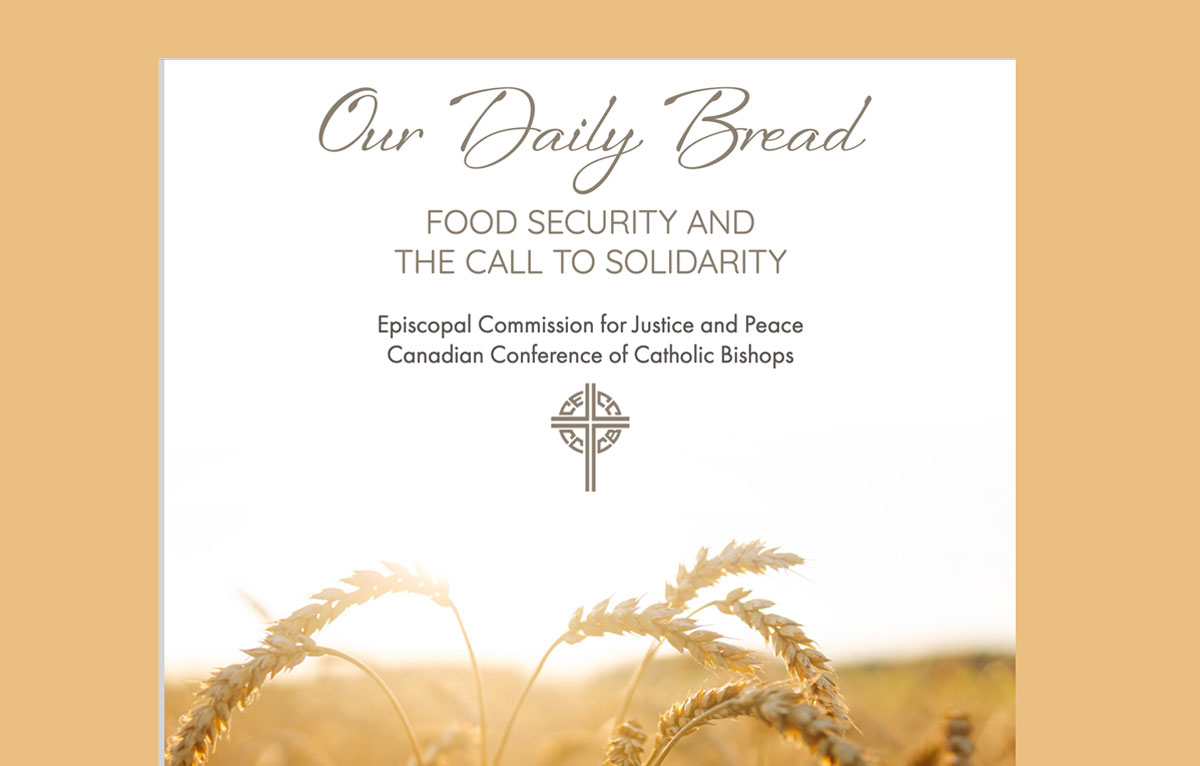
On the World Day of the Poor Nov. 16, 2025, the Catholic Conference of Canadian Bishops (CCCB) released a pastoral letter by the Episcopal Commission for Justice and Peace titled Our Daily Bread: Food Security and the Call to Solidarity.
Centred on the themes of solidarity, harmony, and harvest, the pastoral letter highlights the current challenges to food security, both globally and in Canada. The new document urges Canadian Catholics to consider practical ways they can live in solidarity with those who lack food as well as to ensure that God’s abundant gifts reach all those in need.
“I invite you to reflect on the contents of this letter and to renew our shared commitment to fostering a culture of justice and peace, so that all may have their daily bread,” said Bishop Christian Lépine, Chair of the CCCB Episcopal Commission for Justice and Peace.
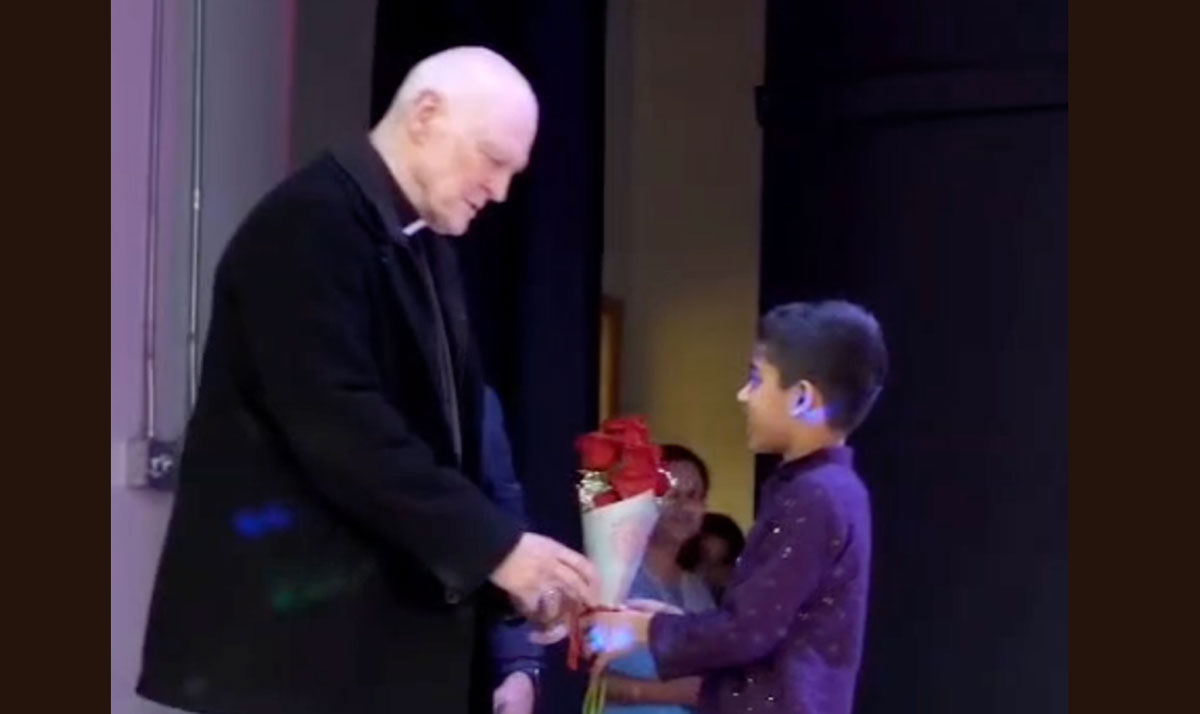
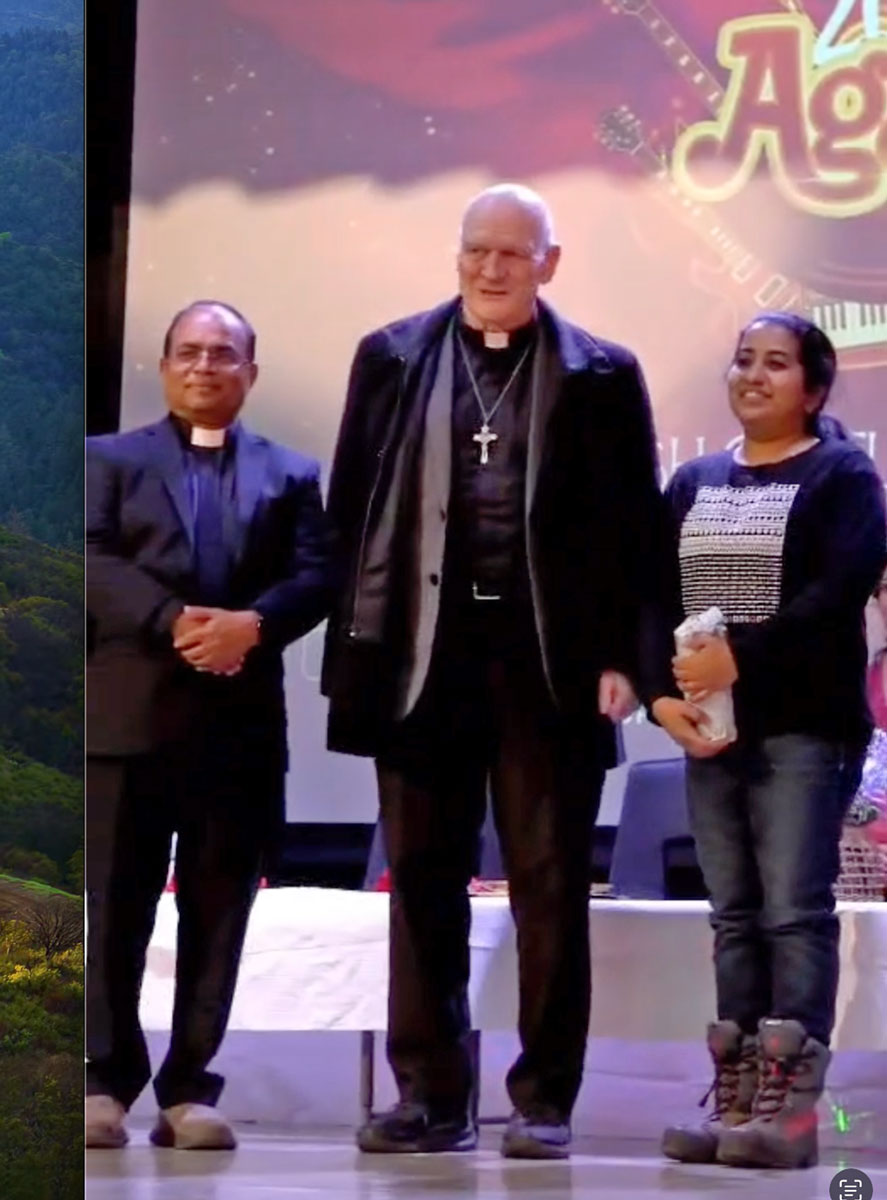
Bishop Mark Hagemoen joined the Syro-Malabar Catholic community as they gathered for a cultural evening Nov. 16 at the community Centre in Warman, SK, north of Saskatoon.
Fr. John Paleethottathil-Kurian serves the Christ the King Syro-Malabar community, which gathers to celebrate Sunday Eucharist each week at St. Michael Parish in Saskatoon.
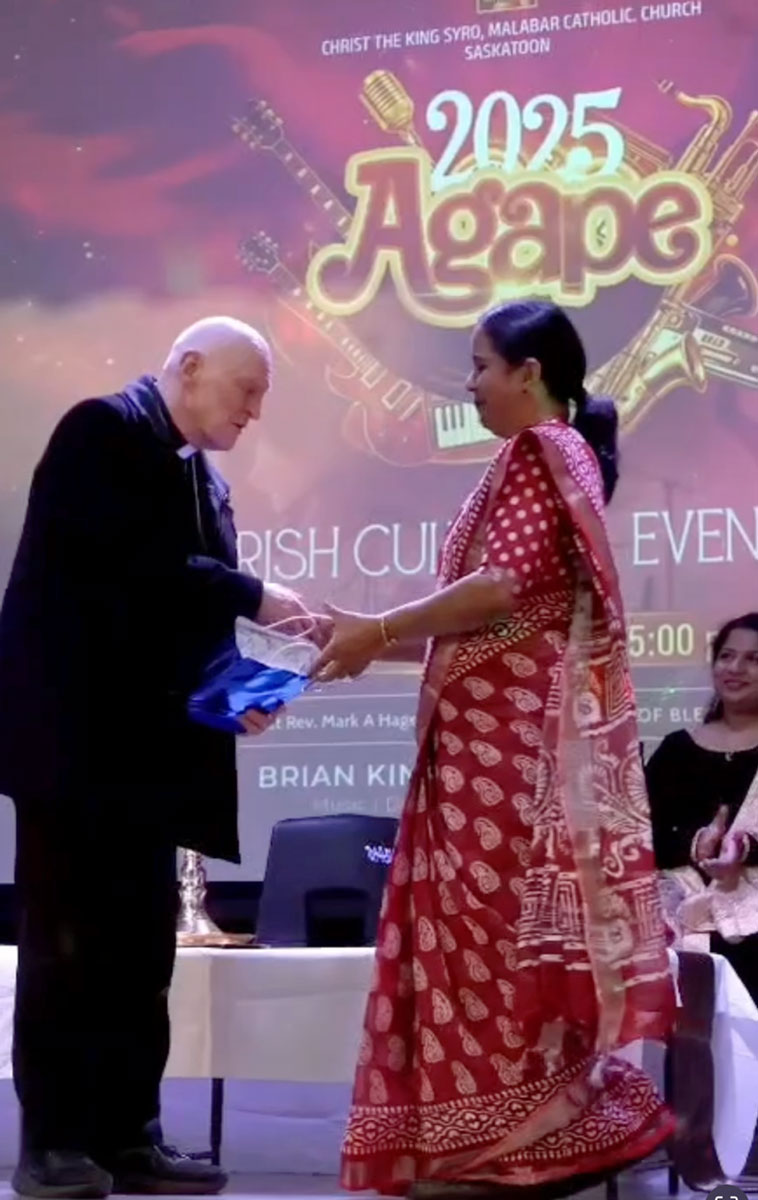
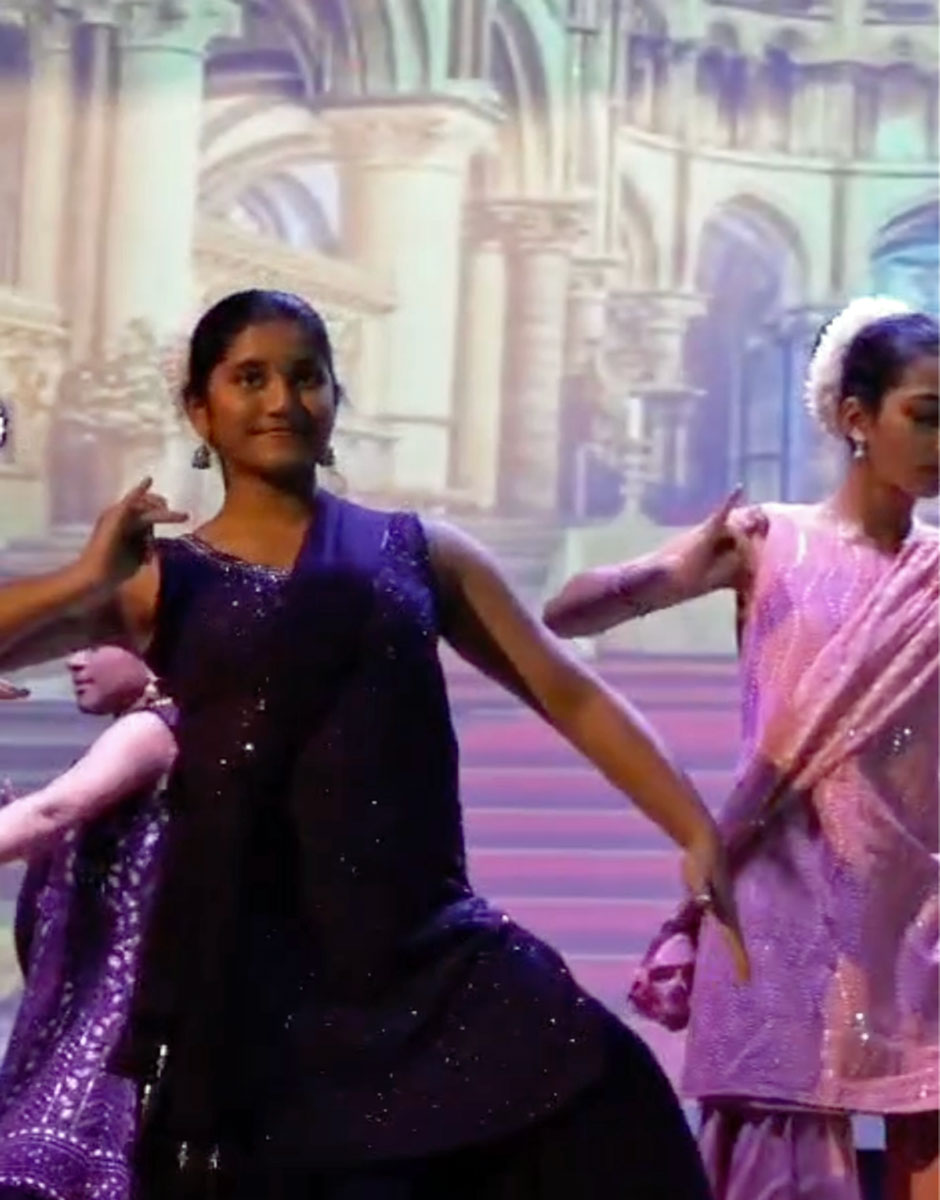
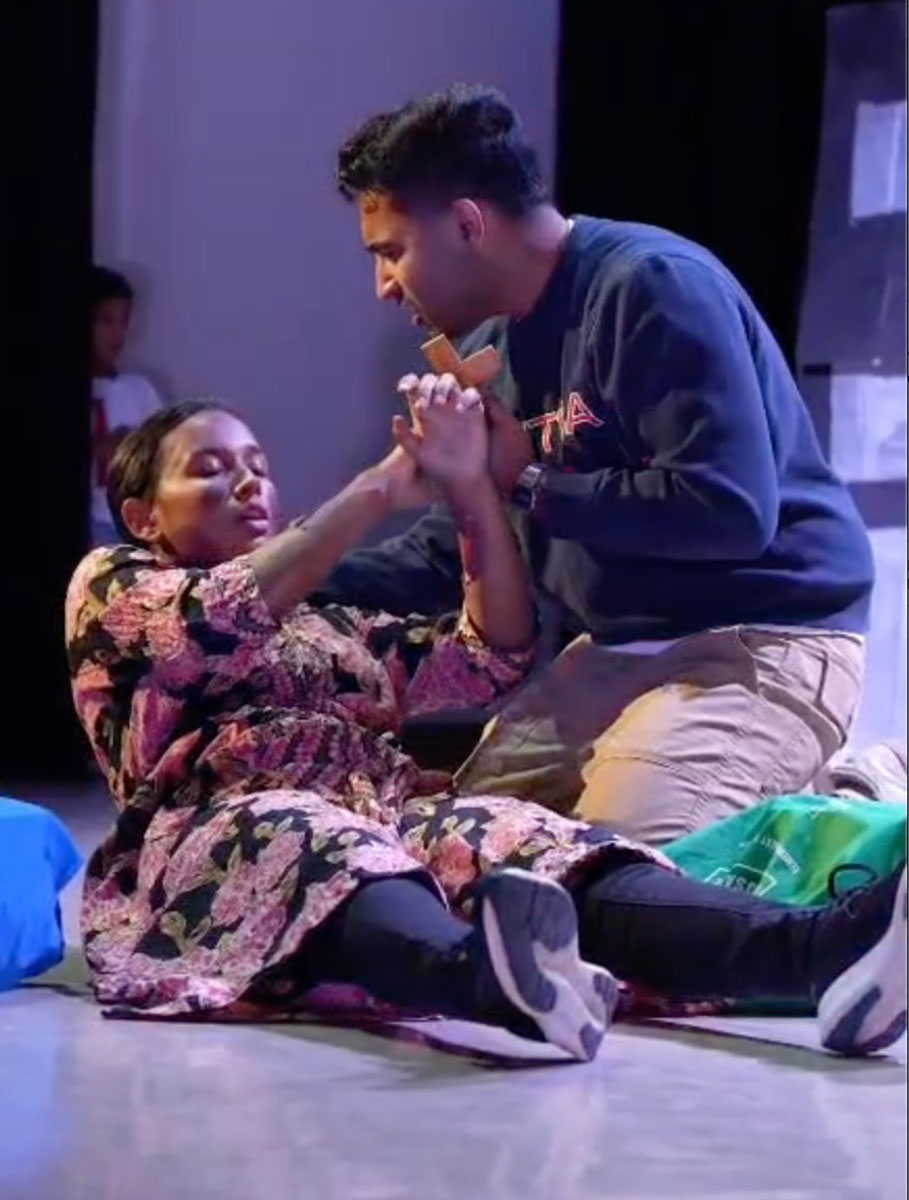
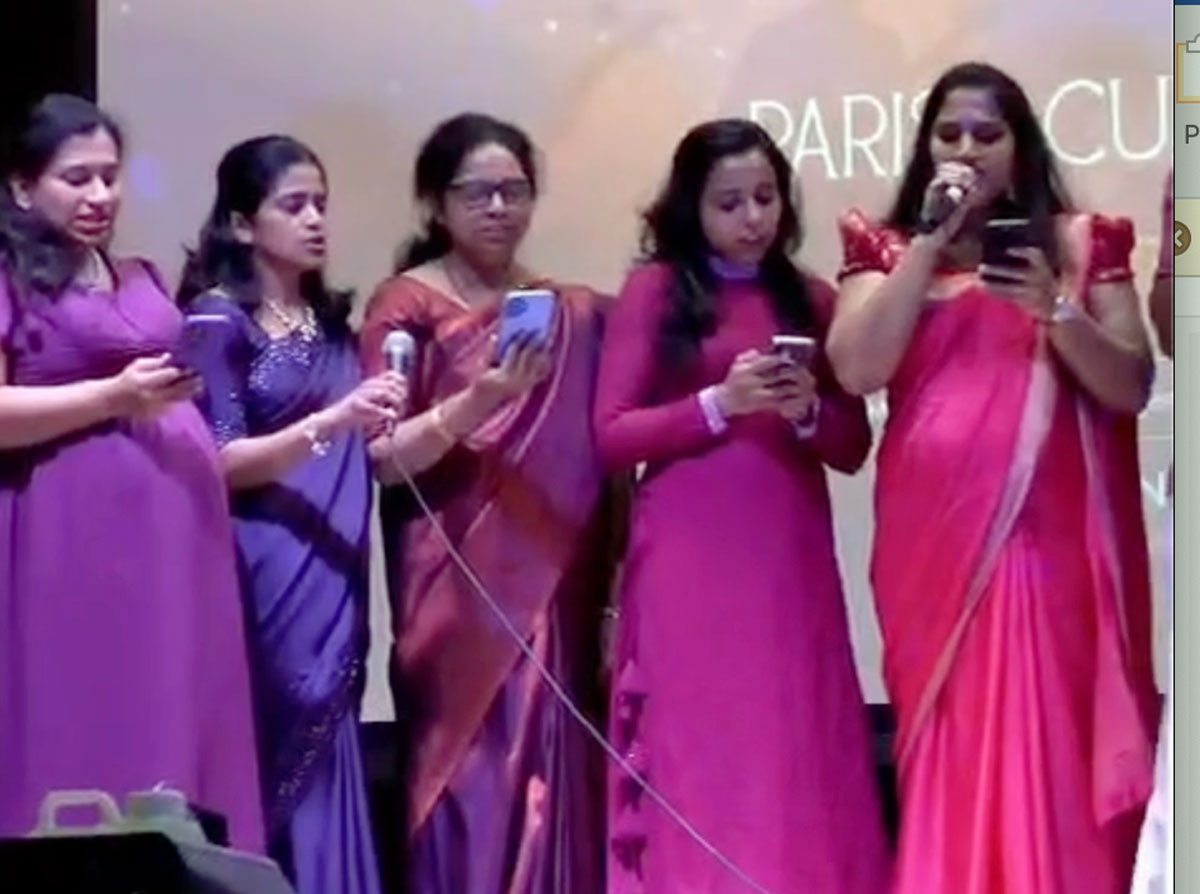
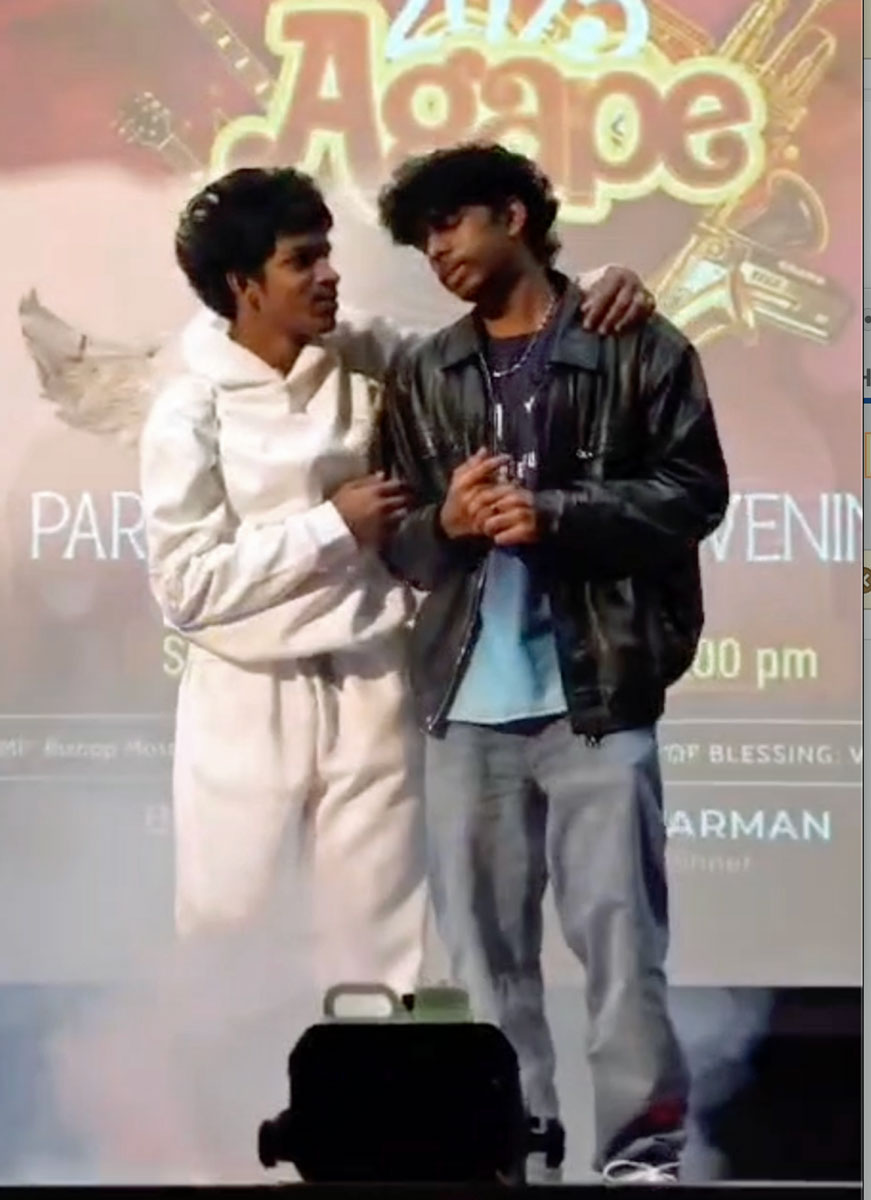
Saskatoon Bishop Mark Hagemoen spoke at the “Agape 2026” cultural celebration that included music, dance, dramatic presentations, speakers, and food.
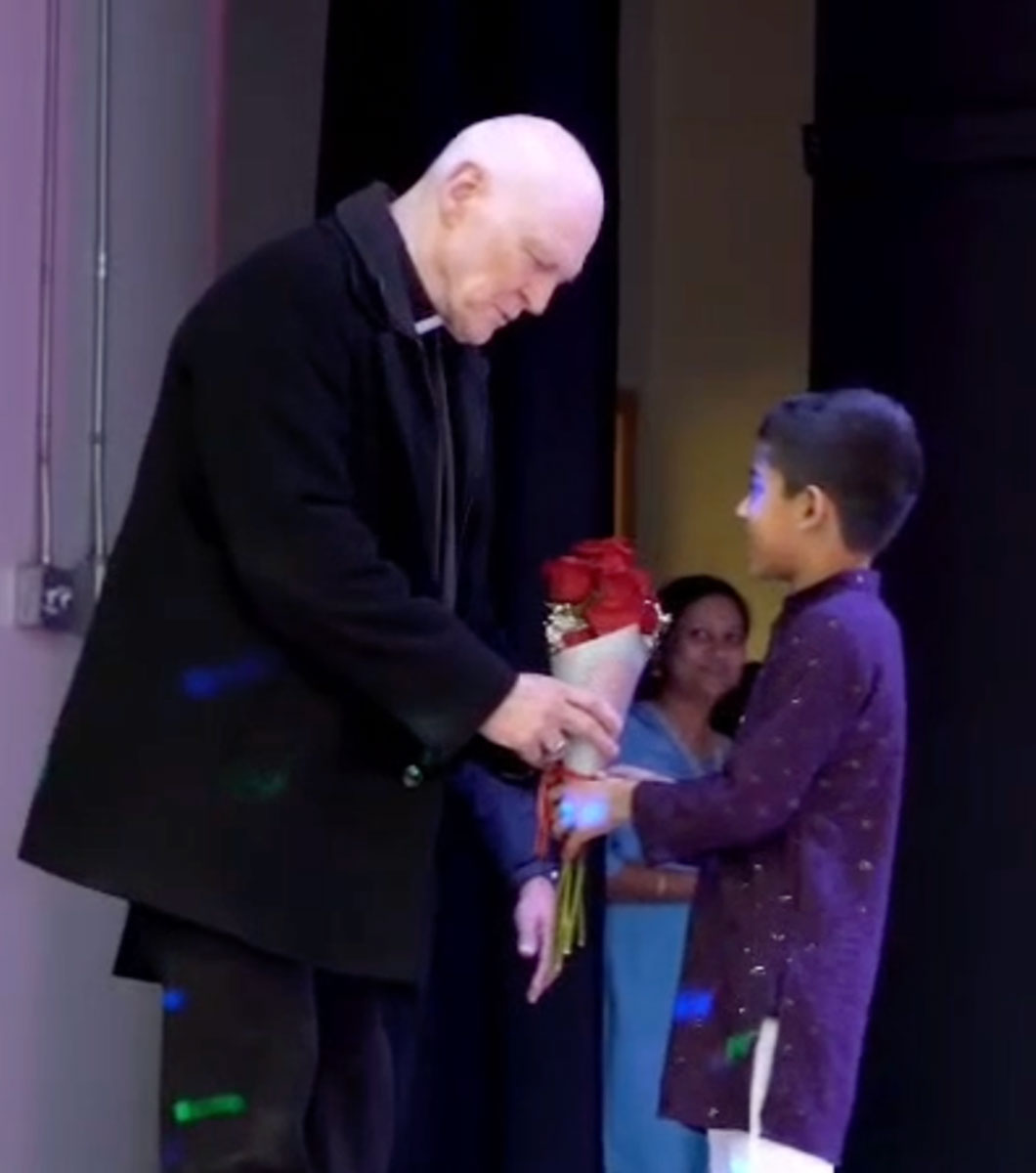
Welcomed with flowers, the bishop reflected on the meaning of the Kingdom of God and the end of the Church year which concludes with the Feast of Christ the King of the Universe, for whom the community is named.
Hagemoen said that it is a blessing how the Syro-Malabar faith community in the diocese of Saskatoon “illustrates how we proclaim Jesus Christ – Christ the King – and the Kingdom of God to the world, through our culture and our identity.”
The bishop thanked the community for how they receive the grace of God and give witness to their faith in the world.
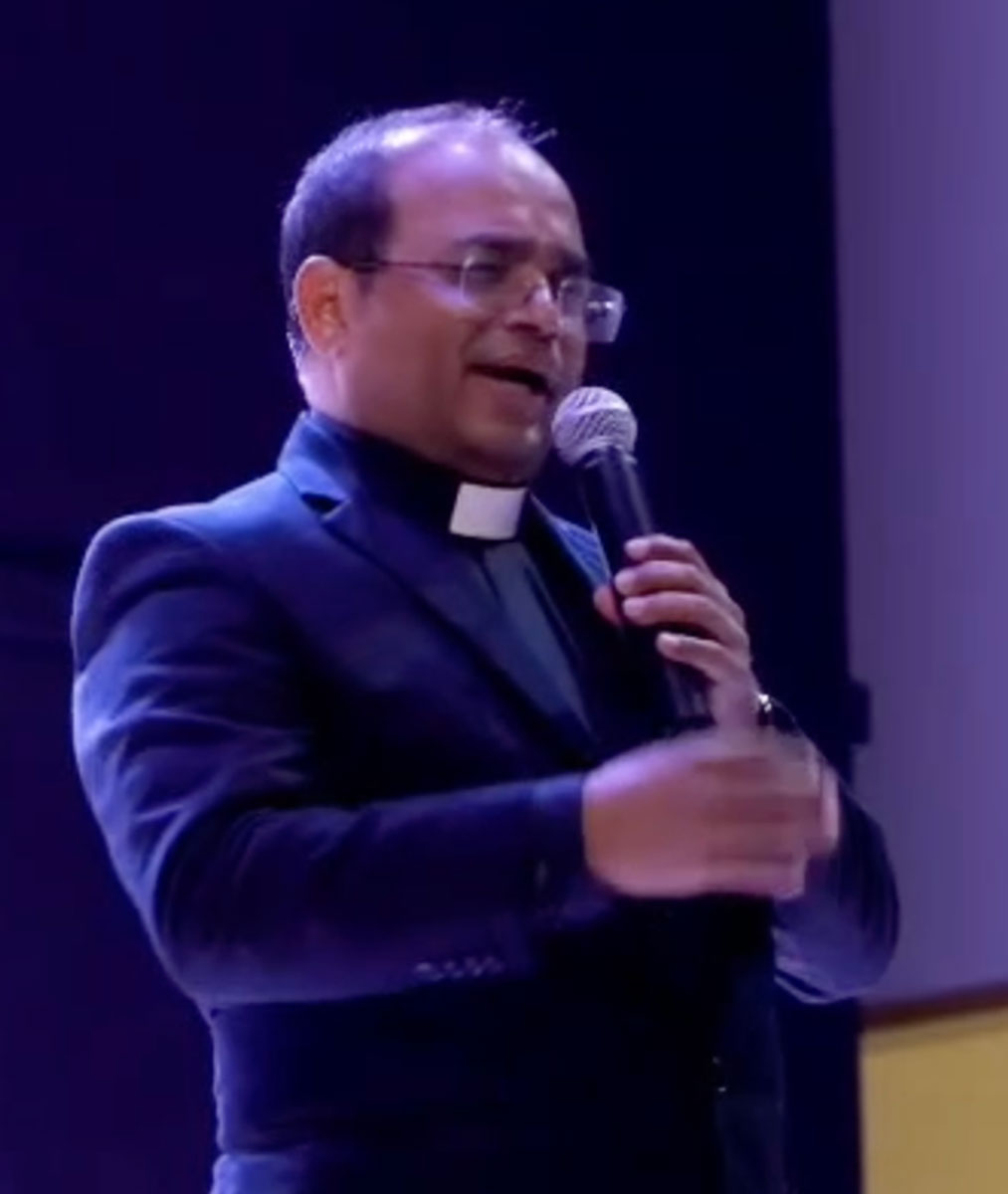
Fr. John Paleethottathil-Kurian at the Agape 2026 celebration. (Submitted photo)
Bishop Mark Hagemoen thanked the Syro-Malabar faith community for their witness in the world. (Submitted photo)
(Submitted photo)
The cultural evening included dance, music and dramatic presentaitons. (Submitted photo)
Saskatoon Bishop Mark Hagemoen has announced the launch of the diocese’s synod implementation phase.
“Synodality is NOT a program or method, but rather a way of being Church… and therefore it calls us all to conversion because it entails a change of mindset and a way of being Church together.” – Summary about Synod Implementation in the Diocese
The Implementation Phase of the SYNOD on SYNODALITY
Dedication of the Lateran Basilica, Sunday, Nov. 9
The Celebration of Our Participation in the Life, Passion, Death, & Resurrection of the Lordship of Jesus Christ.
Do you not know that you are God’s temple and that God’s Spirit dwells in you? – (I Corinthians 3:16)
Dear Sisters and Brothers of the Diocese of Saskatoon:
This year of the Jubilee Pilgrimage of Hope has seen the death of Pope Francis and the election of Pope Leo XIV. One pope started us on this pilgrimage journey of hope – which also features the call to be a more synodal church. And now Pope Leo has confirmed this call and work. At a recent Jubilee of Synodal Teams, Pope Leo said that synodality will “help the church fulfill its primary role in the world, which is to be missionary, to announce the Gospel, to give witness to the person of Jesus Christ in every part of the world, to the ends of the earth.”
This is, of course the mission of the Church at every level, and in every setting! Synodality is indeed a way of walking our journey of missionary discipleship in unity with Jesus Christ, inspired and led by the Holy Spirit. In this walk, we are inspired by the Synod on Synodality that has listened in the Spirit to the voices of people from around the world over a multi-year process of discernment. The Final Document released by the Synod of Bishops calls for intentional focus and an ongoing journey of conversion to become a more synodal church of communion, participation and mission – and the Holy Father is now asking dioceses around the world to implement this synodal vision.
Thus, I am pleased as your bishop to announced the “implementation phase” of the synodal process for the Roman Catholic Diocese of Saskatoon. Our implementation phase will feature the following:
Firstly, we will continue the conversations in the Spirit that have happened to date at the local and diocesan levels about the meaning and practical features of synodality.
Secondly, we will link the implementation features of synodality to our Diocesan Pastoral Plan. We have put a lot of prayer, discernment, and work into this plan – which has been a source of renewal and focus for all of our diocese. However, the pastoral plan can be greatly improved by being infused with the spirit of synodality – just as the Beatitudes (see Mathew 5: 1-16) bring life and character to living out of the Gospel.
Thirdly, as we conclude the Jubilee Year of Hope, we also look to another coming great event: The 2000th anniversary in 2033 of the Resurrection of Christ and the Great Commission. What a remarkable and unprecedented opportunity for the celebration of the very reason for our hope, and the basis for mission. I pray this upcoming time will be a real time of deepening conversion for all of us called to the mission of Jesus Christ to save and bless His people.
Fourthly, this implementation phase is being announced for our diocese on the Feast of the Dedication of John Lateran Basilica – a day when the Church celebrates the great temple and Pope’s cathedral church as the mother church for all the world. It is also a day when we are reminded – as missionary disciples of the Lord Jesus Christ – of His call to us all to be His temples in and for the world. As St. Caesarius of Arles, bishop, states, “…we are to be the true and living temple of God… let the light of good works shine in us … God wishes to enter in to our souls, for He promised: I shall live in them, and I shall walk the corridors of their hearts.”
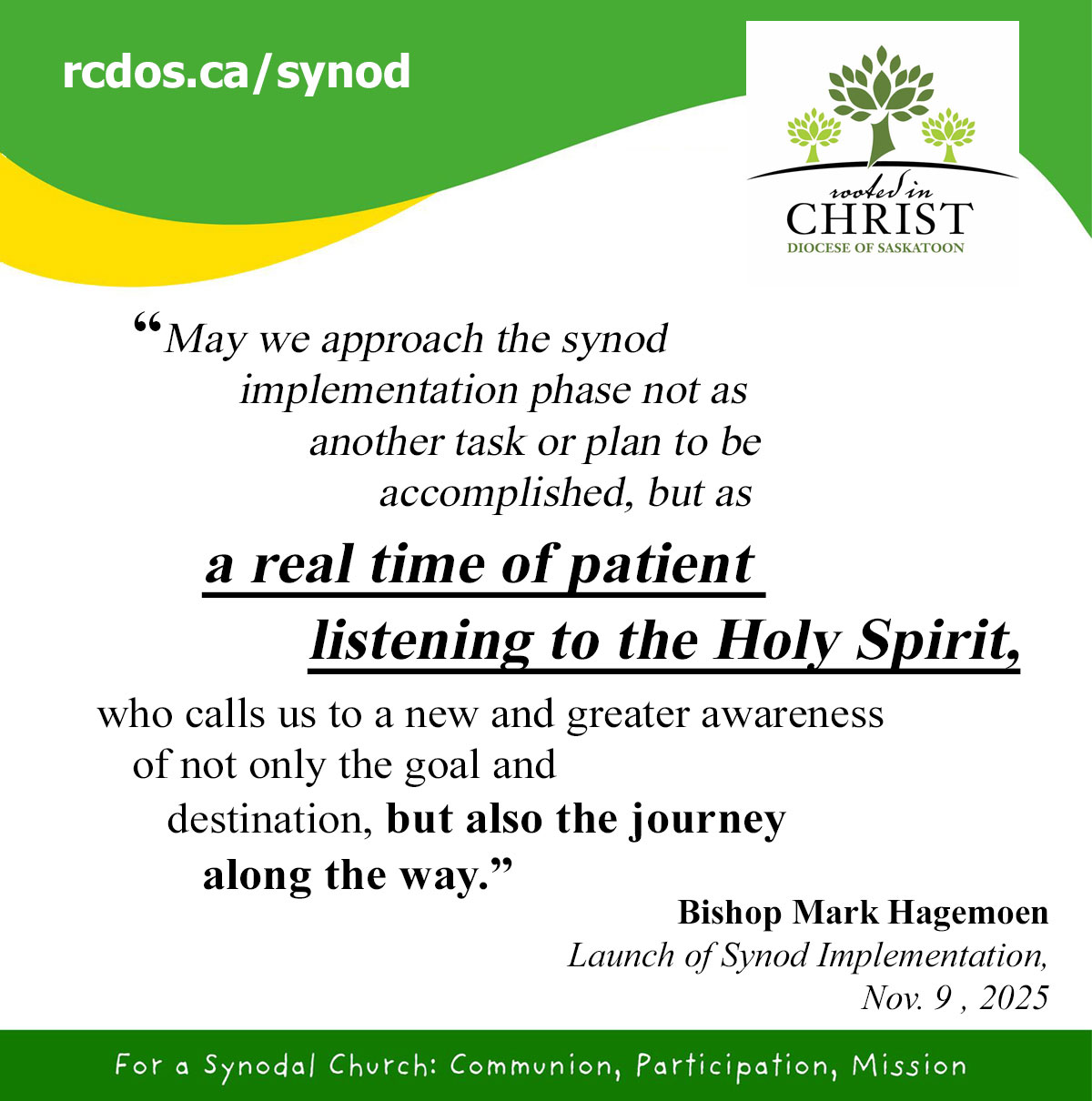
May our synod implementation plan help each of us to be better temples of the life of God – within ourselves – and for our parishes, diocese and larger communities. May we approach the synod implementation phase not as another task or plan to be accomplished, but as a real time of patient listening to the Holy Spirit, who calls us to a new and greater awareness of not only the goal and destination, but also the journey along the way.
I conclude with this inspiration from St. Mother Teresa – who is a great teacher about the synodal features of empathy and attentive listening: “We are called to be contemplatives in the heart of the world by seeking the face of God in everything, everyone, everywhere, all the time, and His hand in every happening.” (St Teresa of Calcutta)
Sincerely, in Christ,
Most Reverend Mark A. Hagemoen, Bishop of Saskatoon
“A SYNODAL WAY of Proclaiming Christ and God’s Kingdom Today”
Background about the implementation phase of the Synod on Synodality in the Roman Catholic Diocese of Saskatoon – November 2025
In communion with the Holy Father Pope Leo XIV and the universal Catholic Church, Bishop Mark Hagemoen is officially launching the implementation phase of our diocese’s synodal journey on Sunday, Nov. 9, 2025. The guiding document for this phase of the Synod on Synodality is the Final Document from the Second Session of the 16th Assembly( “For a Synodal Church: Communion, Participation, Mission” – FD) along with the supporting document, Pathways for the Implementation Phase of the Synod.
Synodality is NOT a program or method, but rather a way ofbeing Church‘modus vivendi et operandi’ (FD #30) and part of “…her proper identity” ( FD#31), and therefore it calls us all to conversion because it entails a change of mindset and a way of being Church together (FD #33)
In deepening synodality in the life of our diocese, our parishes, and among all the baptized, our diocesan pathway will include:
Continuing to reflect upon – and practice – the Conversations in the Spirit from the synodal listening sessions held throughout our diocese and the whole world during the Synod on Synodality 2021-2024.
Proceeding with the ongoing implementation of our Diocesan Pastoral Plan to “Proclaim Christ and God’s Kingdom Today” by intentionally focusing on our priorities and goals through the lens and practice of synodality.
Finding renewed ways to come together to pray, discern, listen to the Holy Spirit and listen to one another as we seek some practical ways to make the existing programs and structures more synodal in practice and in approach.
“The synodal form of the Church is at the service of its mission, and any change in the life of the Church is intended to make it more capable of proclaiming the Kingdom of God and witnessing to the Gospel of the Lord to the men and women of our time.” – Cardinal Mario Grech, Pathways for the Implementation Phase of the Synod.
The supporting resource Pathways for the Implementation Phase of the Synod provides a framework for our diocese to reflect on and implement pastoral strategies, that emphasize: exploring the Gospel, ways of sharing our faith, and creating more synodal practices. This would include: exploring decision-making and governance structures that focus on the church’s mission; broader sharing of ideas and experiences that emphasize evangelization and mission; pursuing formation in listening and accompaniment; and developing strategies at the parish level that include synodality and listening that enhance and create “communion, participation, and mission.” The process is also supported by a timeline (including an evaluation process) with a view to a larger ecclesial assembly in October 2028.
Key implementation pathways:
Discerning ways of Ministry and Service:
We commit to exploring and developing ways of discernment that contribute to good decision-making, include listening to each other, and working together in parishes and dioceses, grounded in the Word of God and attentive to the Holy Spirit. This includes exploring and developing forms of service and ministry that respond to pastoral needs.
The Focus on Mission:
We will strive to ensure that structural changes help the Church better serve the local context and the world in sharing the Gospel message of hope.
Sharing Ideas:
Parishes will be encouraged to engage with and learn from each other’s challenges and accomplishments through the exchange of ideas, resources, and charisms (gifts of the Holy Spirit).
Impacting and Renewing Personal and Communal Life:
The goal is to undertake concrete developments and changes that affect people’s everyday lives in the parish, rather than only writing theoretical plans. This involves the renewal of parishes in a synodal way, grounded in listening, belonging, and a missionary spirit.
Support and accountability
Participatory Bodies:
Ensuring that the diocesan and parish leadership and ministry bodies are reflecting on their own operating methods, and that these are renewed in a synodal way.
Bishop’s Role:
The diocesan bishop is entrusted with the ecclesial leadership responsibility for initiating, guiding, and concluding the implementation phase within the diocese.
Related Formation and Skills:
Forming people in listening, discernment, and facilitation skills to support ongoing listening and conversation.
Widely Participatory:
Engage with a wide range of people, including those on the margins and those who may not have been fully involved.
Evaluation:
The process is structured to include ‘evaluation assemblies’ at the diocesan level in the first half of 2027, and at the continental level in the first half of 2028.
NOTE: Materials and updates related to the diocese’s implementation phase will be available at: https://rcdos.ca/synod.
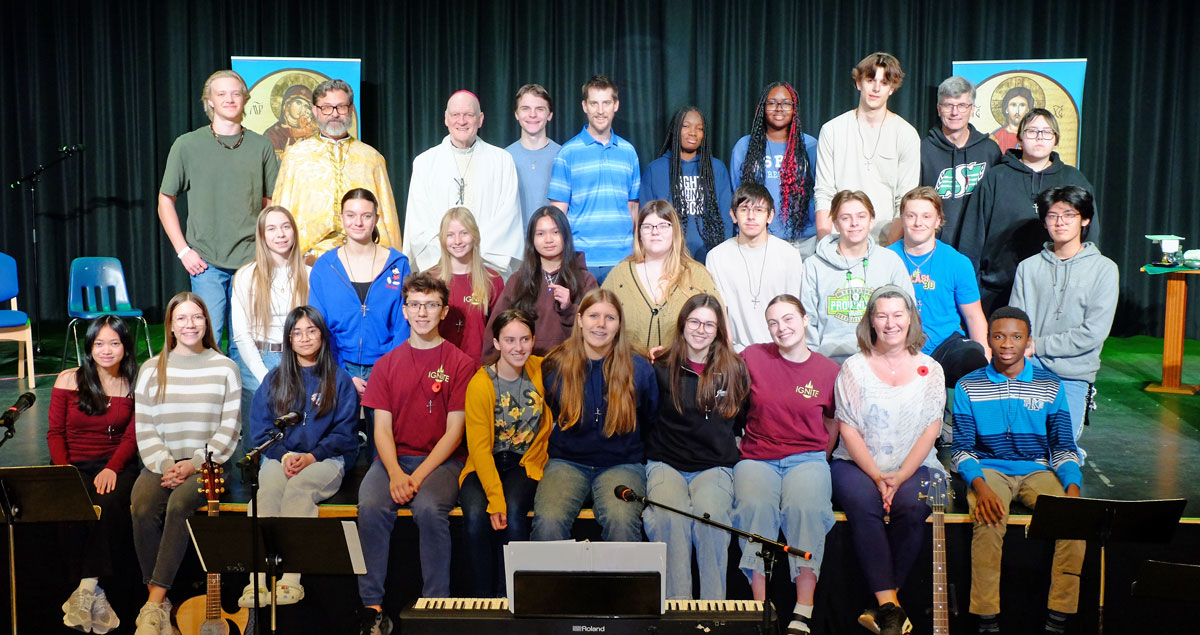
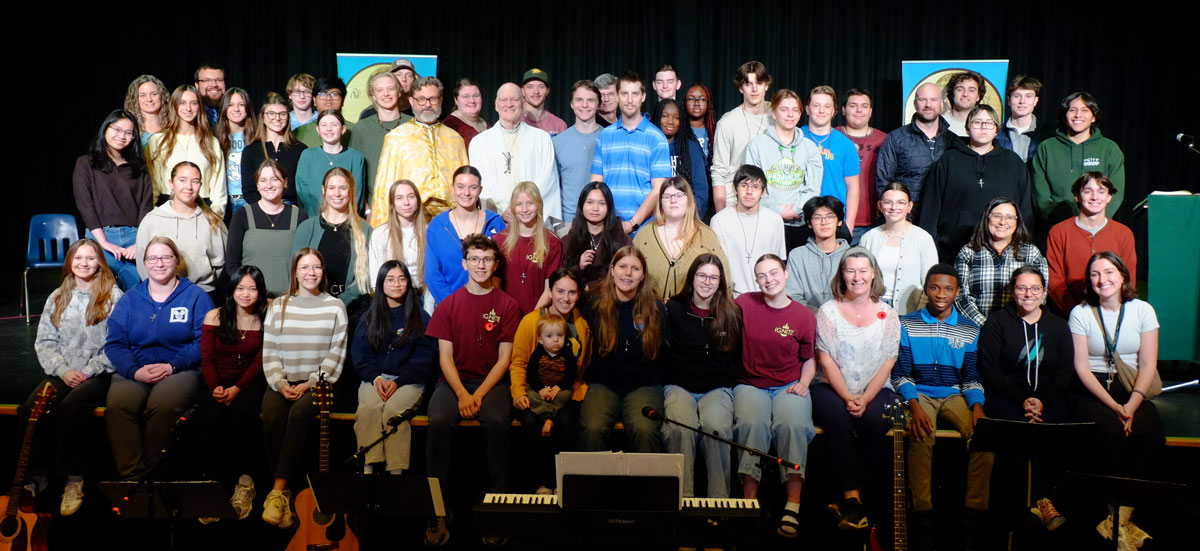
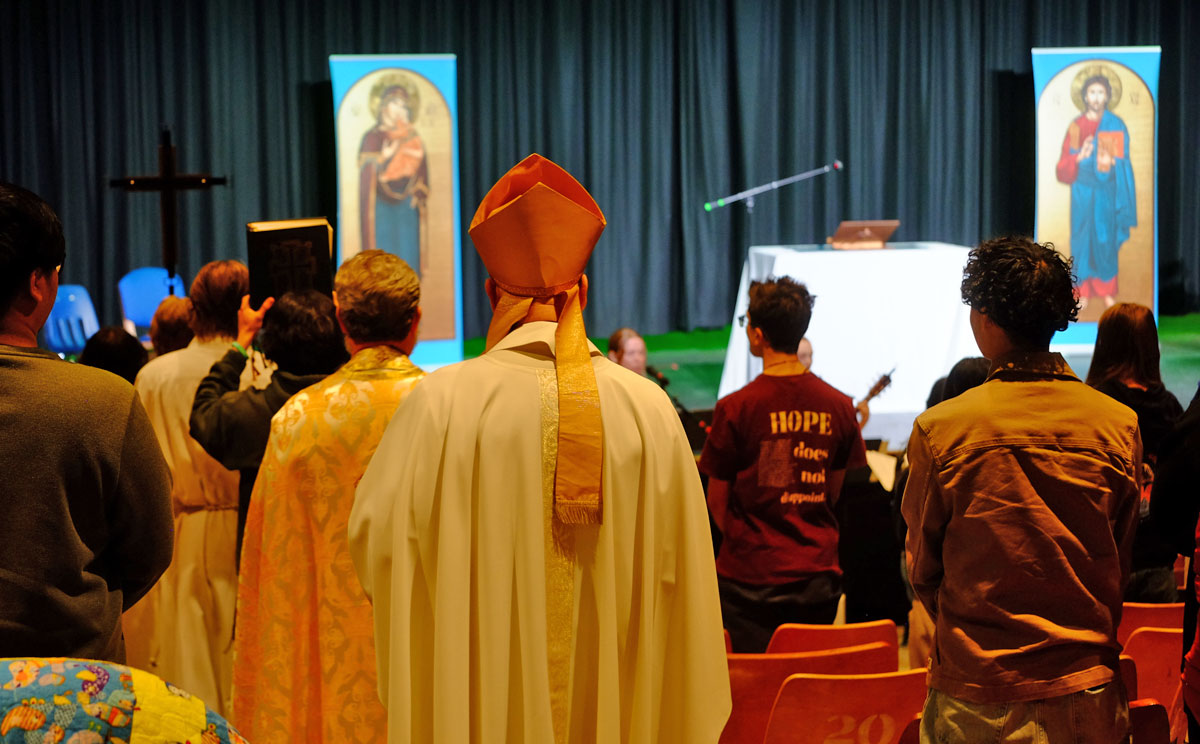
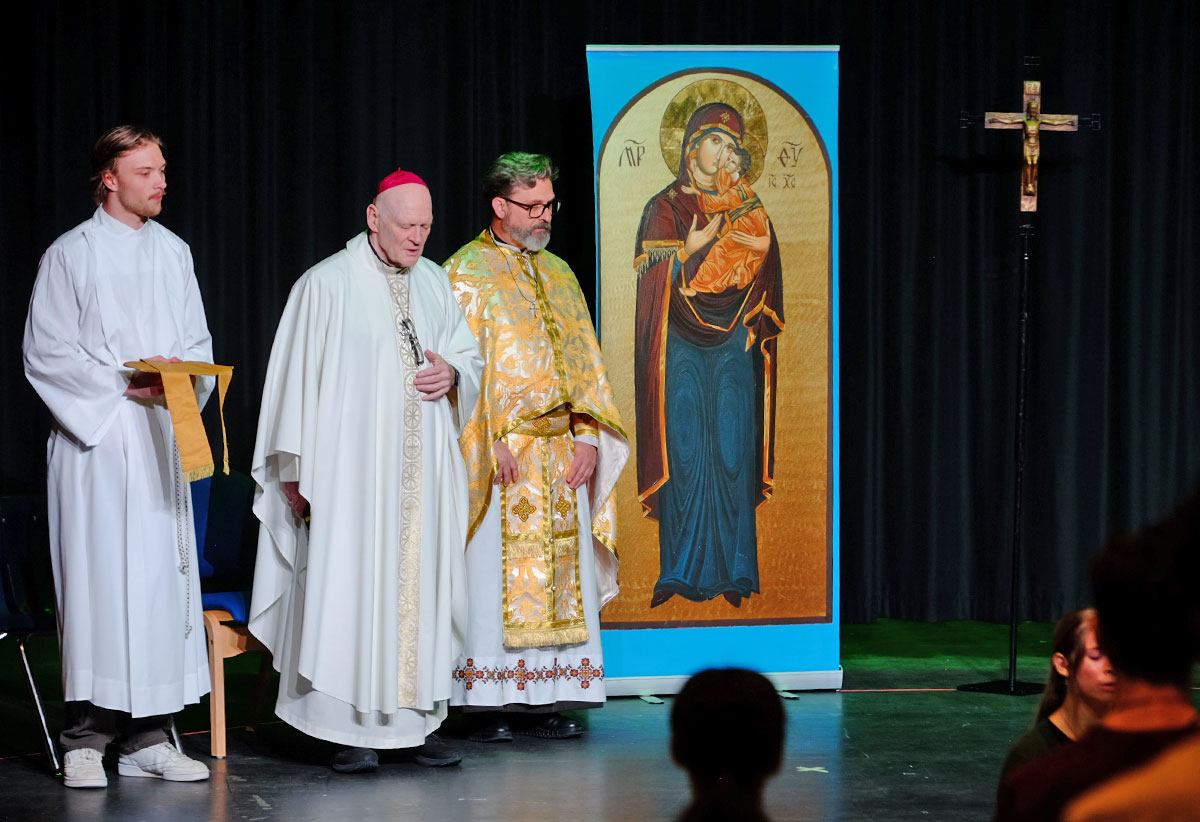
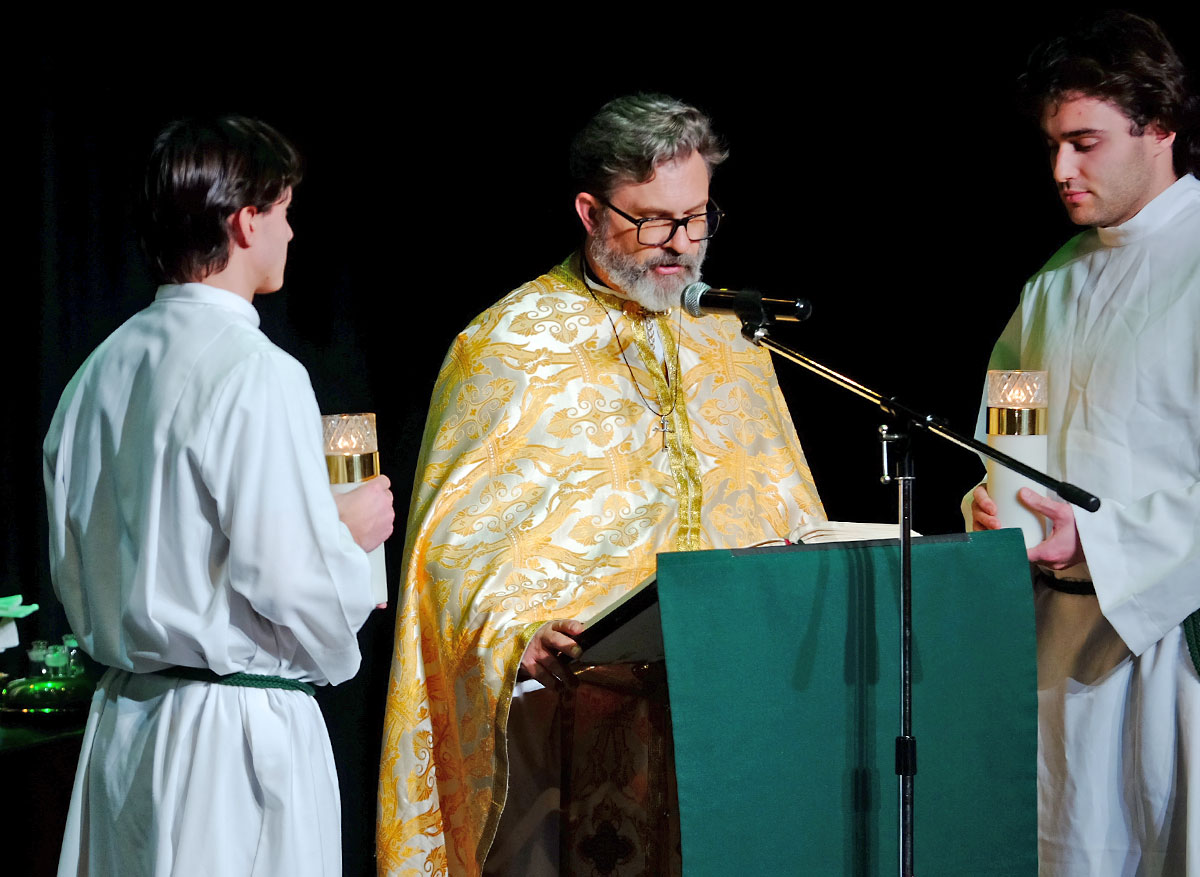
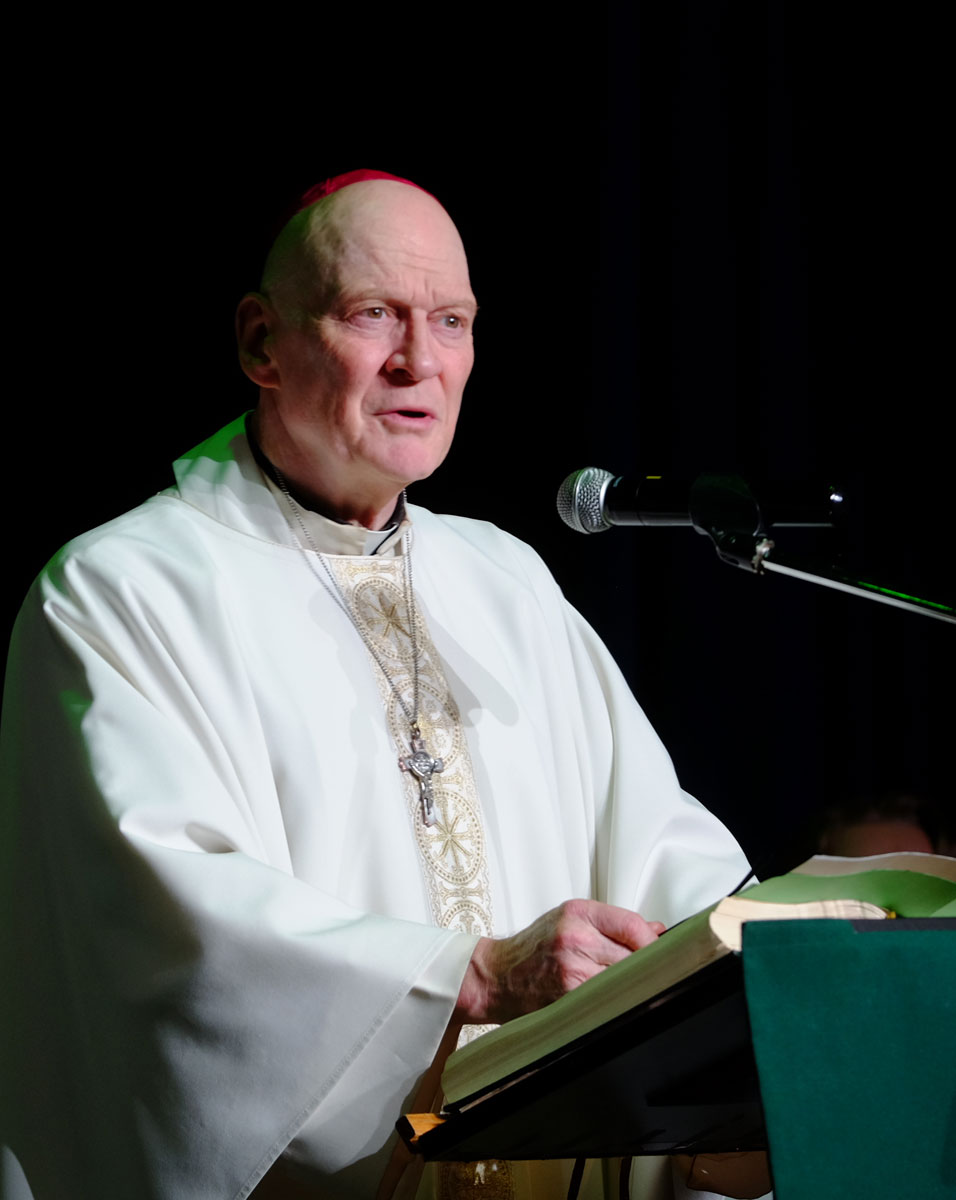
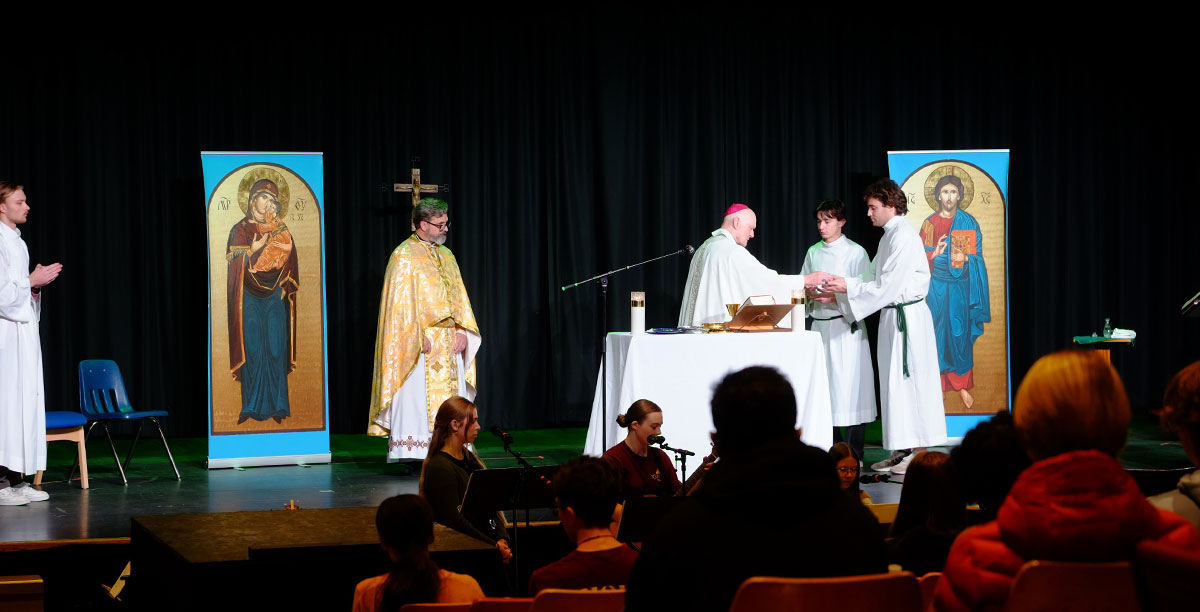
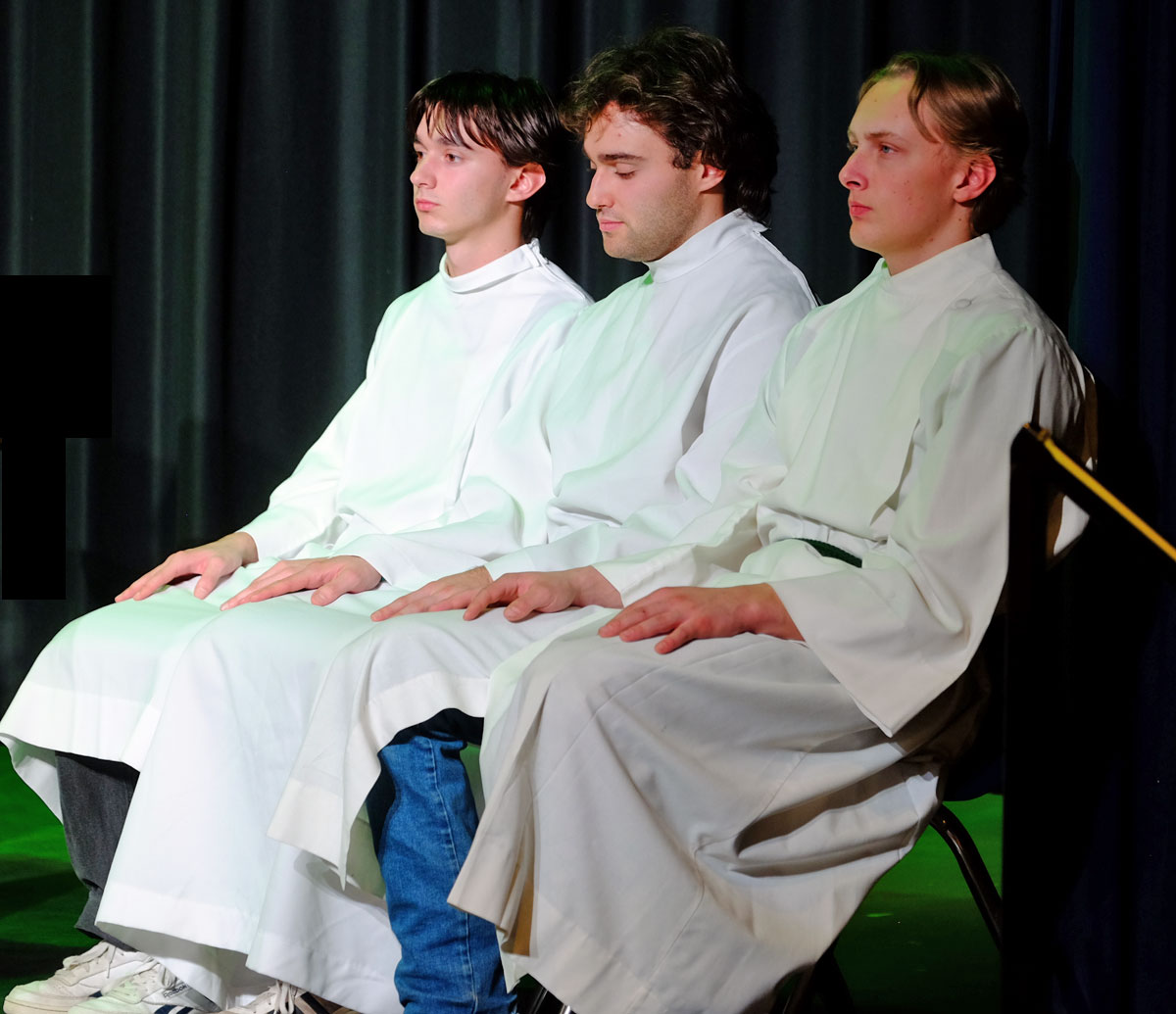
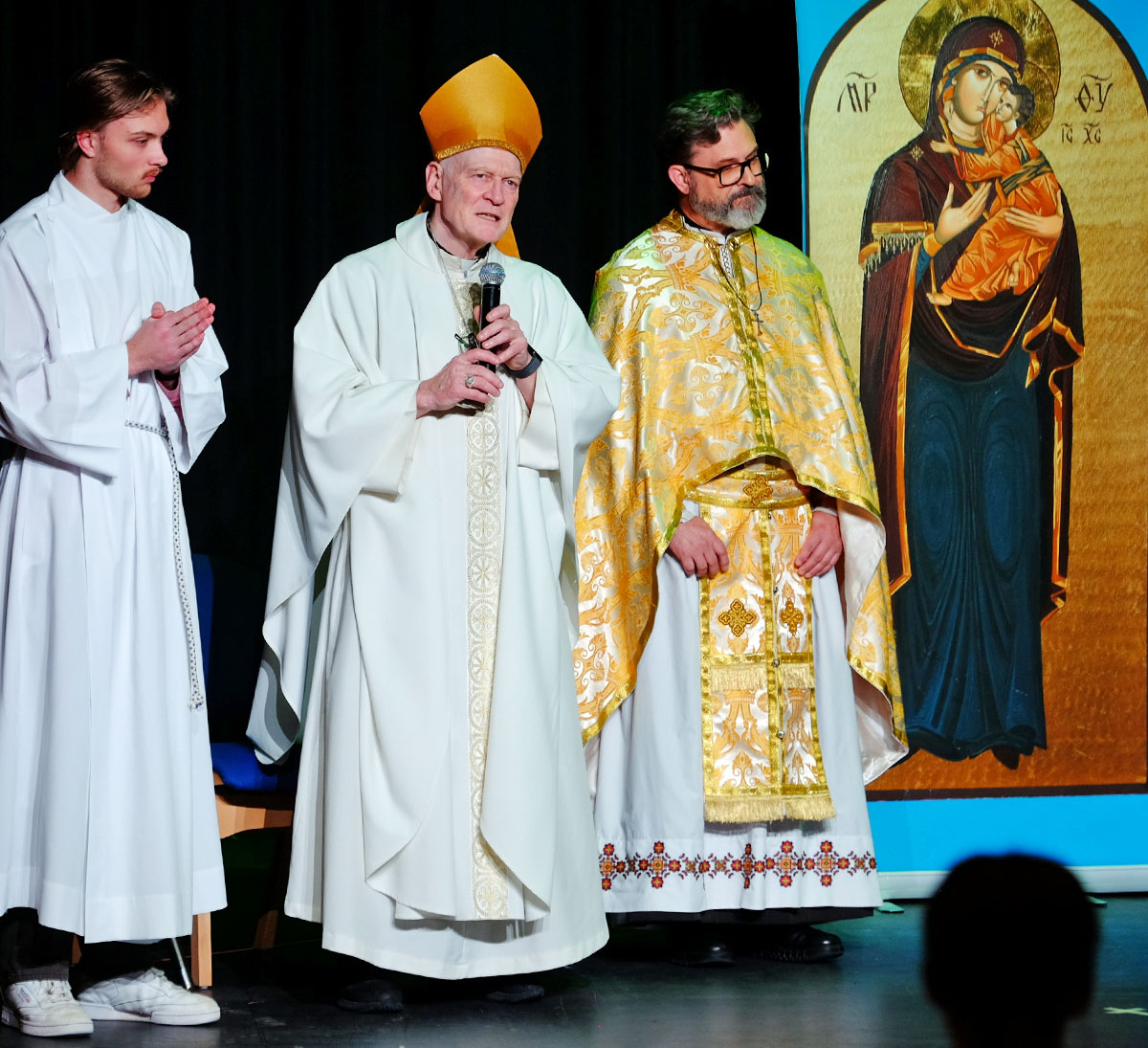
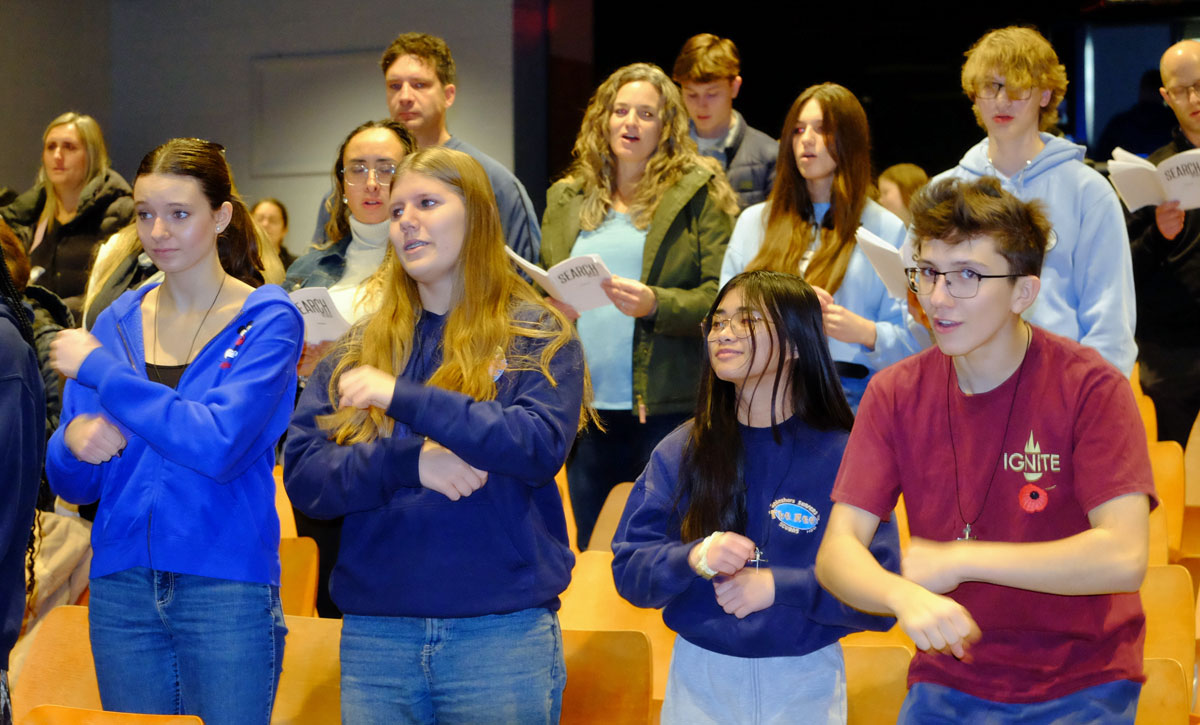
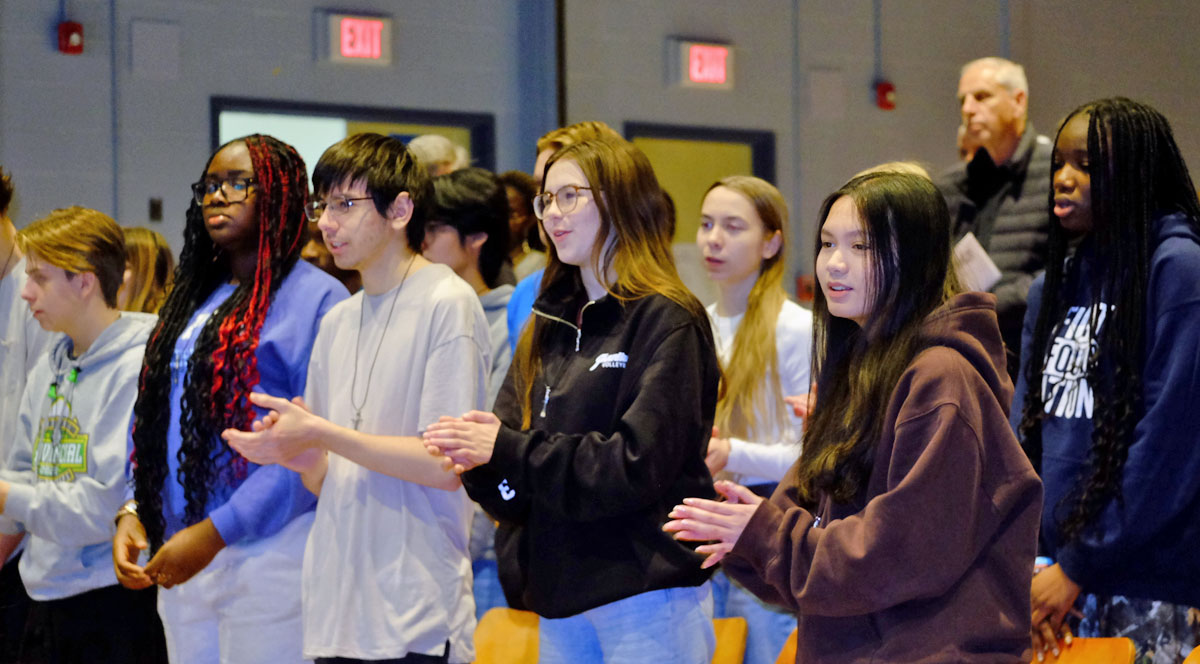
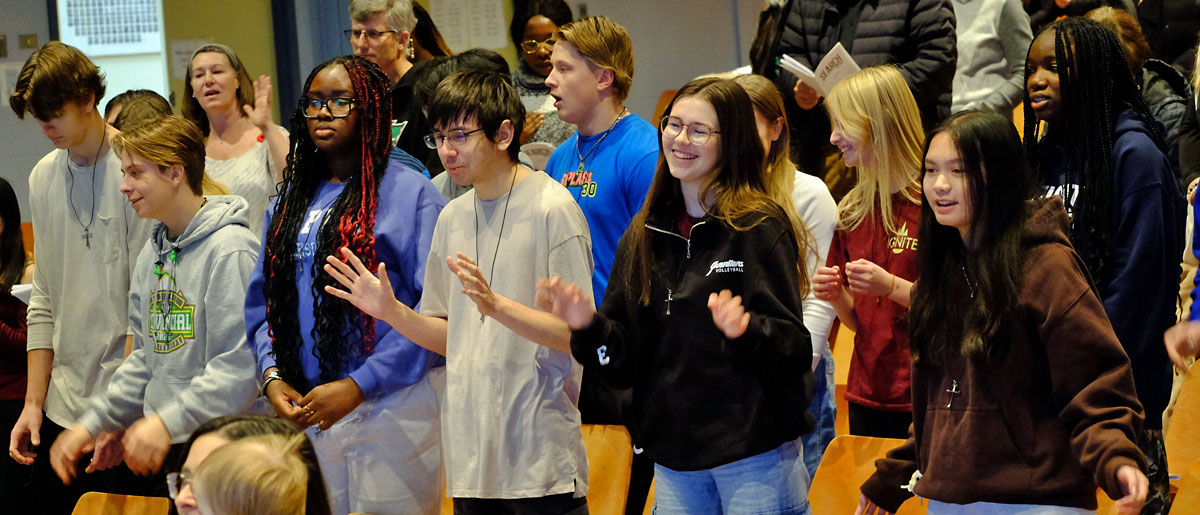
Youth in Grades 10-12 gathered Nov. 7-8 for a Search retreat focused on the love of God and deepening a relationship with Jesus Christ. Bishop Mark Hagemoen and Rev. Gregory Hrynkiw celebrated the closing Mass with participants, family members, leaders, presenters, and volunteers to conclude the Search weekend. (Photo by Kiply Lukan Yaworski, Catholic Saskatoon News)
.
At a closing Mass for the Search youth retreat Nov. 9, Bishop Mark Hagemoen affirmed participants in their baptismal call to be missionary disciples.
“I hope this weekend has been a journey to allow God to dwell in you in a bigger and broader way,” Hagemoen said, reflecting on scriptures for the Feast of the Lateran Basilica.
“As wonderful and beautiful and massive as this great basilica in Rome is, what we hear from the Word of God, is that in all its splendour and wonder, it is nothing compared to the temple that God sees in each of you,” he said
“You are young yet, but you are growing … it is exciting to have new young men and women who are called by God to make a meaningful difference with their lives in the world.”
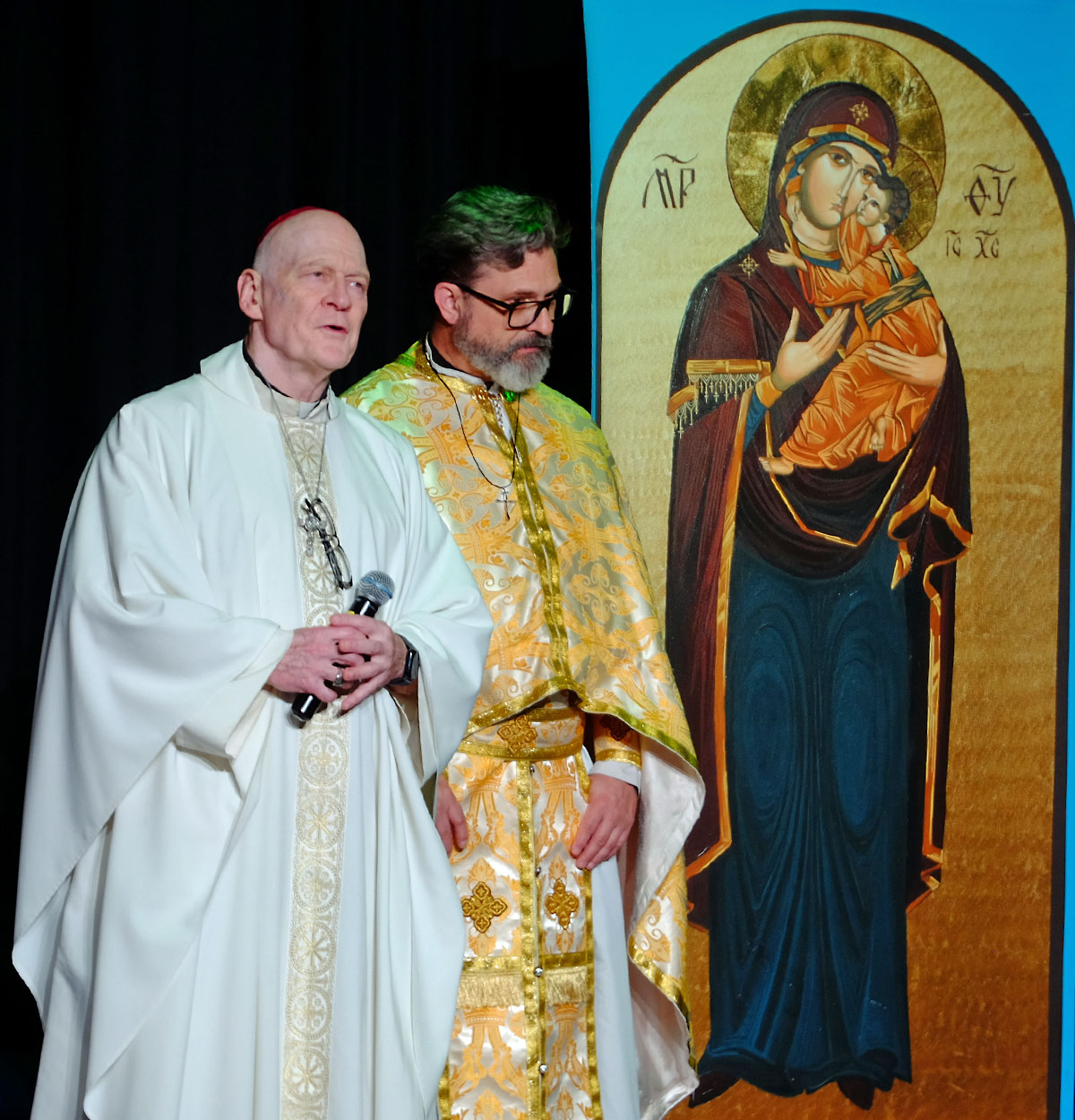
Fr. Gregory Hrynkiw of the Ukrainian Catholic Eparchy of Saskatoon — who spent time at the Search retreat Nov. 9-11 along with Fr. Gregory Roth of Saint Anne Catholic Parish — also spoke at the closing Mass, echoing St. John Paul II’s words from his 1984 visit to Winnipeg: “Resist the wind — but do not resist the Spirit!”
“We are immersed in the Trinity, in that water that flows from the temple … the living water flowing from the temple, the throne of the Lamb… it becomes fruitful, but it also becomes the healing of all nations. That’s your goal just to be a receptacle of that Living Water, to let it flow through you,” Hrynkiw said.
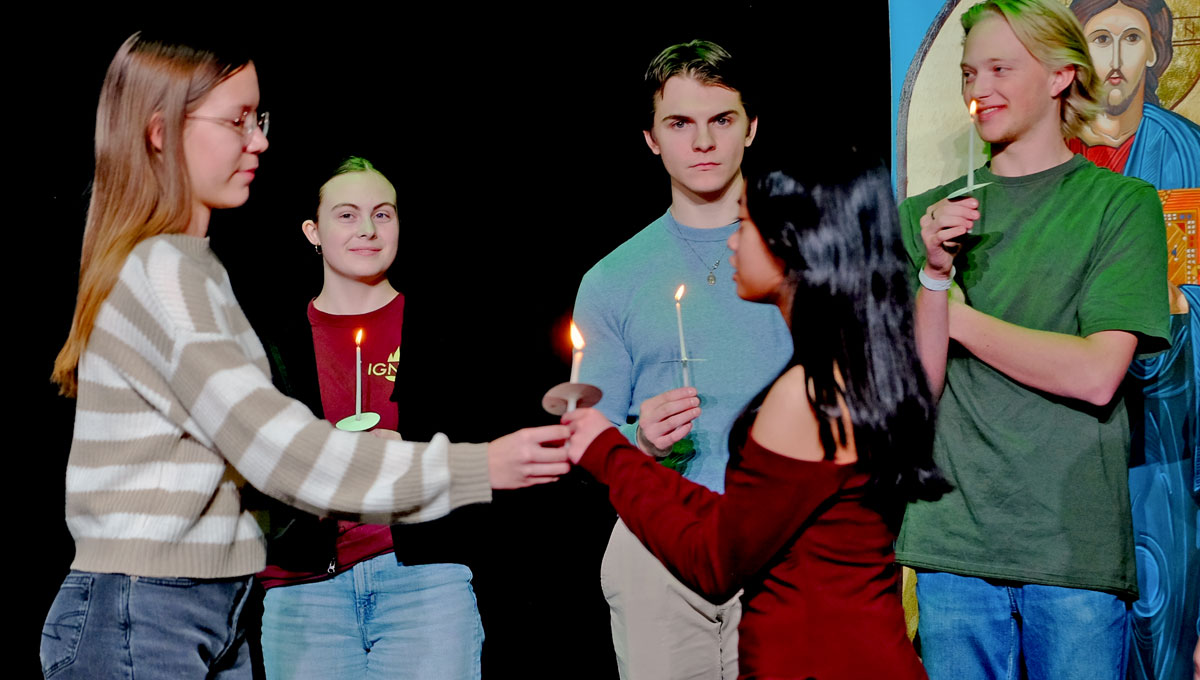
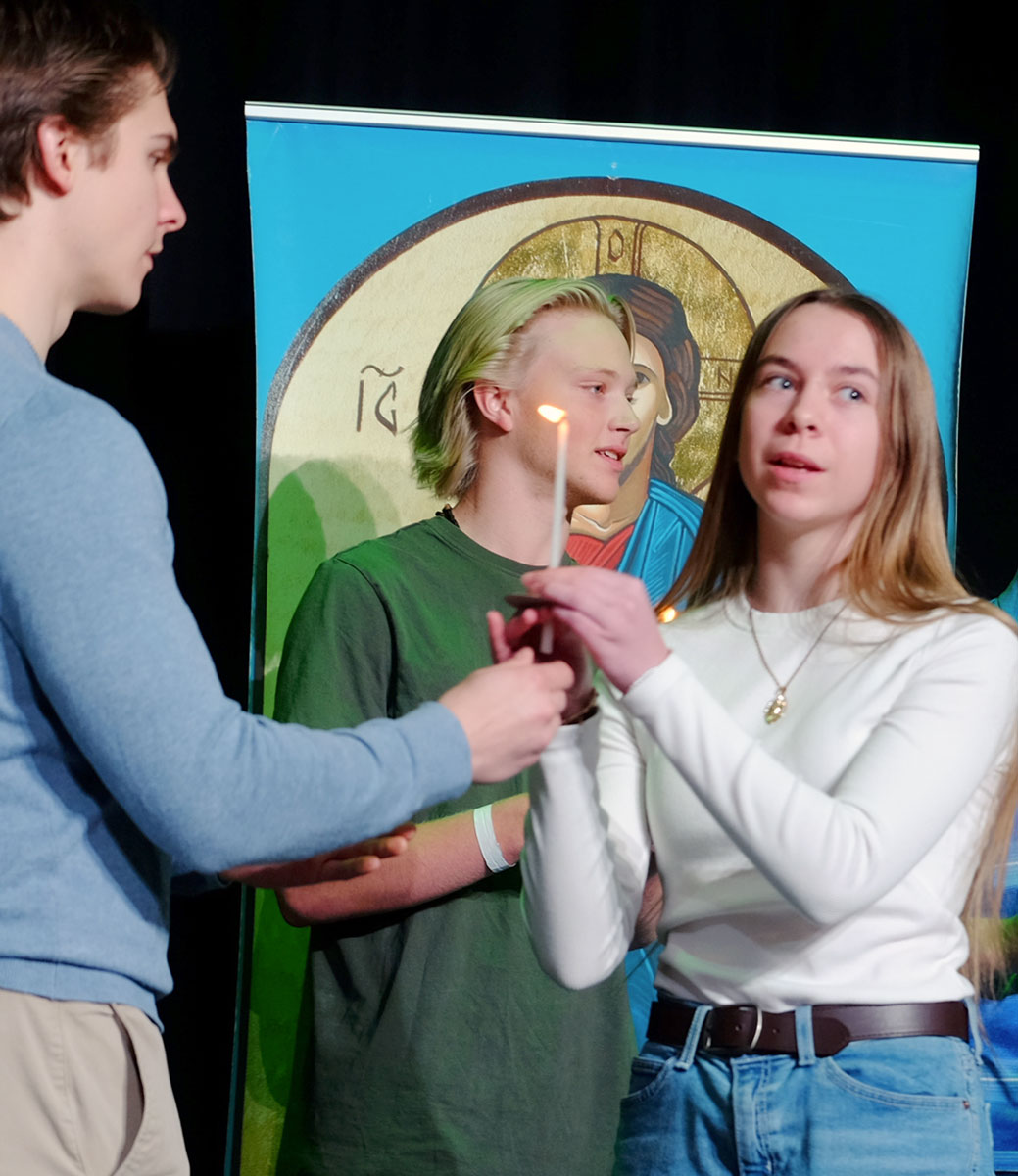
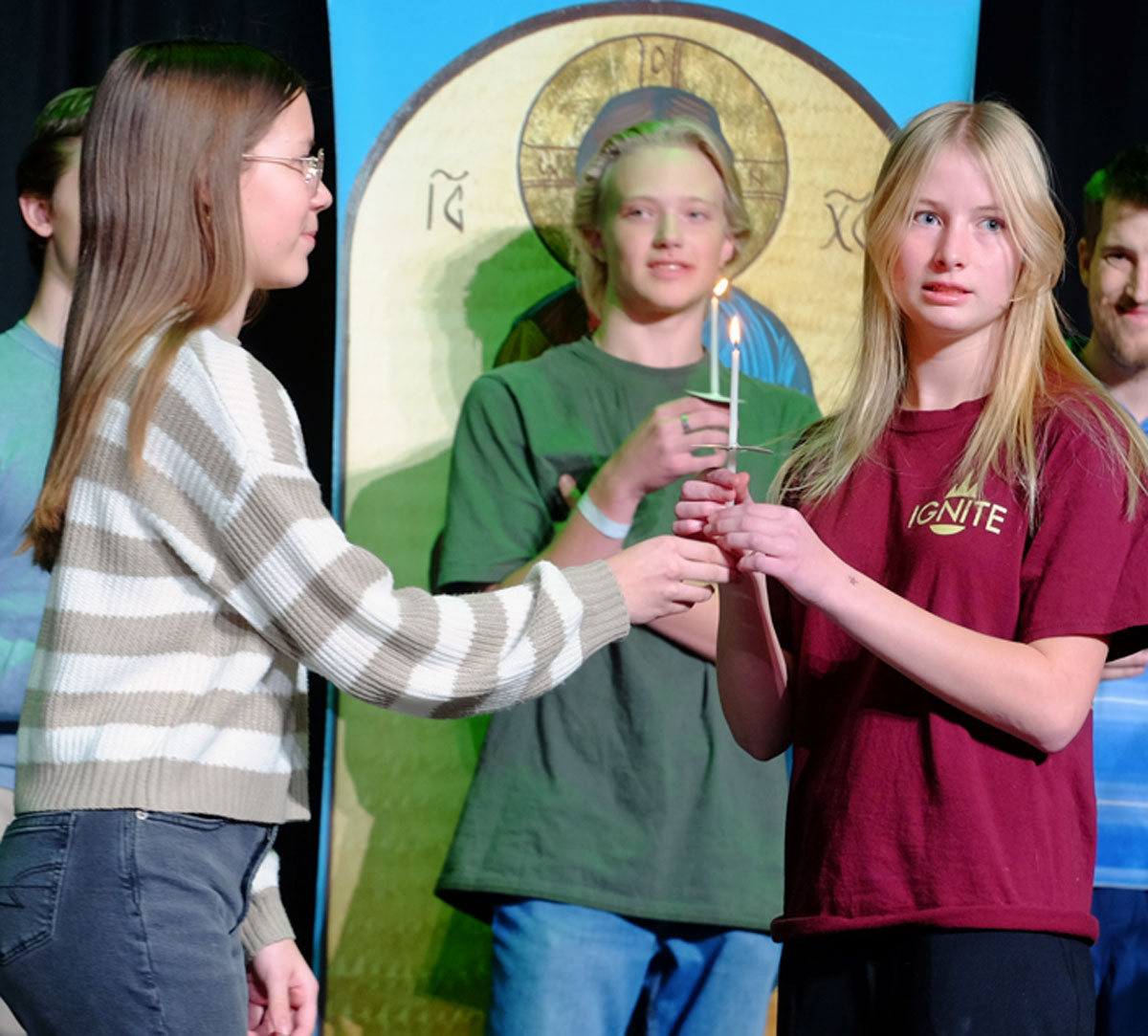
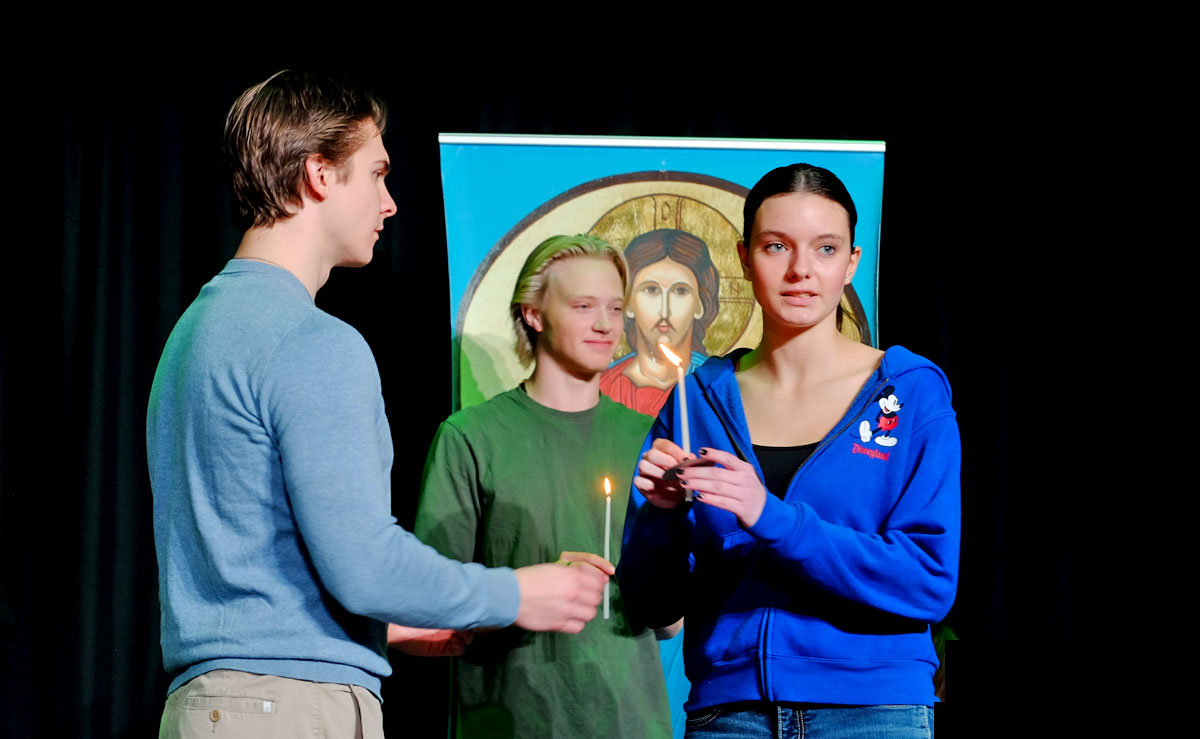
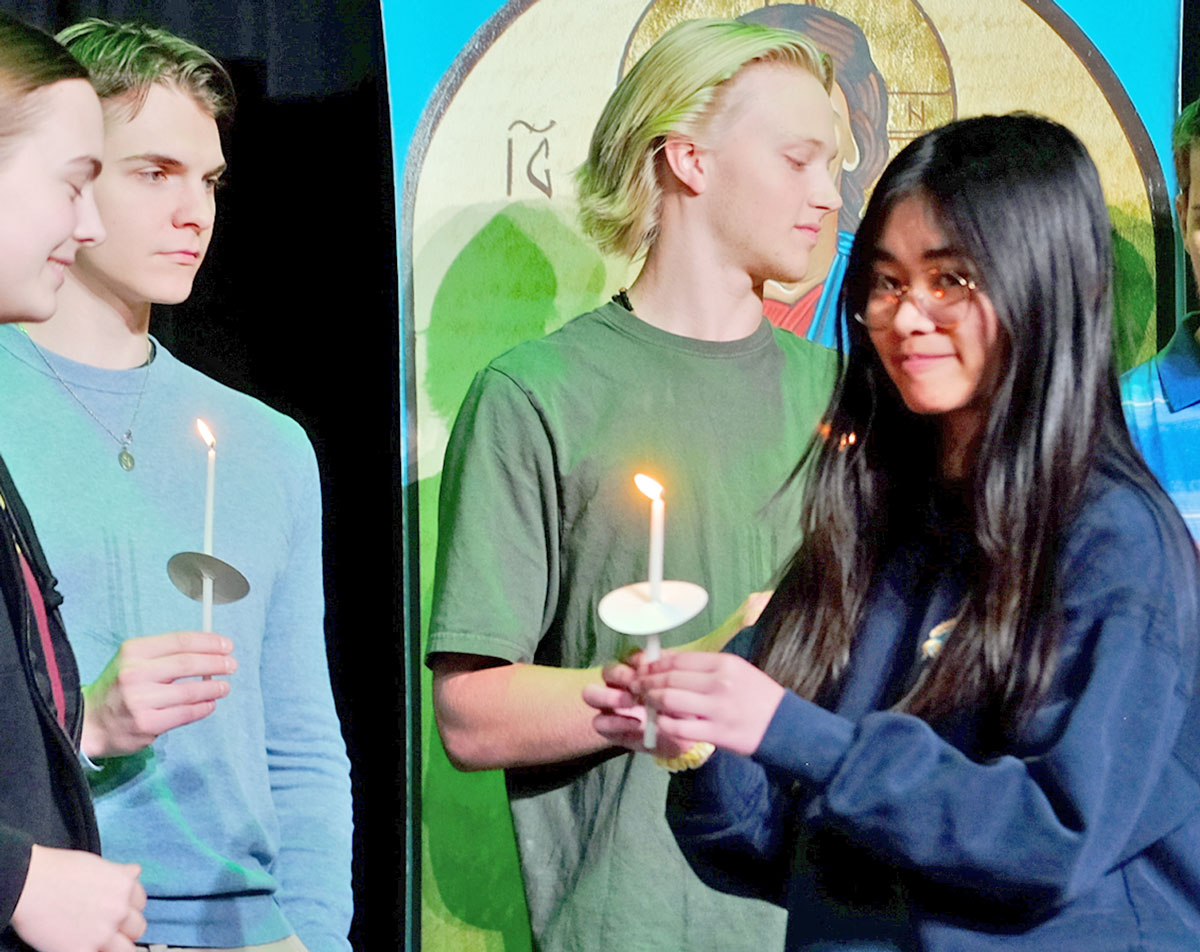
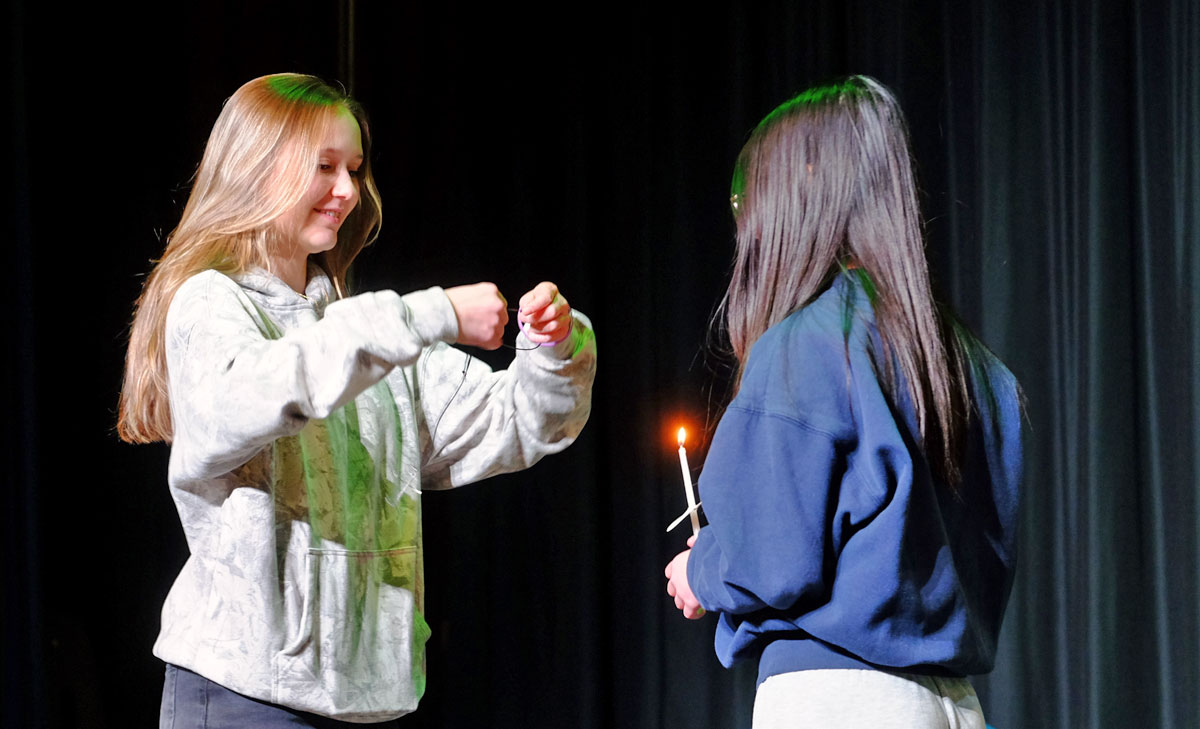
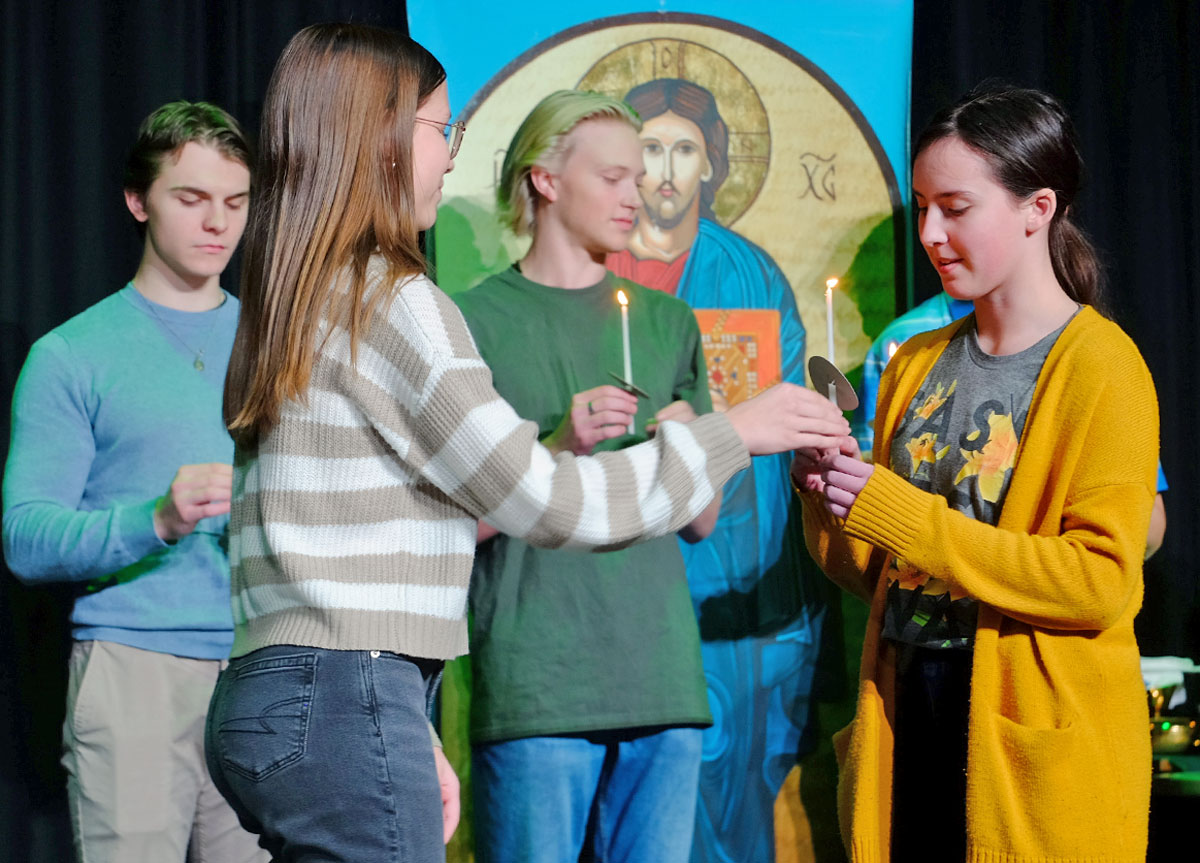
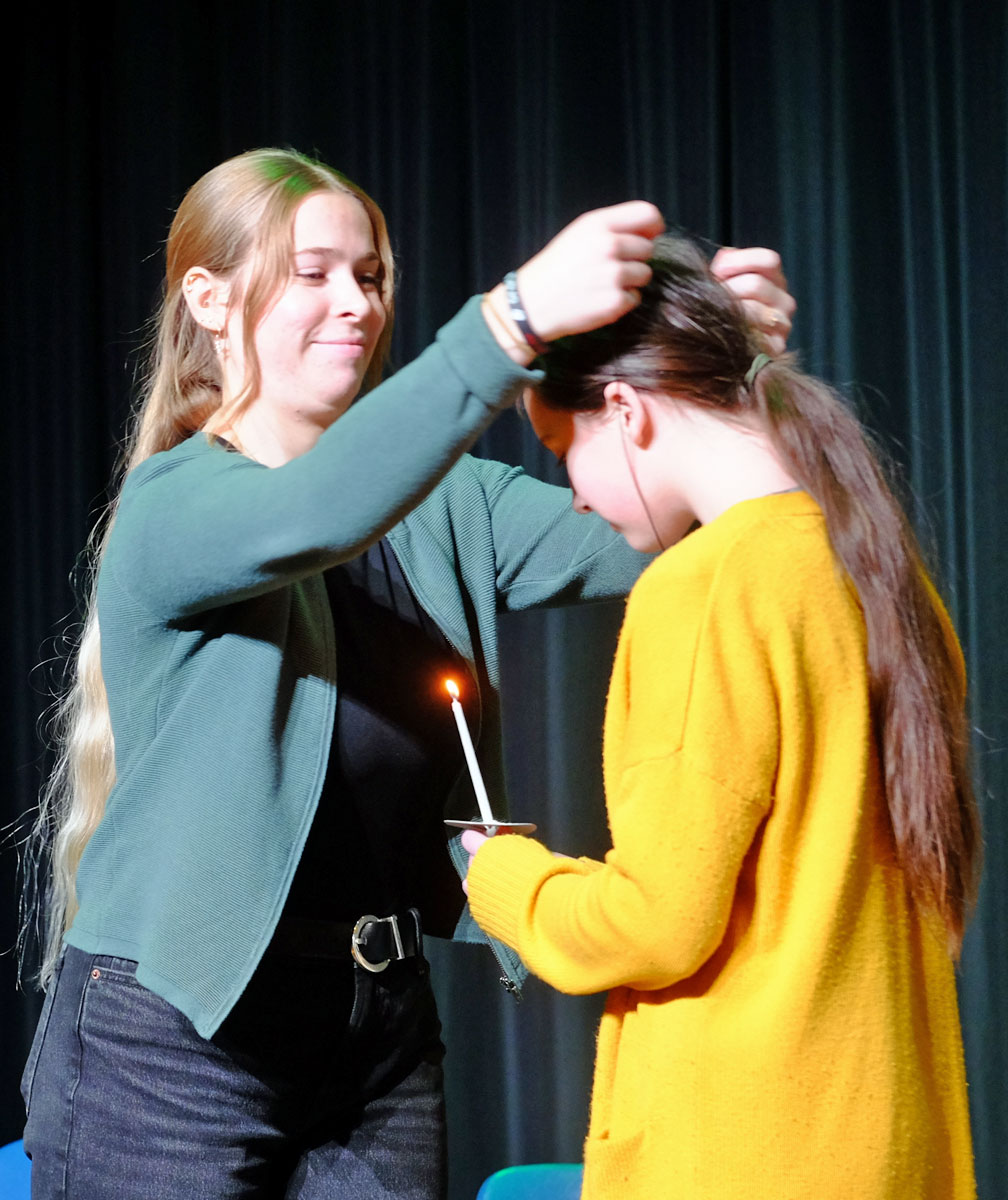
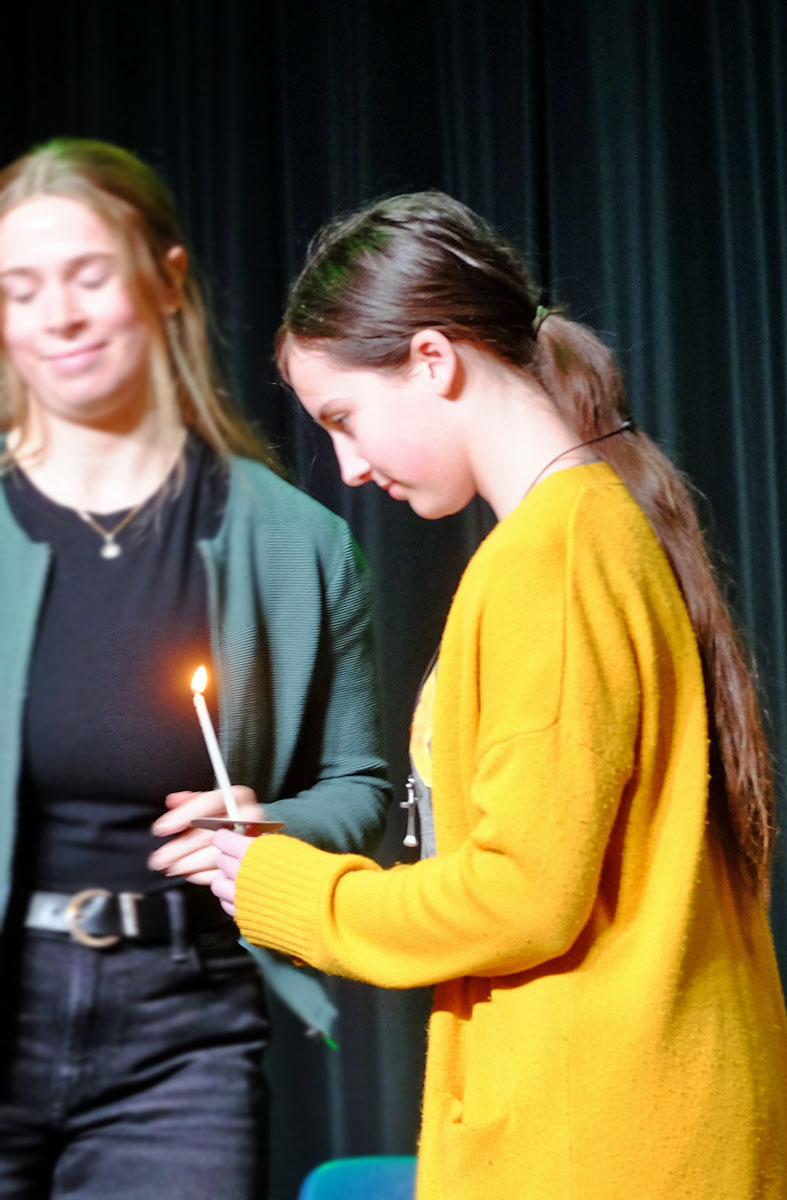
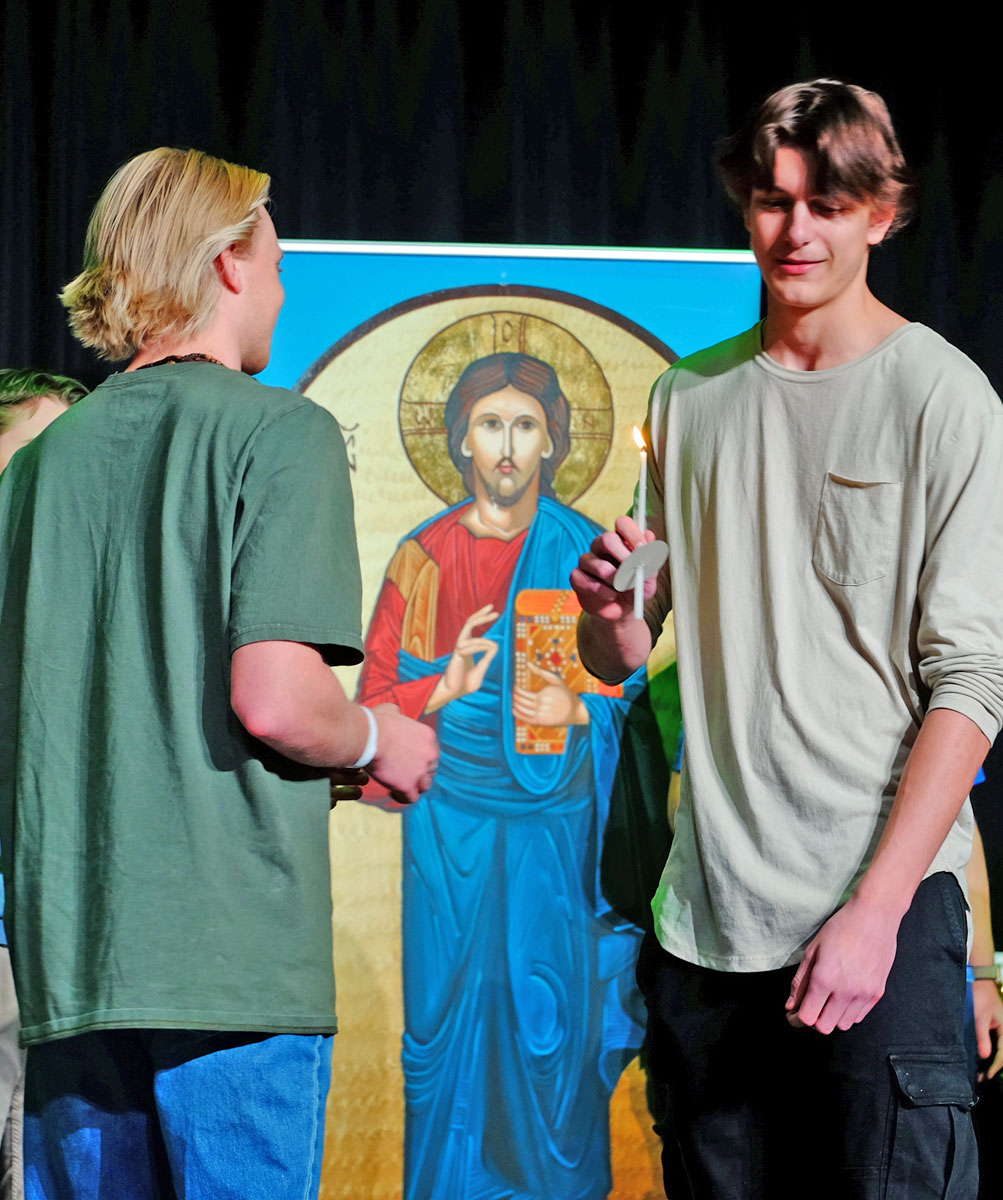
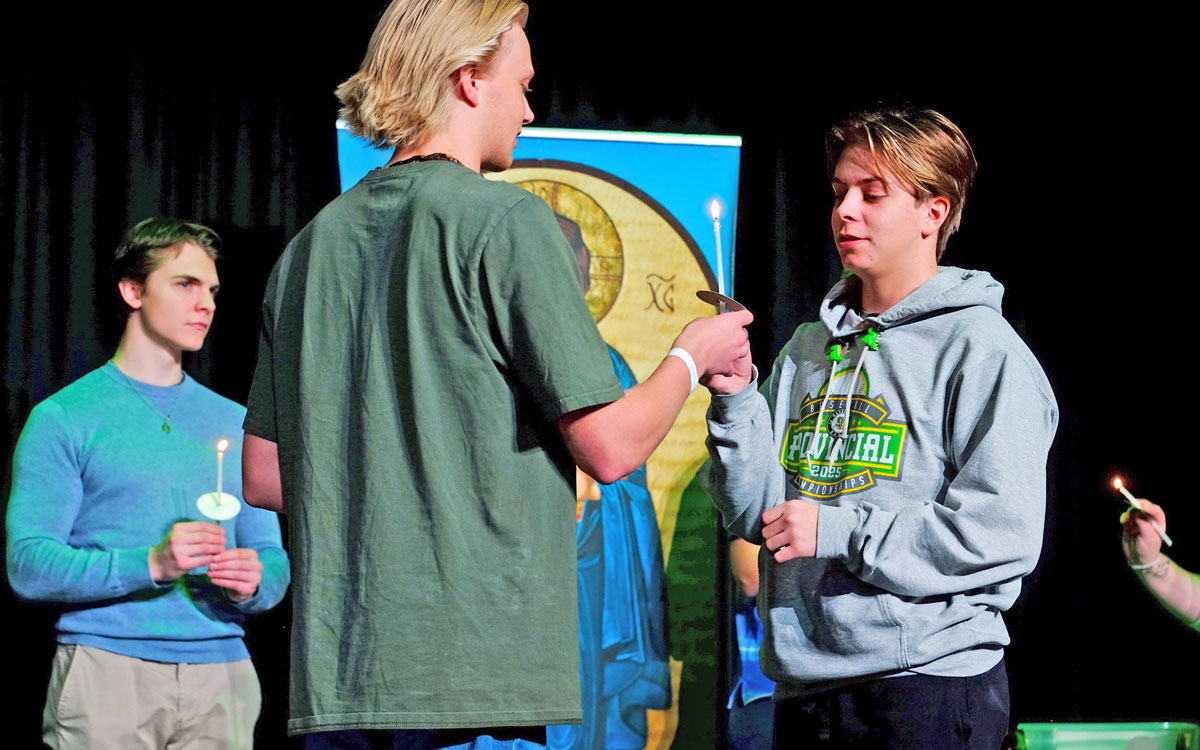
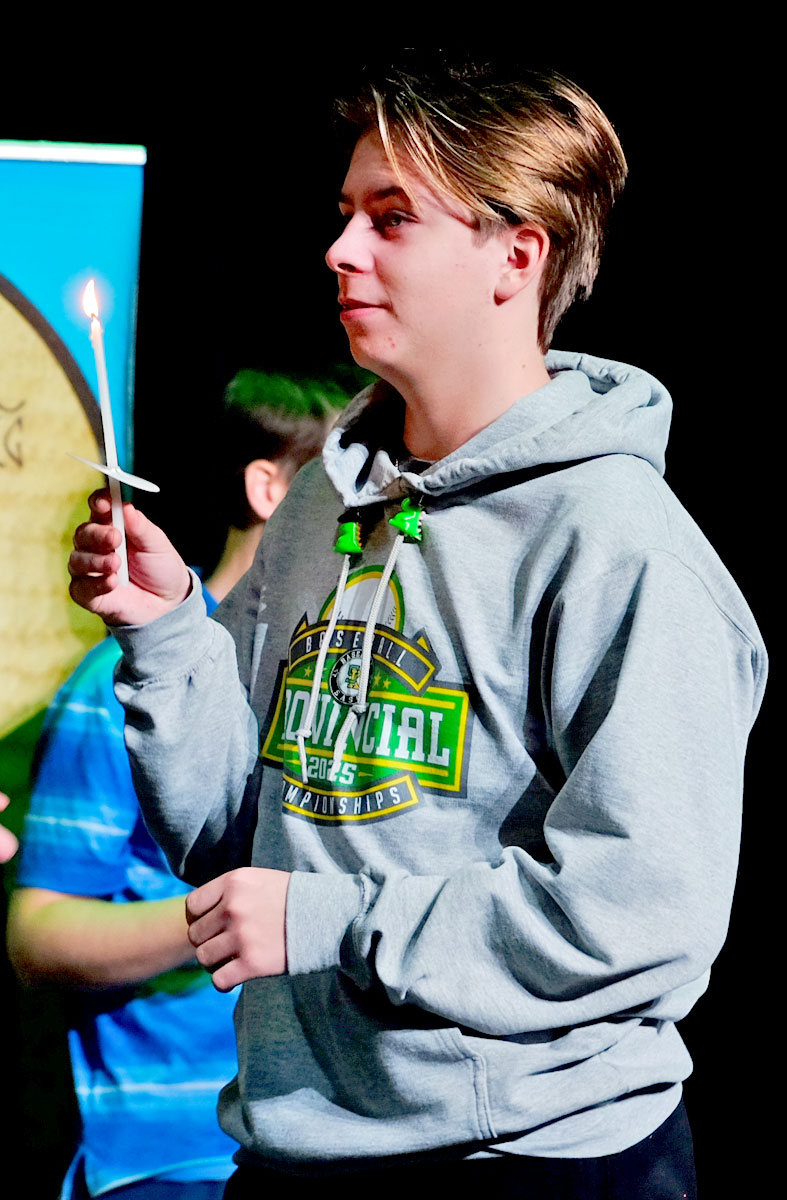
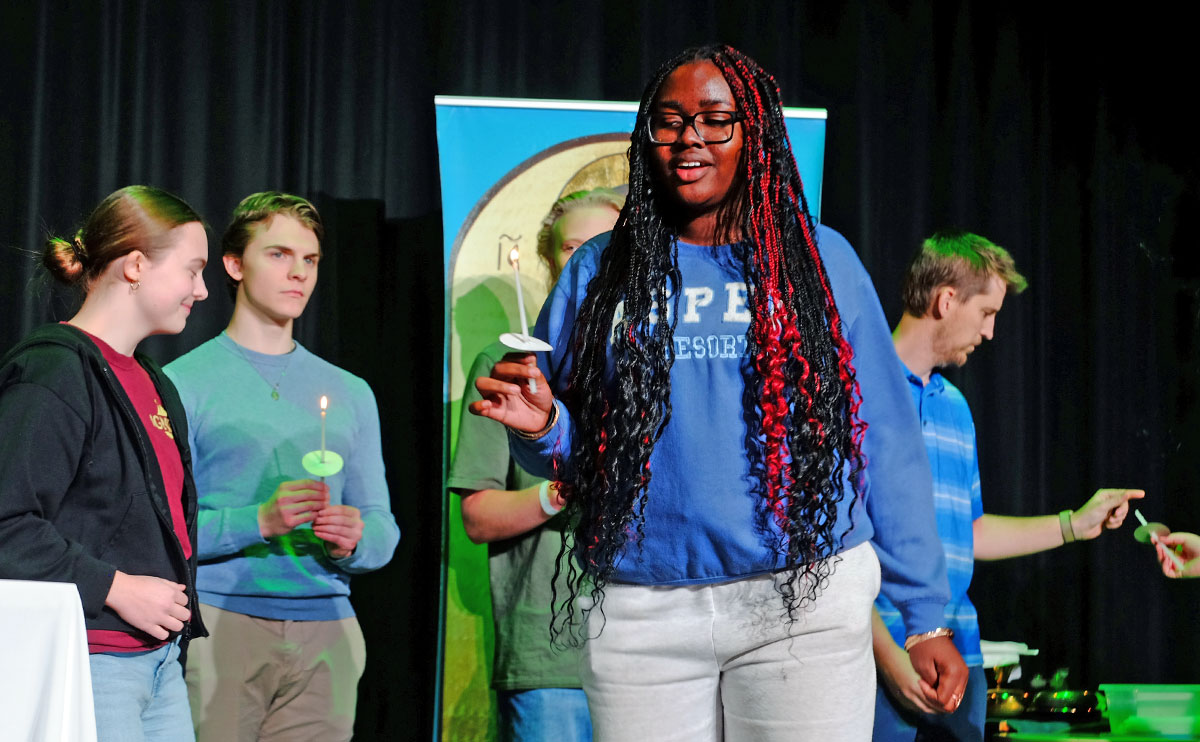
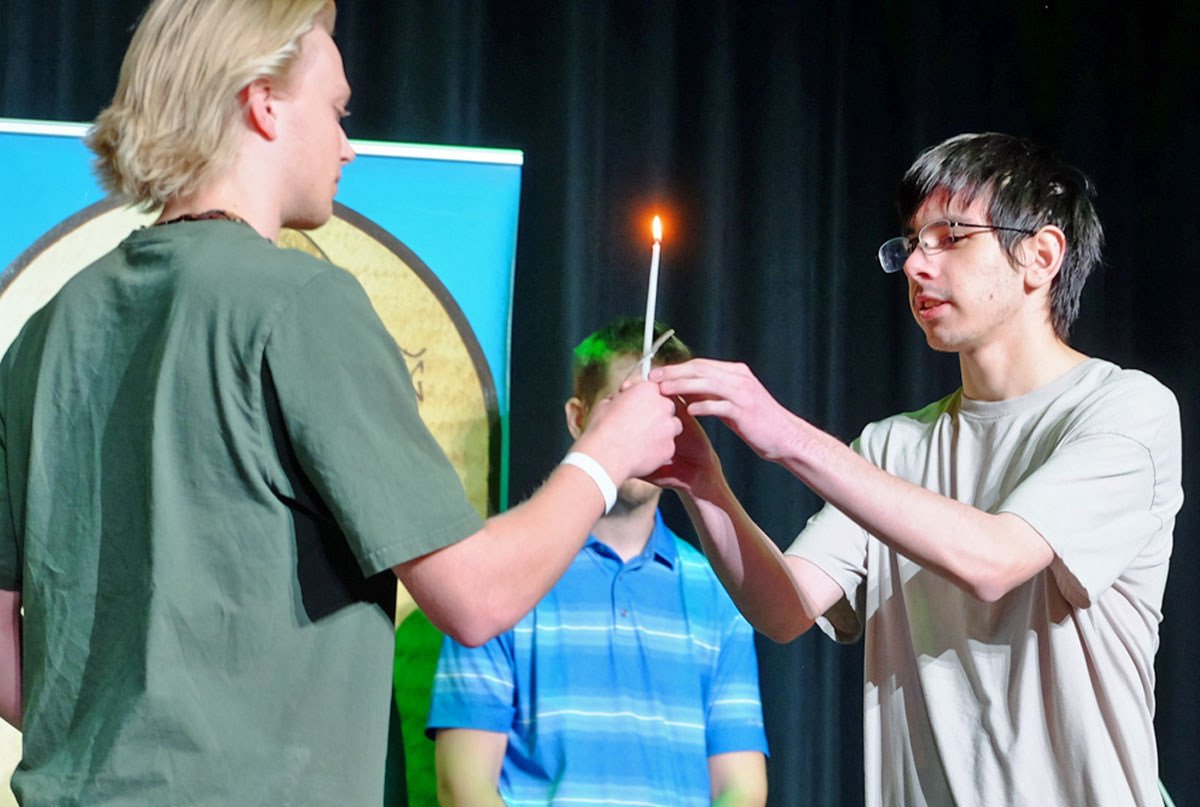
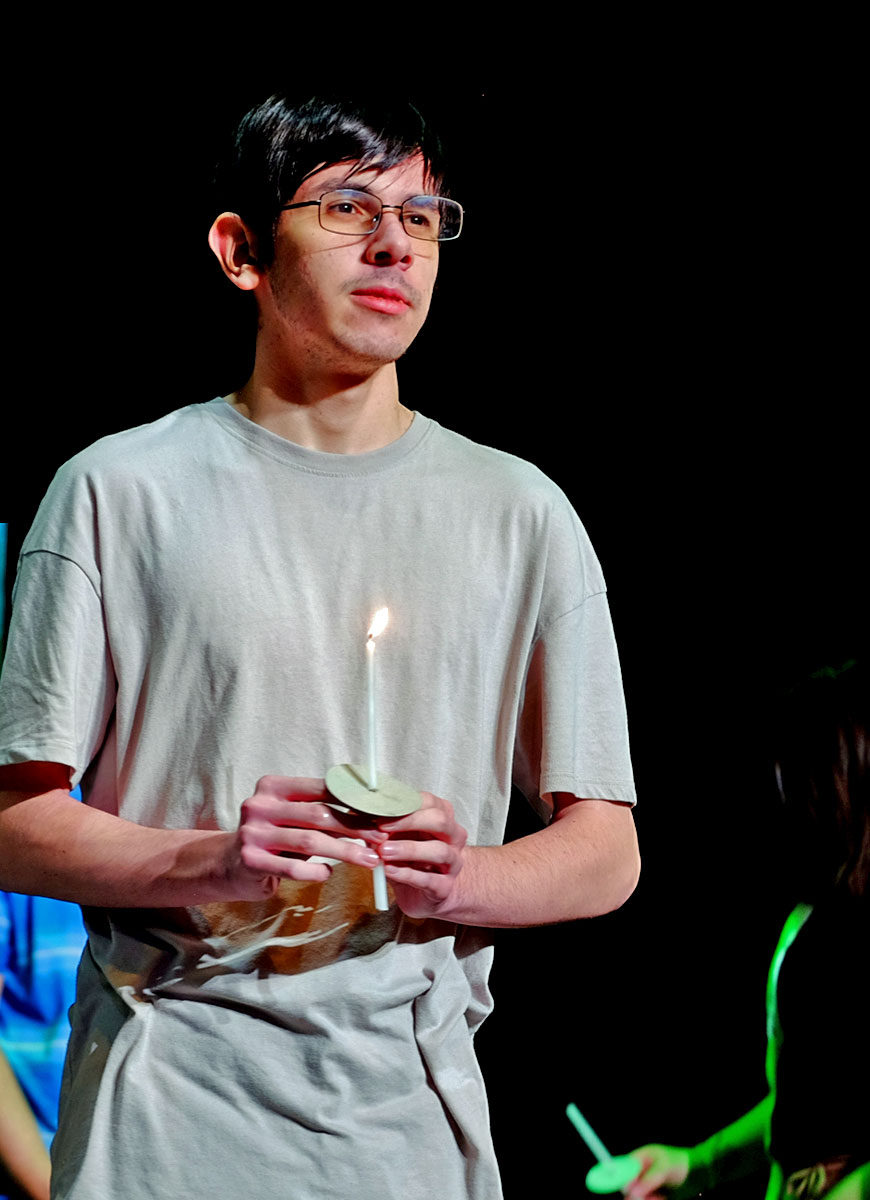
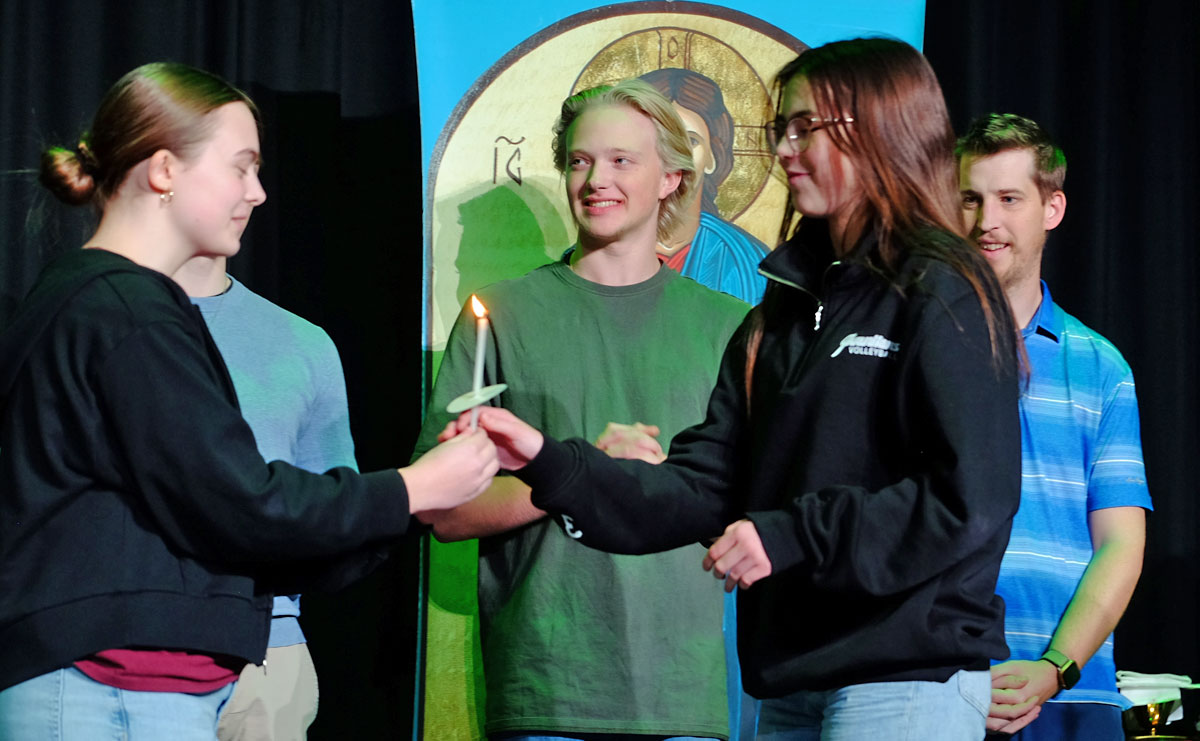
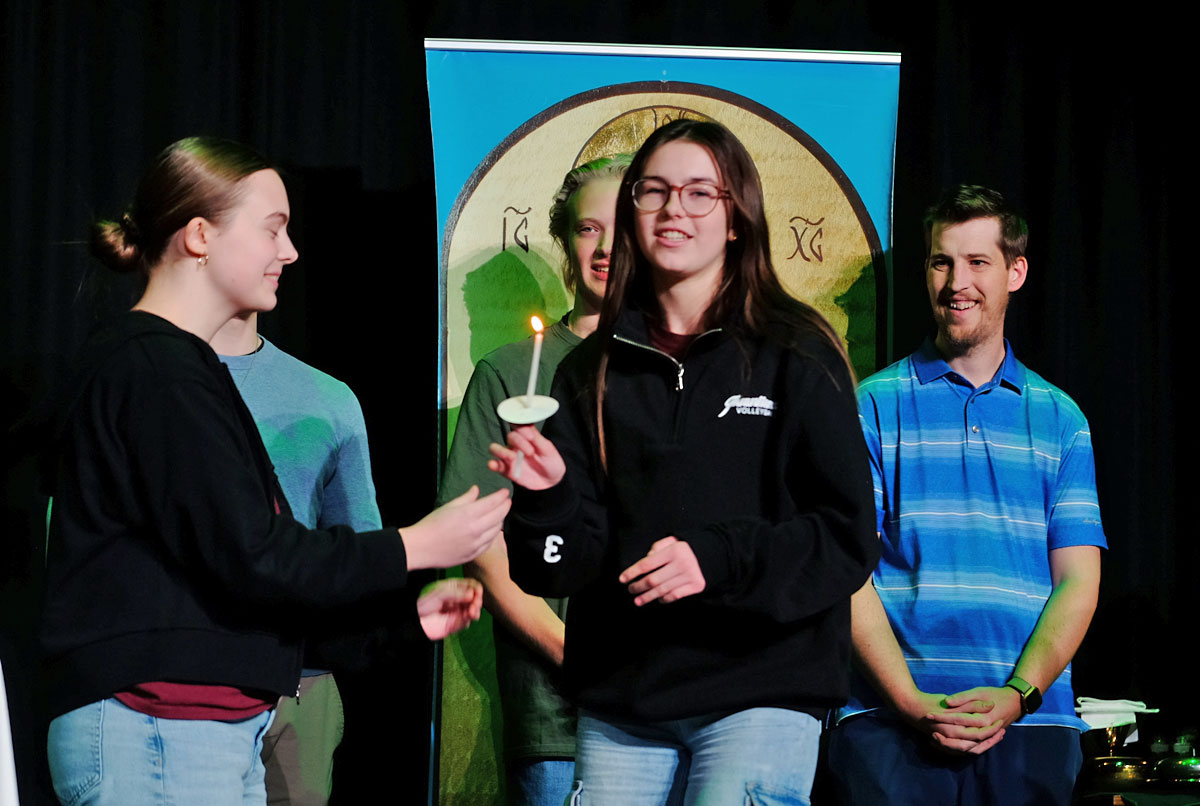
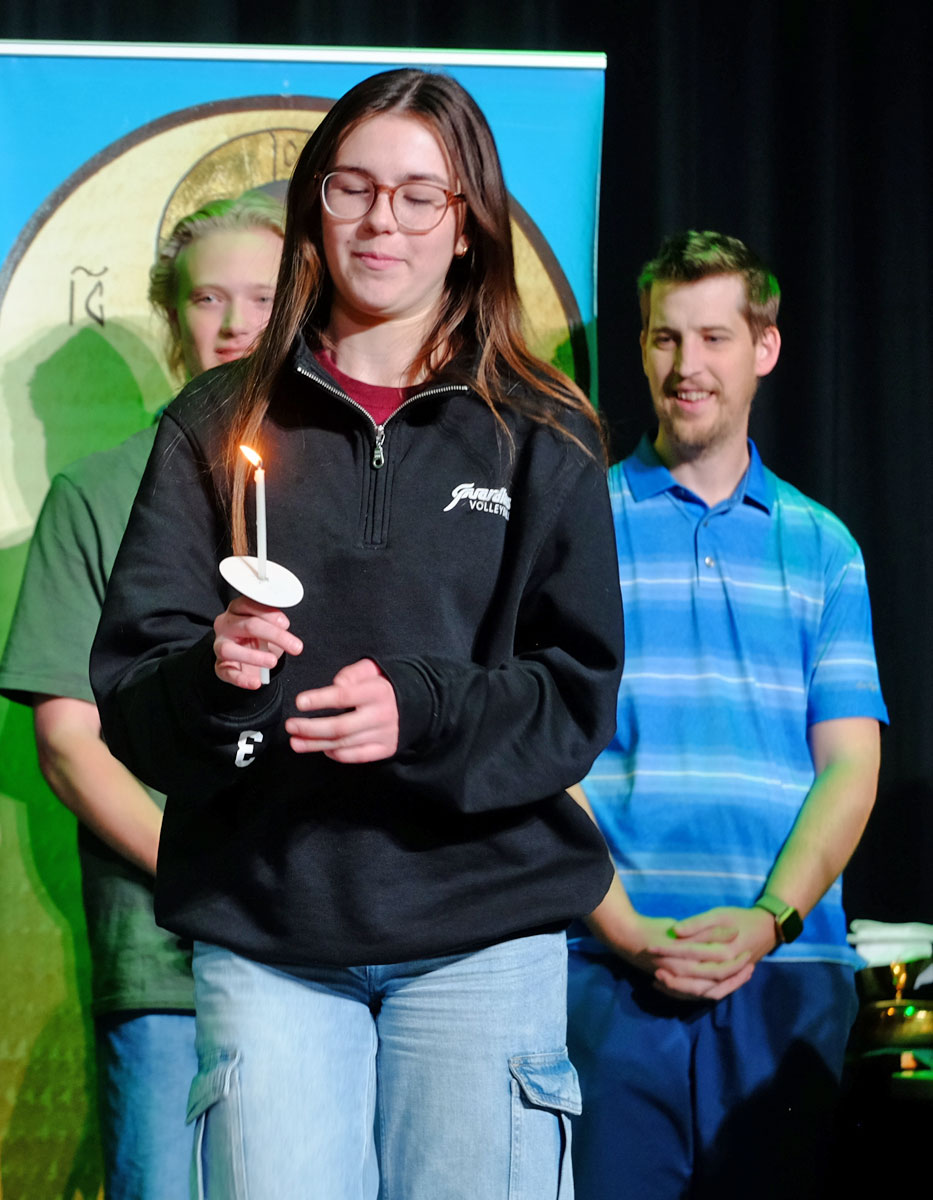
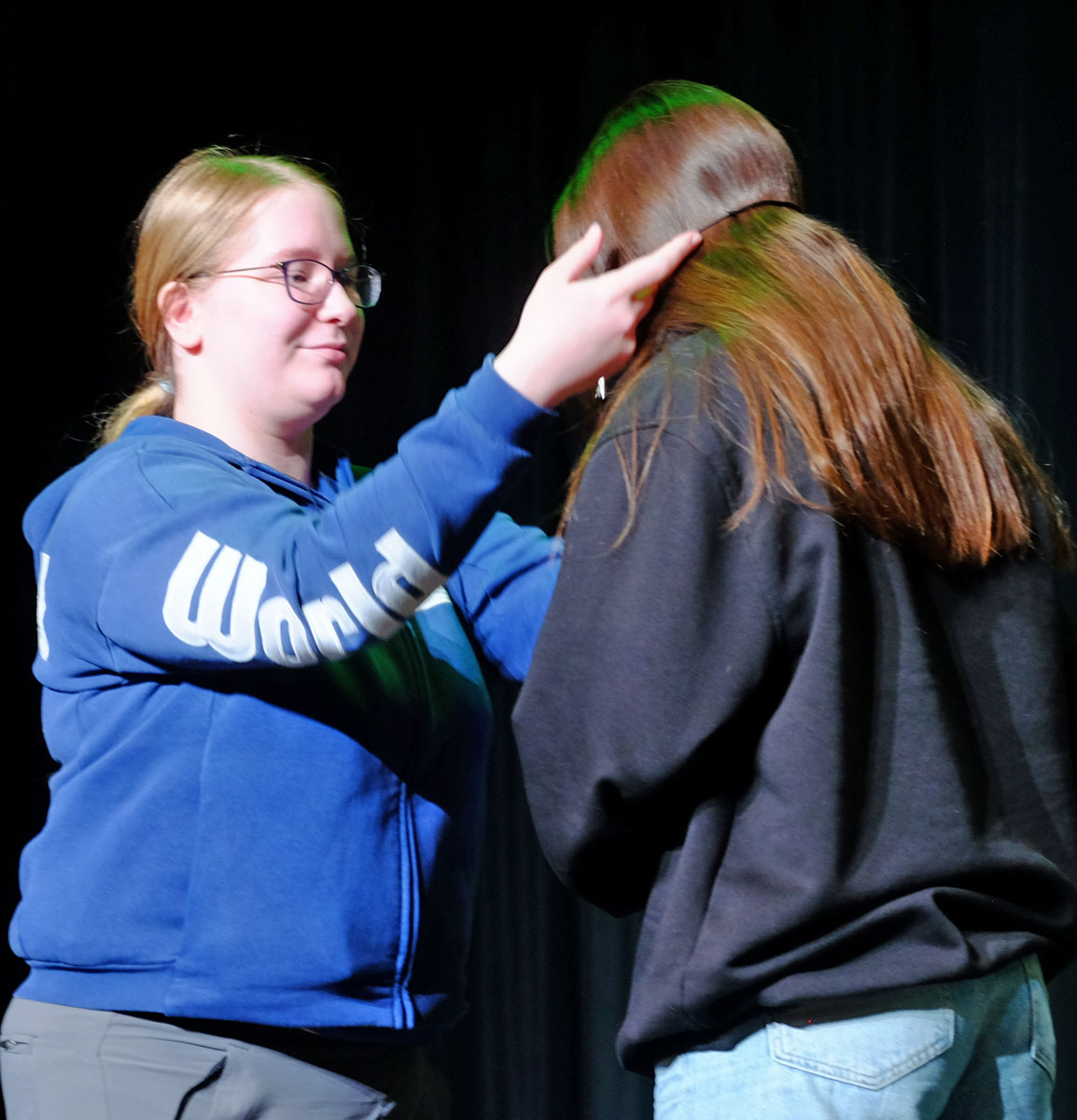
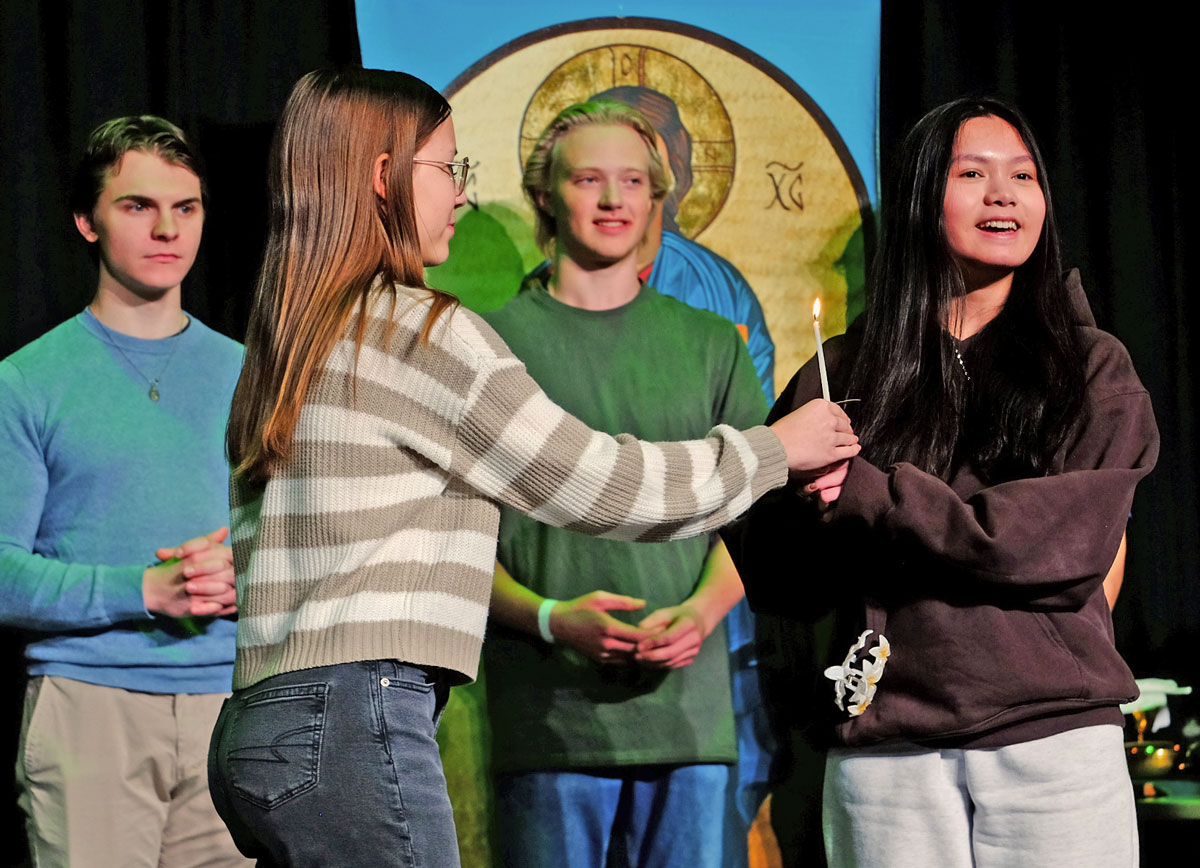
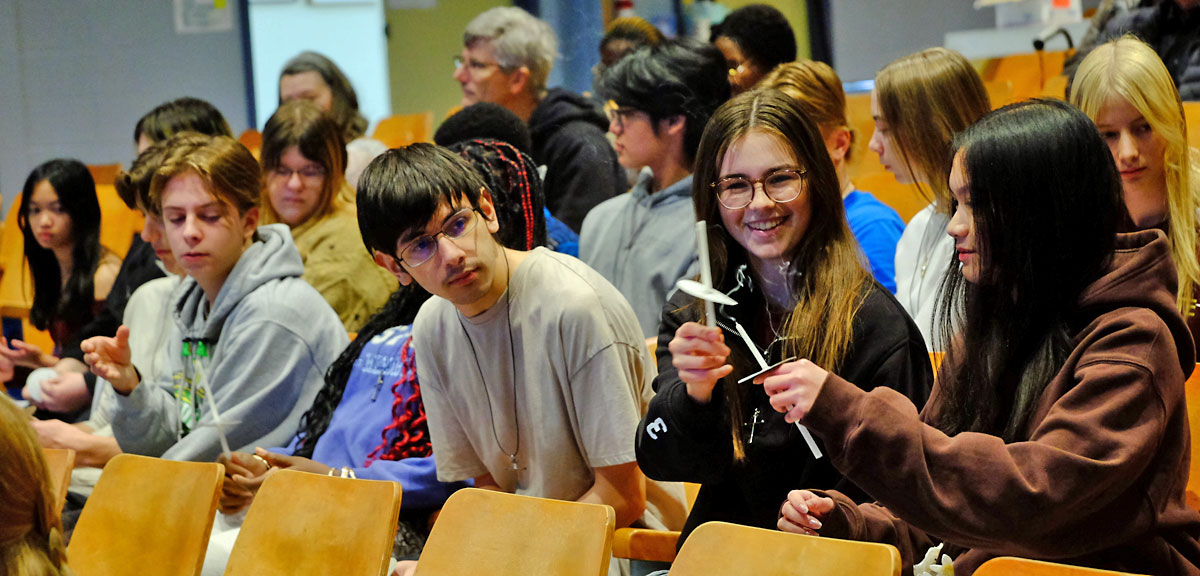
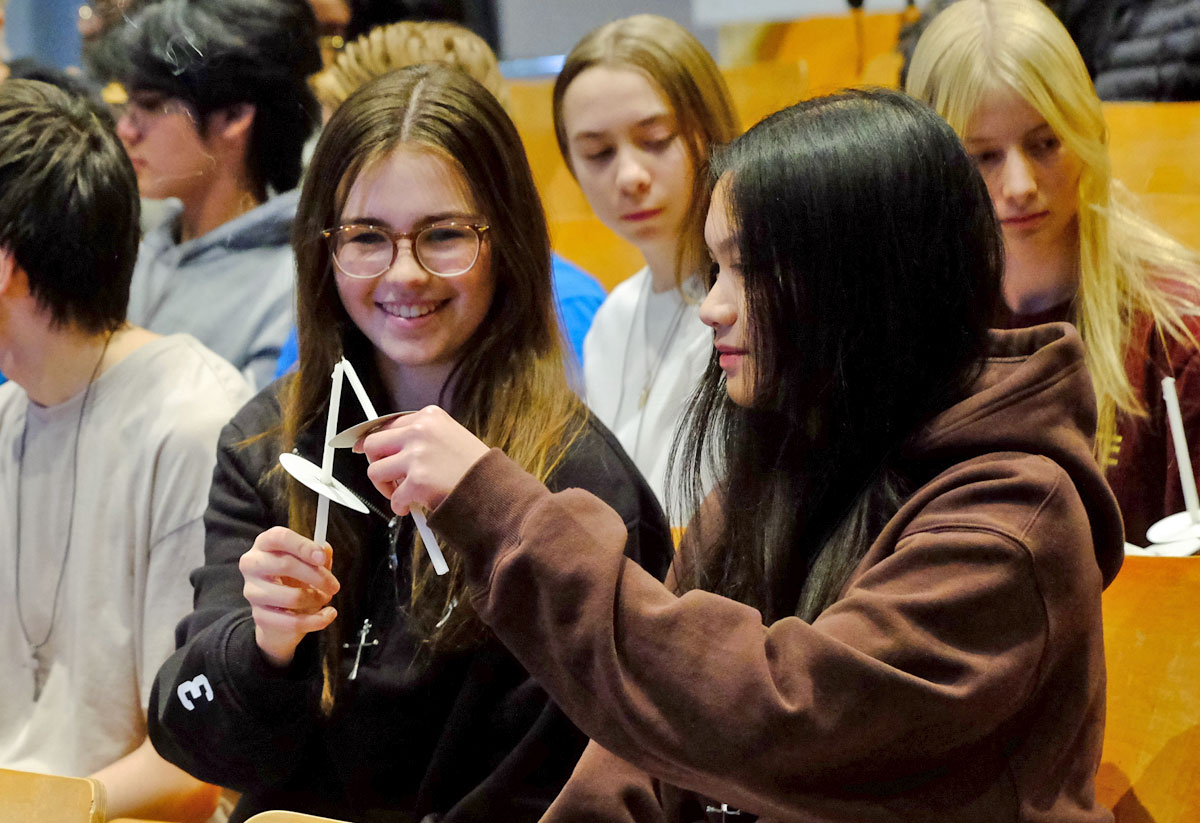
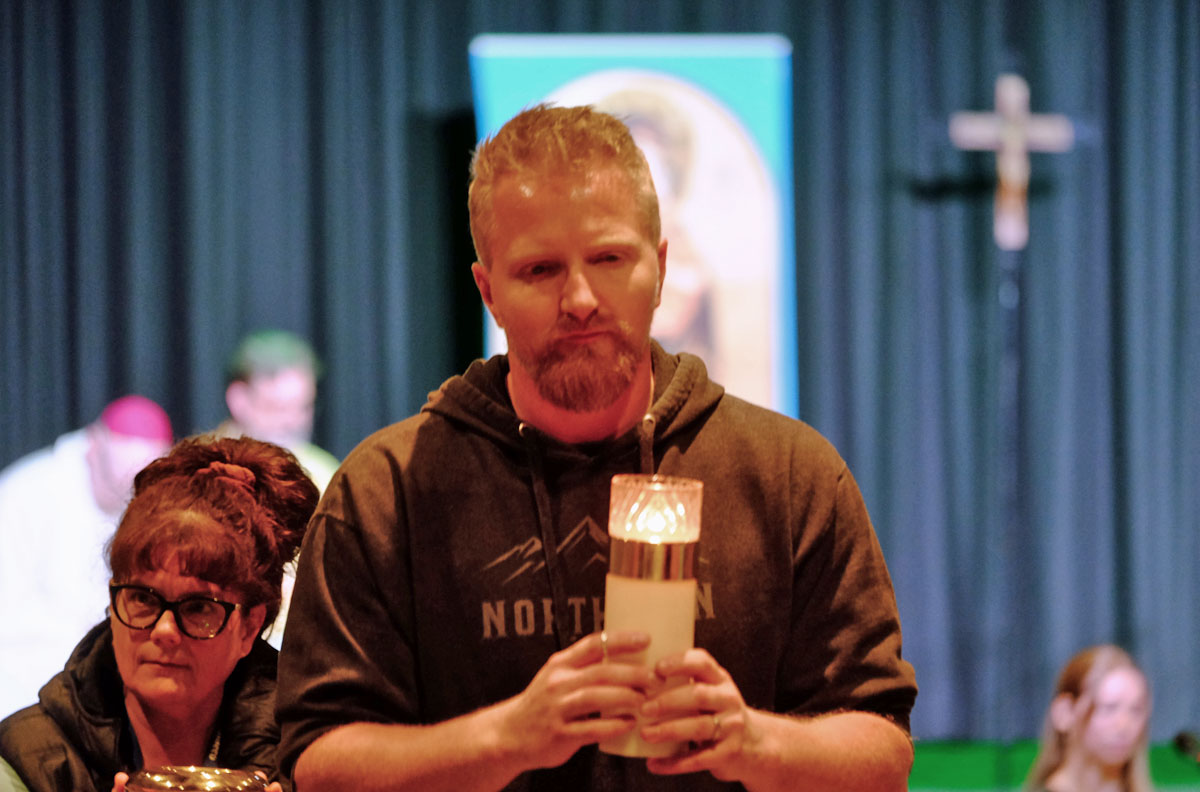
Youth in grades 10-12 who participated in the weekend retreat were sent forth in a ceremony in which they received a lit candle as a symbol of the Light of Christ, and were presented with a cross by a representative of all those who prayed, mentored, and served them through the many hours of the weekend retreat.
The Search retreat weekend for Grades 10-12 is offered twice a year in the Roman Catholic Diocese of Saskatoon, supported by a large team of volunteers and former “Searchers”– as well as by gifts to the Bishop’s Annual Appeal.
The retreat is described as a “Search for Christian maturity” focused on the saving love of God, deepening a relationship with Jesus Christ, and offering inspiration and challenge for continuing the journey once the retreat itself is over. The Search weekend is highlighted by peer-based ministry, with “talks given by young adults for young adults.”
The next Search retreat for Grades 10-12 youth will be held in February. Find more information at: saskatoonsearch.ca
Photos
Search participants — past and present — along with Search leaders and organizers gathered for a large group photo at the end of Mass. (Photo by Kiply Lukan Yaworski, Catholic Saskatoon News)
(Photo by Kiply Lukan Yaworski, Catholic Saskatoon News)
(Photo by Kiply Lukan Yaworski, Catholic Saskatoon News)
(Photo by Kiply Lukan Yaworski, Catholic Saskatoon News)
(Photo by Kiply Lukan Yaworski, Catholic Saskatoon News)
(Photo by Kiply Lukan Yaworski, Catholic Saskatoon News)
(Photo by Kiply Lukan Yaworski, Catholic Saskatoon News)
(Photo by Kiply Lukan Yaworski, Catholic Saskatoon News)
(Photo by Kiply Lukan Yaworski, Catholic Saskatoon News)
(Photo by Kiply Lukan Yaworski, Catholic Saskatoon News)
(Photo by Kiply Lukan Yaworski, Catholic Saskatoon News)
(Photo by Kiply Lukan Yaworski, Catholic Saskatoon News)
(Photo by Kiply Lukan Yaworski, Catholic Saskatoon News)
(Photo by Kiply Lukan Yaworski, Catholic Saskatoon News)
(Photo by Kiply Lukan Yaworski, Catholic Saskatoon News)
(Photo by Kiply Lukan Yaworski, Catholic Saskatoon News)
(Photo by Kiply Lukan Yaworski, Catholic Saskatoon News)
(Photo by Kiply Lukan Yaworski, Catholic Saskatoon News)
(Photo by Kiply Lukan Yaworski, Catholic Saskatoon News)
(Photo by Kiply Lukan Yaworski, Catholic Saskatoon News)
(Photo by Kiply Lukan Yaworski, Catholic Saskatoon News)
v
v
(Photo by Kiply Lukan Yaworski, Catholic Saskatoon News)
v
(Photo by Kiply Lukan Yaworski, Catholic Saskatoon News)
(Photo by Kiply Lukan Yaworski, Catholic Saskatoon News)
v
(Photo by Kiply Lukan Yaworski, Catholic Saskatoon News)
(Photo by Kiply Lukan Yaworski, Catholic Saskatoon News)
(Photo by Kiply Lukan Yaworski, Catholic Saskatoon News)
(Photo by Kiply Lukan Yaworski, Catholic Saskatoon News)
(Photo by Kiply Lukan Yaworski, Catholic Saskatoon News)
(Photo by Kiply Lukan Yaworski, Catholic Saskatoon News)
v
(Photo by Kiply Lukan Yaworski, Catholic Saskatoon News)
(Photo by Kiply Lukan Yaworski, Catholic Saskatoon News)
(Photo by Kiply Lukan Yaworski, Catholic Saskatoon News)
(Photo by Kiply Lukan Yaworski, Catholic Saskatoon News)
(Photo by Kiply Lukan Yaworski, Catholic Saskatoon News)
(Photo by Kiply Lukan Yaworski, Catholic Saskatoon News)
-30-
Kiply Lukan Yaworski is the communications coordinator for the Roman Catholic Diocese of Saskatoon: rcdos.ca.
Search, Youth and Young Adult Ministry, Communications and Catholic Saskatoon News are supported by gifts to the Bishop’s Annual Appeal: dscf.ca/baa.
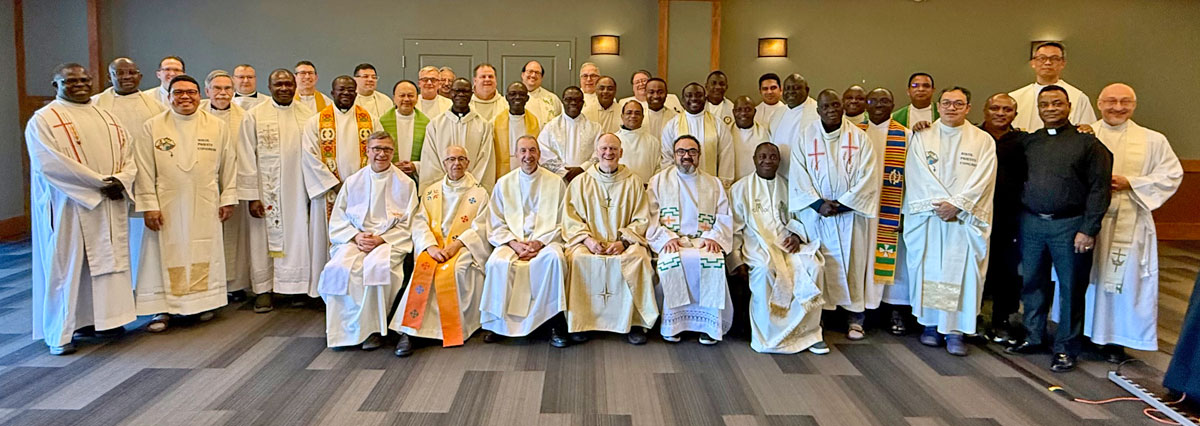
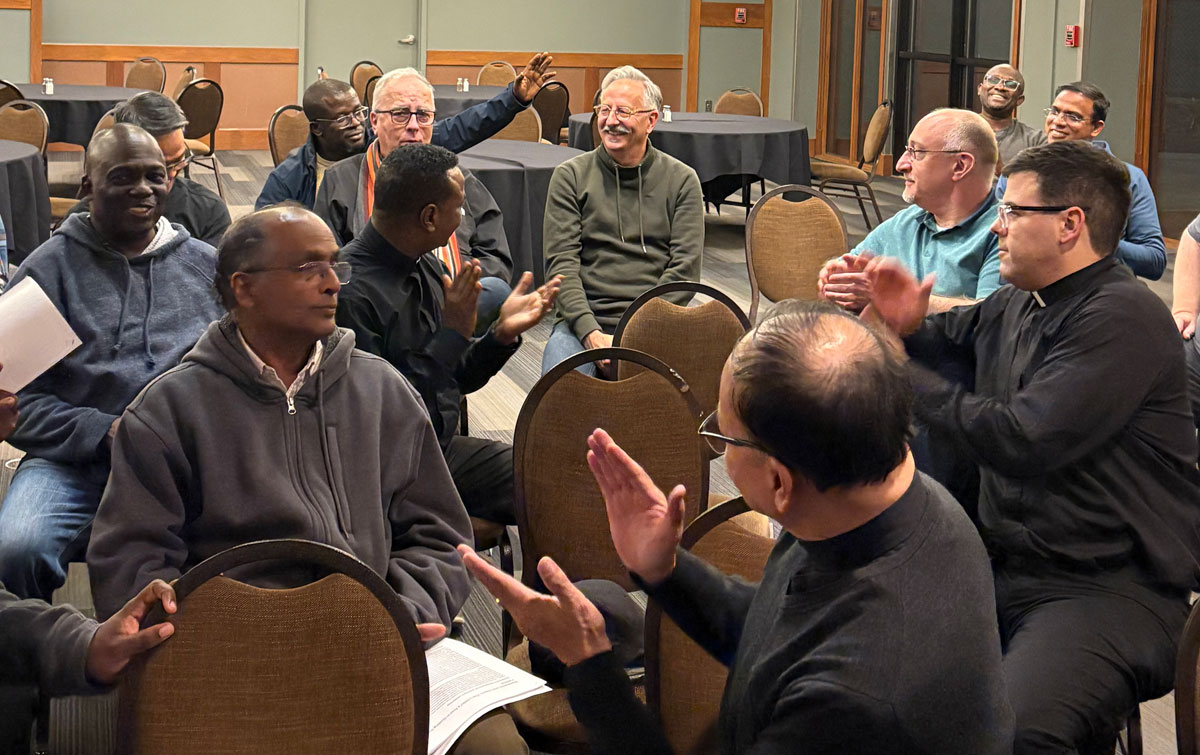
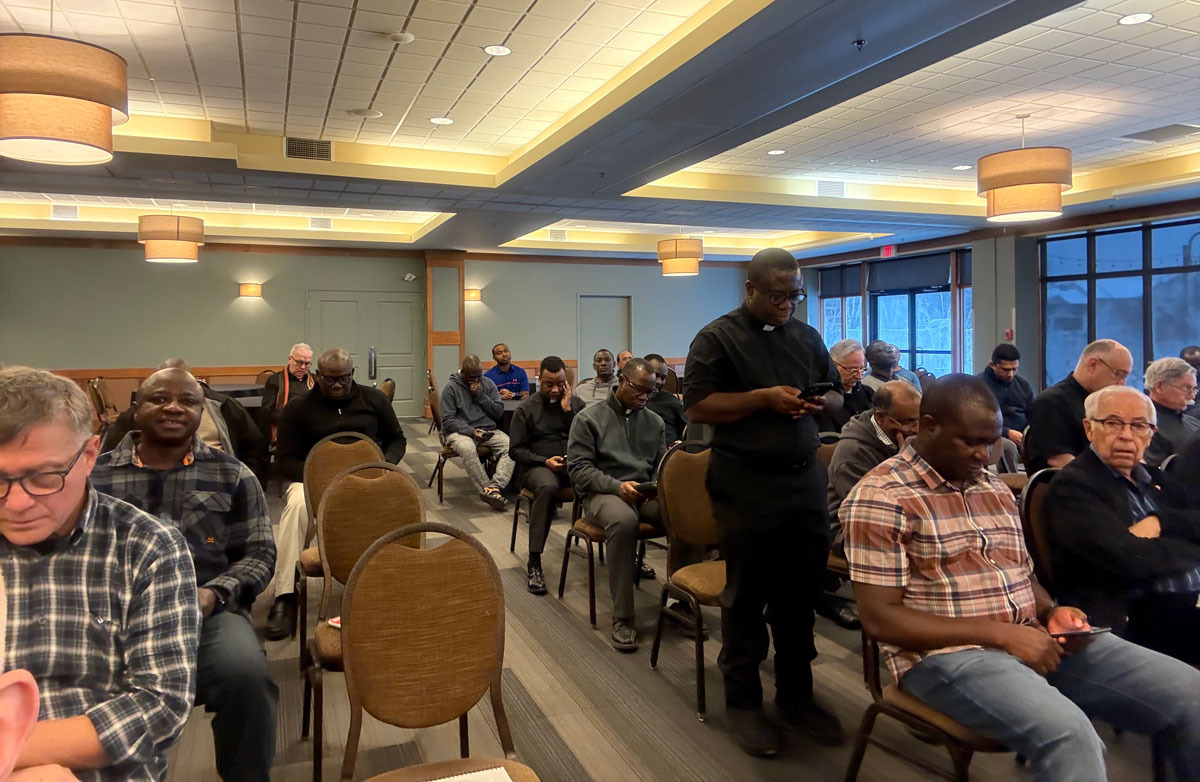
Priests from across the Roman Catholic Diocese of Saskatoon attended an annual Clergy Study Days Nov. 3-Nov. 6, 2025 at Elk Ridge, SK, near Prince Albert National Park.
Priests from across the diocese gathered for annual Clergy Study Days Nov. 3-6. (Submitted photo)
“At Clergy Study Days we cover a range of important themes related to the life and ministry of the diocese,” said Bishop Mark Hagemoen, reporting that 45 priests attended this year’s gathering.
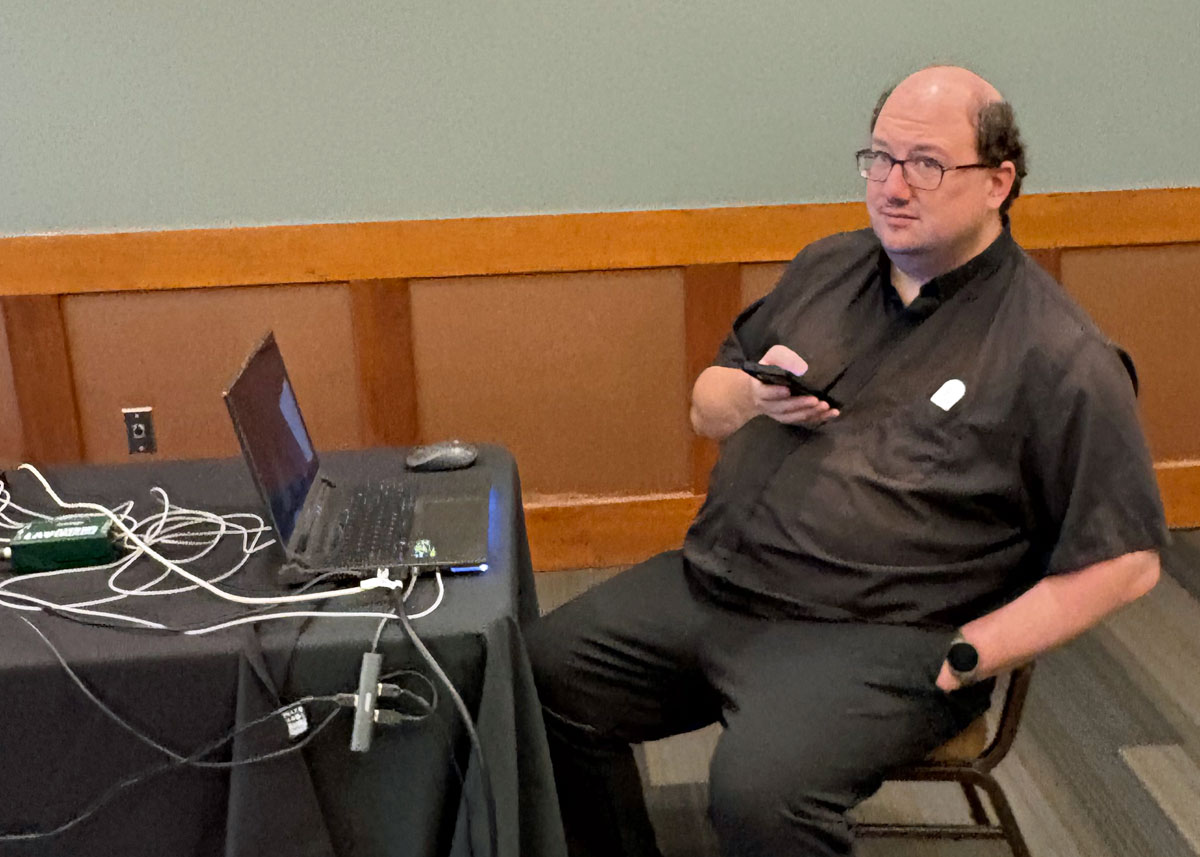
Clergy Study Days 2025 coordinator was Fr. Daniel Yasinski, with Fr. Gregory Roth providing technical assistance throughout the four days, which included a number of guest speakers and presenters, both in-person and online, as well as time for celebration of the Eucharist, prayer and fraternity.
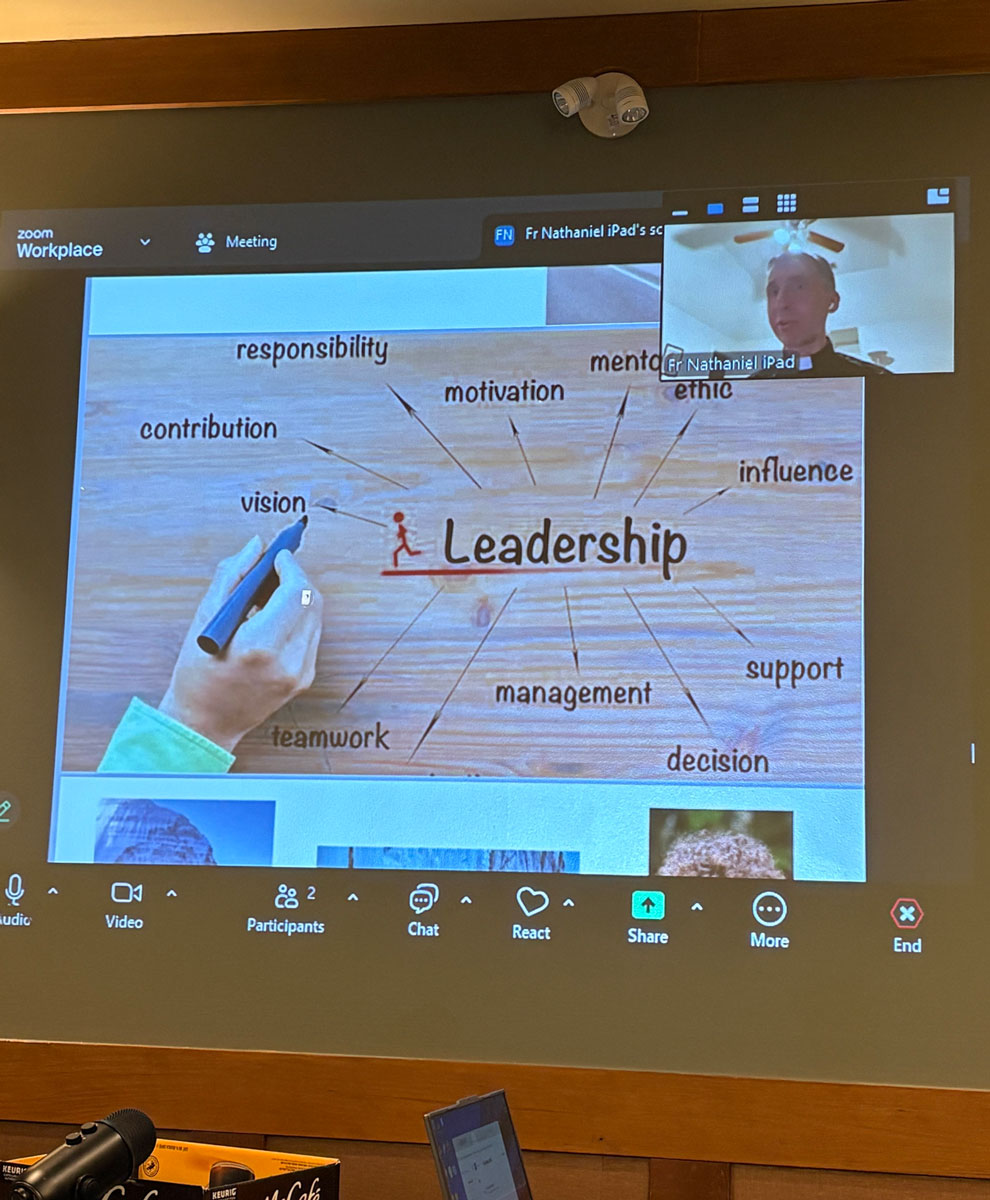
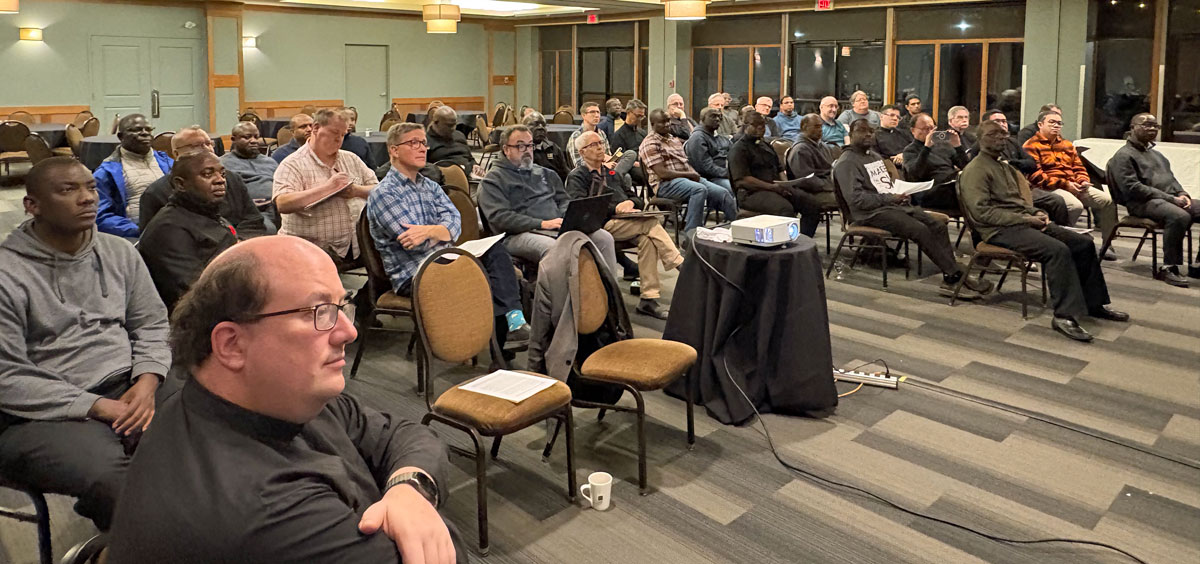
“We began Monday evening with a keynote presentation on pastors as synodal leaders by Fr. Nathaniel Haslam, LC, chaplain for the Lumen Institute for Christian Business and Cultural Leaders, who spoke on the theme, Shepherds with Vision: Leadership, Vision, and Synodality: Shepherding with Joy and Foresight,” said Hagemoen.
A presentation by Fr. Nathaniel Haslam, LC, chaplain for the Lumen Institute for Christian Business and Cultural Leaders was part of Clergy Study Days. (Submitted photo)
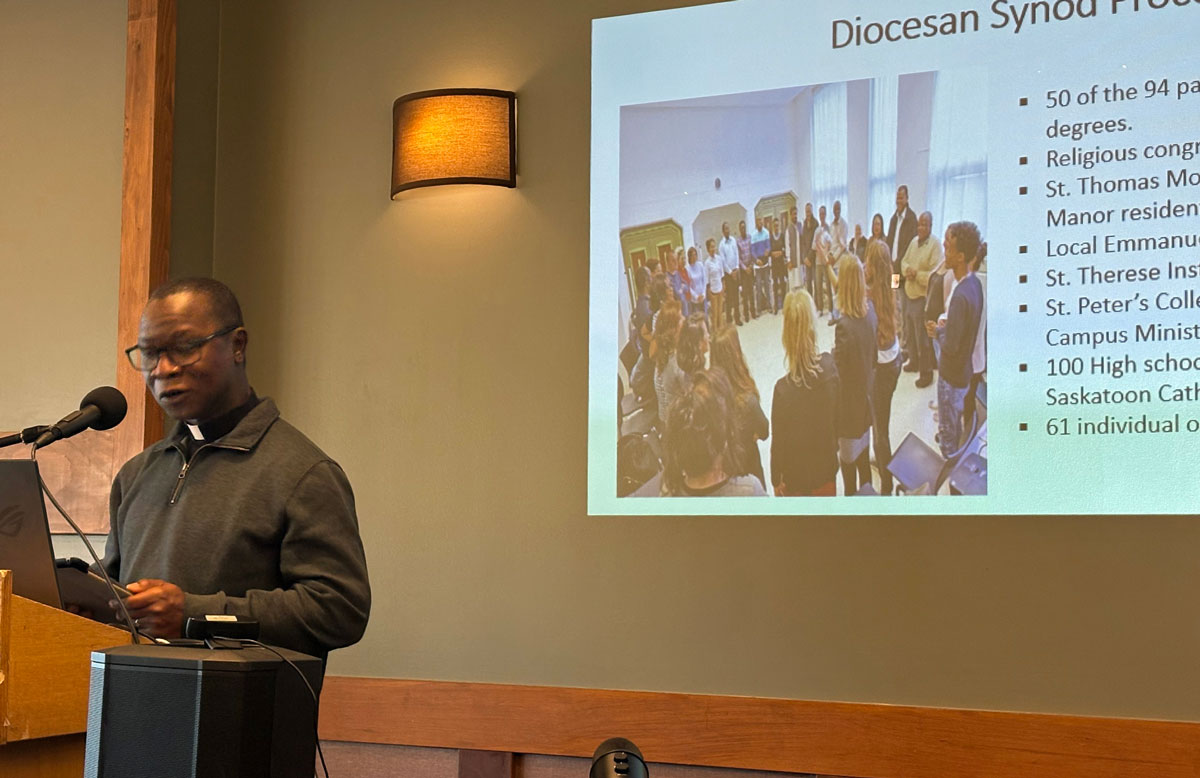
On Nov. 4, two key sessions on the implementation of the Synod on Synodalty were led by Fr. Joseph Salihu, chair of the Diocesan Synod Committee, co-presenting with the bishop. A group process for discussion and discernment was then led by Greg Chatlain, diocesan Director of Administration and Finance.
Fr. Joseph Salihu, chair of the Diocesan Synod Committee, spoke about the Synod on Synodality. (Submitted photo)
“Later in the day Greg Chatlain also gave an update addressing several features of the Diocesan Pastoral Plan – particularly the practical features of the goal ‘Moving from Maintenance to Mission,’ in terms of administrative and organizational supports for the work of the diocese.”
Presentations continued Nov. 5 with Director of Greater Saskatoon Catholic Schools Francois Rivard, and Assistant SuperIntendent Thomas Hickey, providing updates regarding Catholic schools.
Later that day, Jonathan Courchene of Face-to-Face Ministries, and Benjamin Turland of Catholic Christian Outreach gave a presentation about youth and young adults, and the importance of pastoring and accompaniment by priests.
(Submitted photo)
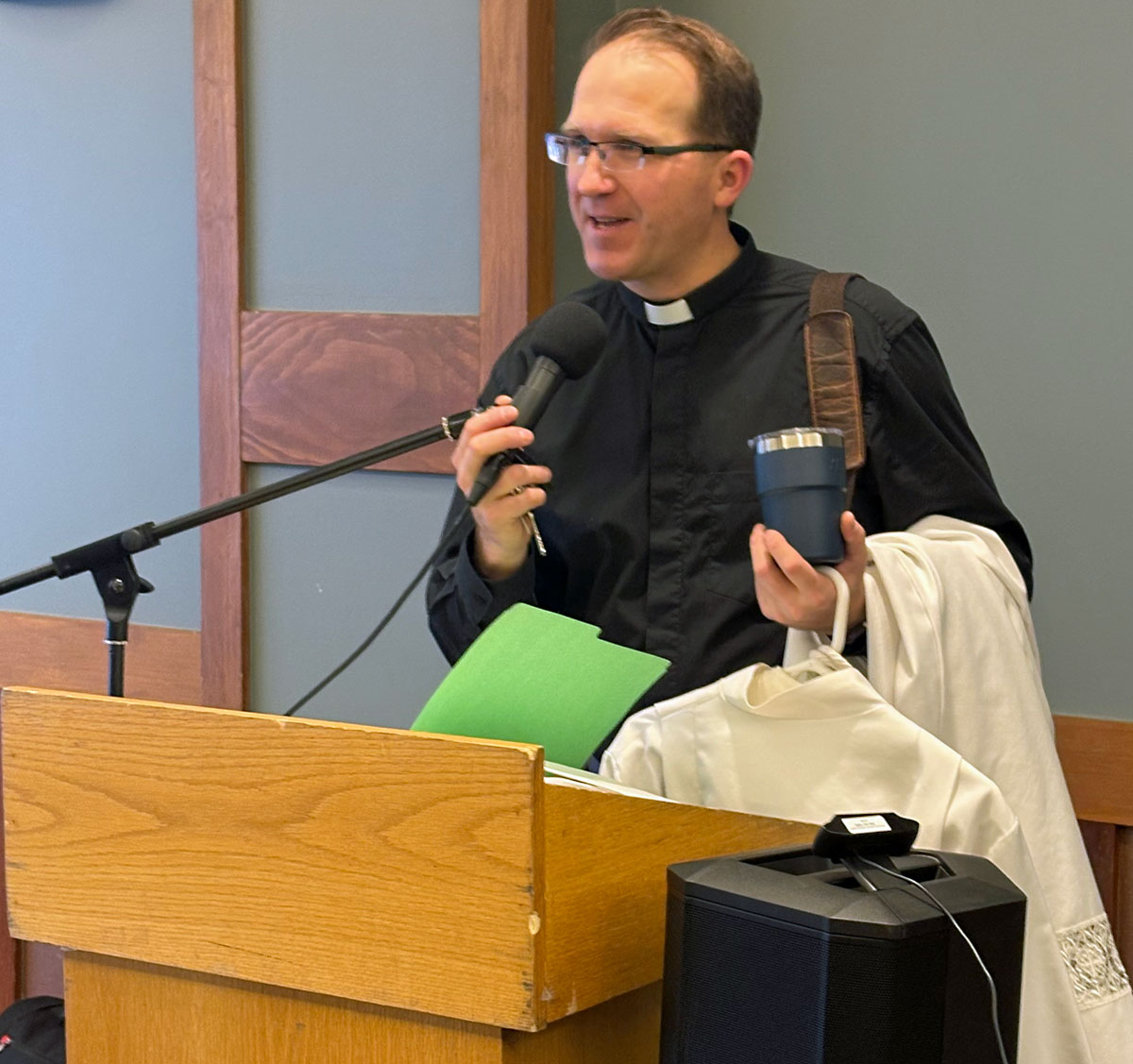
Nov. 5 included an update from Fr. Geoffrey Young, the chair of the Diocesan Liturgical Commission about celebrating the Church’s liturgy and the General Instruction of the Roman Missal (GIRM). Fr. Colin Roy and Fr. Daniel Yasinski provided a report about vocations support and development, and Fr. Joseph Salihu addressed the upcoming Diocesan Mission Works appeal to be held in parishes Nov. 8-9.
(Submitted photo)
Clergy Study Days concluded with a “Bishop’s Forum” which covered recent statements by the Catholic Bishops of Saskatchewan on Indigenous liturgy rubrics and Catholic institutes of higher education; the Church’s approach to artificial intelligence as recently addressed by Pope Leo IV and by Fr. Philip Larrey, PhD, at the 2025 Plenary Assembly of the Canadian Conference of Catholic Bishops (CCCB) this year; as well as an overview of Pope Leo’s first apostolic exhortation “Dilexi Te.” The new papal document offers “validation, encouragement, and support for outreach and apostolates to the poor,” said Hagemoen.
The bishop also encouraged clergy to look ahead to the Extraordinary Jubilee in 2033 which will celebrate the 2,000th anniversary of the Resurrection and the Great Commission. Hagemoen noted that a report about preparing for Jubilee 2033 was part of an October 2025 forum of the CCCB’s Standing Committee for Relations with Catholic Movements and Associations.
“Jubilee 2033 will be a remarkable and unprecedented opportunity for the celebration of the very reason for our hope, and the basis for mission,” Hagemoen said.
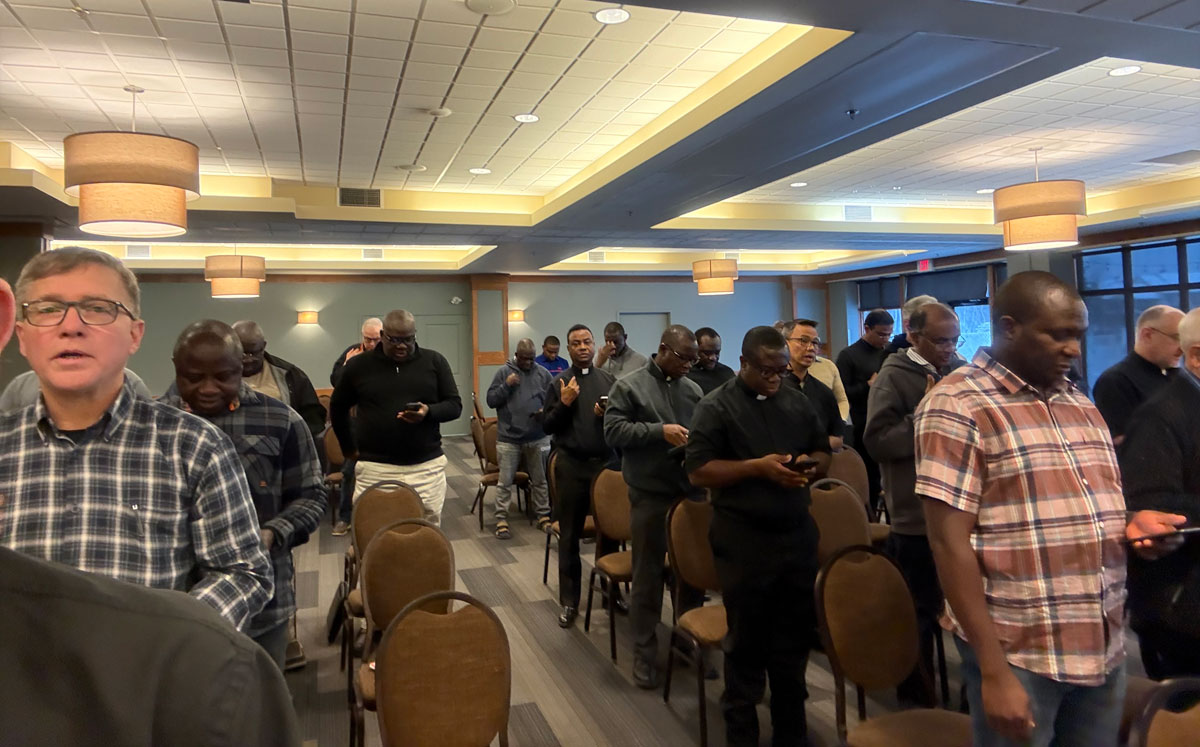
Celebration of the Eucharist concluded the gathering Nov. 6.
(Submitted photo)
Fr. Ralph Kleiter (Submitted photo)
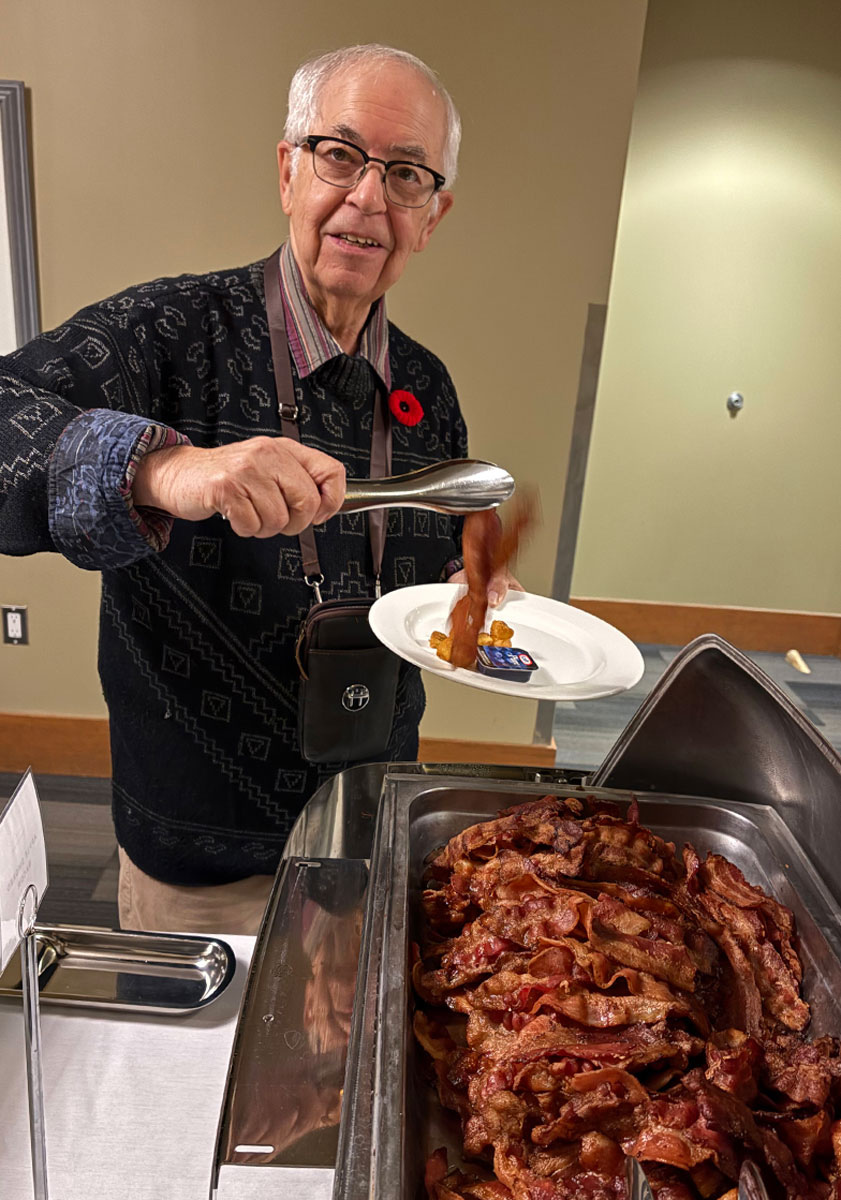
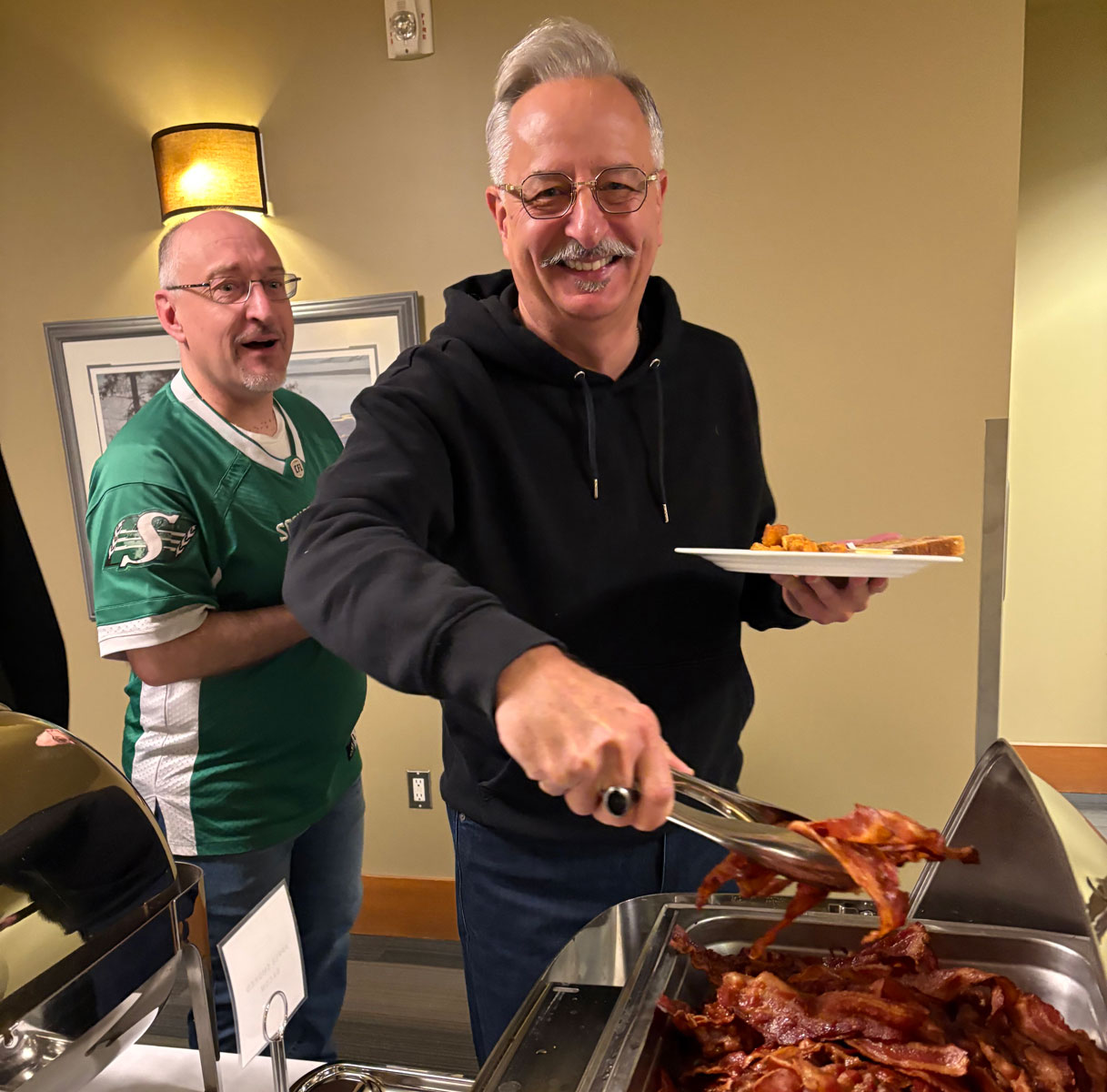
Fr. Darryl Millette and Fr. Marvin Lishchynsky at breakfast. (Submitted photo)
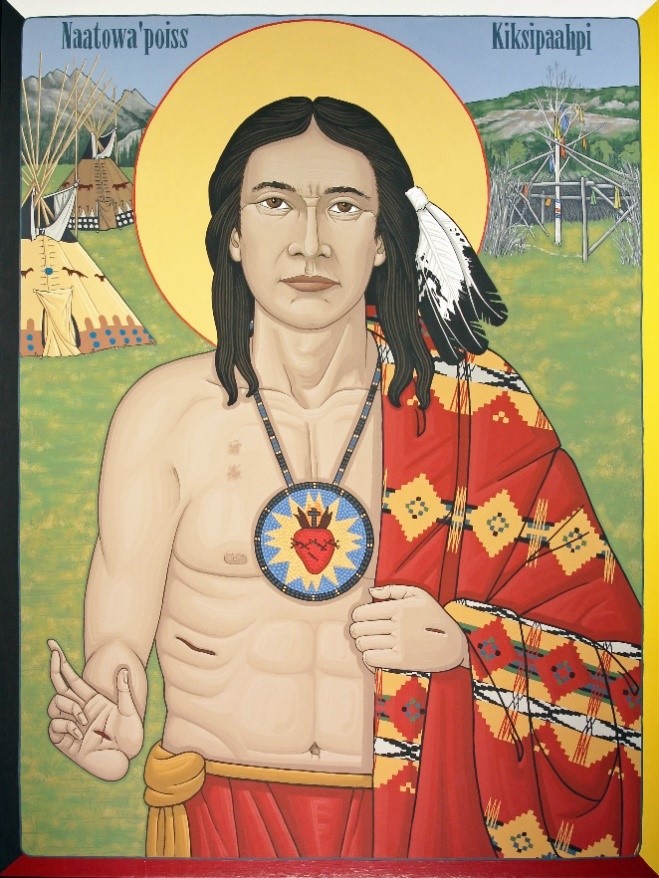
Icon of the Sacred Heart 2017 written by Andre J. Prevost in collaboration with Romeo Crow Chief of Siksika Nation. Used with permission.
No prerequisite is required. Each course is 18 hours including out-of-class time commitment to additional reading and course work. Participants can register for a single course or more – but those who complete all four courses will earn a certificate.
The fee is $200 for each course. Funding assistance and bursaries may be available.
The Indigenous Pastoral & Lay Leader Ministry Education Program includes:
An overview of the features of Indigenous peoples in western Canada, with specific reference to the Saskatchewan context.
An overview of the history and features of contact and relationship between Indigenous and non-Indigenous peoples with specific reference to the Roman Catholic Church experience.
Creation of a dialogue between Indigenous and Christian world views.
Insight into the history that has shaped the complex nature of the relationships in the present day.
Provide mutual sharing and hope for a respectful and harmonious future as children of God, who together seek beauty and good of all.
Why take the program?
To participate in a concerted effort to answer the Truth and Reconciliation Commission’s Call to Action.
To learn about the history of the interaction between Indigenous and non-Indigenous Peoples including the impact of Roman Catholic missionaries on Indigenous communities.
To discuss areas of culture convergence/divergence.
To further Catholic social and moral teachings.
To support the building of right relationship between Indigenous and non-Indigenous Catholics in Western Canada.











Recent Comments